




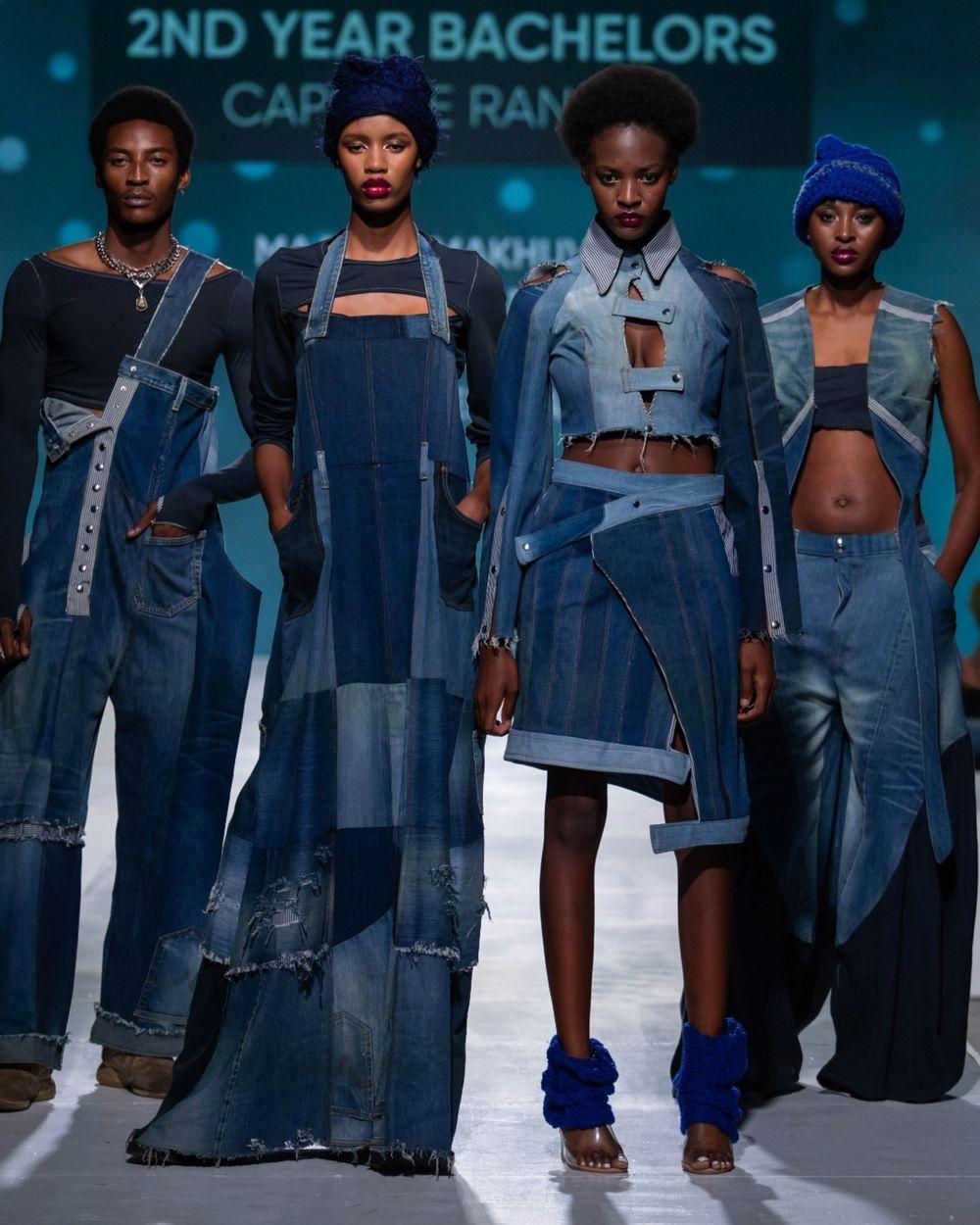
“Engen’s Xtreme Kouture initiative demonstrates how discarded lubricant bottles, bottle caps and retired corporate clothing can be transformed into contemporary fashion, with approximately 90% of the collection reportedly made from recycled materials. Through its collaboration with South African designer Carlo Gibson and local seamstresses, the project connects environmental responsibility with creative innovation, skills development and the cultural identity of South Africa’s motoring communities.”
South Africa’s fashion industry is increasingly being challenged to rethink how clothing is designed, manufactured, consumed and discarded. As environmental concerns grow, designers, manufacturers and commercial brands are exploring alternatives to traditional production methods that depend heavily on newly manufactured materials. One particularly interesting example is Engen’s Xtreme Kouture initiative, which demonstrates how materials associated with the automotive and lubricants industries can be transformed into creative fashion.
Unveiled at Heat on the Street at Kwamagesh Spinning Arena in Brakpan on 10 October 2026, the collection brought together fashion, recycling, South African motoring culture and local craftsmanship. The initiative transformed discarded lubricant bottles, bottle caps and retired corporate clothing into contemporary fashion pieces, demonstrating that materials traditionally regarded as waste can have creative and practical value beyond their original purpose.
According to reporting by Mail & Guardian on 23 October 2026, approximately 90% of the collection was created using recycled materials. The project was developed through Engen’s Xtreme brand in collaboration with South African artist, fashion designer and activist Carlo Gibson.
Although the initiative is not a complete solution to South Africa’s textile waste challenges, it provides an important example of how creative partnerships can encourage more responsible attitudes towards materials, production and consumption.
Turning discarded materials into fashionable designs
One of the most distinctive aspects of Xtreme Kouture is its approach to material reuse. Instead of depending entirely on newly manufactured fabrics, the collection incorporates materials that have already served another purpose.
Discarded lubricant packaging, bottle caps and retired corporate clothing were selected and reimagined as components of new garments. Through creative design, preparation and craftsmanship, these materials became part of a collection that challenges conventional ideas about what fashionable clothing should look like.
This approach is closely associated with upcycling, a sustainable design practice that transforms unwanted materials into products with renewed value. Unlike conventional recycling, which may involve breaking materials down into raw components, upcycling seeks to preserve and creatively improve existing resources.
For the fashion industry, this distinction is important. Clothing production requires substantial quantities of raw materials, energy and water. Consequently, extending the useful life of existing materials can contribute to reducing demand for new resources.
Xtreme Kouture demonstrates how waste generated outside the traditional fashion industry can become an unexpected source of inspiration for designers. It also encourages consumers to question why materials are automatically considered worthless once their original commercial purpose has ended.
However, successful upcycling requires careful consideration of material safety, durability, preparation and the intended lifespan of finished garments. The environmental value of a collection ultimately depends on more than its appearance or recycled-material percentage.
Engen brings sustainability into South African fashion
Engen’s involvement makes the initiative particularly interesting because the company operates in the petroleum and lubricants sector rather than the conventional fashion industry.
Through its Engen Xtreme Beyond Oil platform, the company is exploring opportunities to extend the value of materials associated with its lubricants business. Xtreme Kouture represents a creative demonstration of how industrial materials and corporate waste can be reconsidered through design.
Melissa Graham, Engen Lubricants’ marketing manager, explained that the initiative aims to make sustainability more tangible by encouraging people to reconsider materials that would otherwise be discarded.
The collection therefore represents an intersection between corporate environmental responsibility and creative expression.
For businesses operating in South Africa, this approach offers an opportunity to examine their waste streams and identify materials that could potentially be reused through partnerships with designers, manufacturers and community organisations.
Nevertheless, a fashion collection alone cannot demonstrate that an entire business has achieved sustainable operations. Meaningful environmental progress requires measurable waste reduction, responsible procurement, transparent reporting and long-term improvements in production practices.
Engen’s project should therefore be understood as a creative sustainability initiative and an invitation for further experimentation, rather than evidence that the wider environmental challenges associated with industrial production have been resolved.
Carlo Gibson and the importance of creative innovation
The collection was developed in collaboration with Carlo Gibson, a South African artist, designer and activist based in Chicago.
Gibson’s work explores sustainability, recycling, upcycling and the possibilities of transforming overlooked materials into creative products. His involvement helped translate Engen’s environmental ambitions into a distinctive fashion concept.
The collaboration demonstrates how designers can contribute to environmental discussions through practical creativity rather than relying exclusively on awareness campaigns.
Fashion has considerable cultural influence because clothing communicates identity, personality, heritage and individual expression. Consequently, incorporating sustainability into fashionable garments can make environmental conversations more accessible to audiences who might not ordinarily engage with technical discussions about waste management.
Xtreme Kouture uses this relationship between fashion and personal identity to encourage a different understanding of discarded materials.
Instead of presenting recycled products as inferior alternatives, the collection positions material reuse as an opportunity for originality, craftsmanship and artistic experimentation.
This is particularly relevant in South Africa, where local designers have opportunities to develop distinctive fashion identities through indigenous inspiration, cultural expression, craftsmanship and resourcefulness.
Connecting sustainability with South African motoring culture
Beyond its environmental objectives, Xtreme Kouture celebrates South Africa’s motoring communities.
The collection draws inspiration from mechanics, vehicle tuners, spinners, shop stewards and petrolheads. These communities have developed distinctive identities through customised vehicles, creative modifications, fashion and social gatherings.
By presenting the collection at Heat on the Street, Engen connected its sustainability message to an established cultural environment.
The relationship between motoring and fashion is particularly interesting because both industries use personal expression to communicate identity. Vehicle customisation, clothing choices and individual styling can all become representations of creativity and belonging.
Carlo Gibson’s designs explored these connections by incorporating industrial materials into garments inspired by the visual culture of South African motoring.
The approach also challenges the assumption that sustainable fashion must follow a particular aesthetic. Recycled materials can be used to create contemporary, expressive and culturally relevant designs.
Furthermore, involving communities in sustainability projects can help make environmental responsibility more inclusive. Instead of treating consumers as passive recipients of environmental messages, businesses can encourage them to participate in conversations about reuse, waste reduction and responsible consumption.
Local craftsmanship and skills development
Another important contribution of Xtreme Kouture is its involvement of South African creative talent.
The production process included a fashion design intern who worked alongside Gibson during garment development. Local seamstresses in Johannesburg also contributed to creating the collection.
This involvement demonstrates how sustainability initiatives can create opportunities beyond environmental awareness.
South Africa’s fashion and textile sector has the potential to support employment through design, garment construction, tailoring, alterations, manufacturing and creative entrepreneurship. Supporting local craftsmanship can therefore contribute to economic participation while strengthening domestic creative capabilities.
For emerging designers, practical experience working on experimental collections can also provide valuable exposure to material selection, pattern development, garment construction and innovative production techniques.
However, the long-term benefits of these opportunities depend on continuity. A single collection can provide valuable experience, but sustained employment creation requires ongoing projects, access to markets, investment and commercial opportunities.
Engen’s collaboration illustrates how companies can bring together designers, experienced craftspeople and emerging talent to develop projects that serve environmental and economic objectives simultaneously.
South Africa’s wider textile waste challenge
Although Xtreme Kouture provides an encouraging example, the country’s broader textile waste challenge remains significant.
South African consumers purchase clothing from local retailers, international brands, second-hand markets and online platforms. As garments become damaged, outdated or unwanted, many eventually enter donation, resale, recycling or disposal systems.
However, collecting unwanted clothing does not automatically mean that it can be converted into new garments.
A June 2026 analysis by ENSafrica, titled Mending South Africa’s Textile Recycling Gap, highlighted several barriers affecting the country’s textile recycling system.
These include limited fibre-to-fibre recycling capacity, insufficient sorting and processing infrastructure, blended fabrics and challenges associated with fabric composition information.
Many collected garments are downcycled into industrial rags, stuffing and insulation rather than being converted back into textile fibres for new clothing.
Mending South Africa’s textile recycling gap
These challenges demonstrate why South Africa needs more than isolated recycling campaigns.
The country requires stronger cooperation between clothing retailers, manufacturers, waste management companies, designers, government institutions and recycling businesses.
Improving textile collection systems, identifying suitable recycling technologies and encouraging manufacturers to consider the entire lifecycle of garments could help strengthen the local circular economy.
Xtreme Kouture contributes to this discussion by showing that waste from outside the conventional textile sector can also become a resource for creative industries.
The importance of circular fashion
Circular fashion is based on keeping clothing and materials in productive use for as long as possible.
Rather than following a linear model of extracting resources, manufacturing products, selling them and eventually disposing of them, circular systems prioritise durability, repair, reuse, resale, remanufacturing and recycling.
For South African designers, this approach creates several opportunities.
Firstly, designers can develop collections using existing fabrics, surplus materials and reclaimed garments. Secondly, clothing businesses can introduce repair and alteration services that extend garment lifespans. Thirdly, retailers can explore resale and take-back programmes that encourage customers to return unwanted clothing.
Finally, manufacturers can investigate materials and production processes that make garments easier to repair, reuse and recycle.
International sustainability research also highlights the environmental pressures associated with conventional fashion production, including water consumption, greenhouse gas emissions, pollution and textile disposal.
Geneva Environment Network+1
These challenges reinforce the importance of changing both production practices and consumer behaviour.
Xtreme Kouture offers a practical creative example of circular thinking, although its wider impact will depend on whether similar approaches can be adopted consistently and at greater scale.
What sustainable fashion means for South African consumers
Consumers also have an important role in creating a more sustainable fashion industry.
One of the simplest actions is purchasing clothing more thoughtfully. Instead of buying garments simply because they are fashionable for a short period, consumers can consider quality, durability, versatility and whether an item can be worn repeatedly.
Repairing damaged clothing, donating wearable garments, purchasing second-hand fashion and supporting responsible local designers are other practical options.
Consumers can also ask retailers about the origins of materials, manufacturing practices and available recycling programmes.
Importantly, sustainable fashion should not be understood as a luxury reserved for wealthy consumers. Repairing clothing, exchanging garments and extending the lifespan of existing wardrobes can be accessible ways of reducing unnecessary consumption.
South African designers can also make sustainability more inclusive by creating garments that reflect local cultural identities, everyday lifestyles and different consumer budgets.
This broader approach can help establish sustainability as a practical part of the fashion industry rather than merely a marketing trend.
The challenges of scaling upcycled fashion
Despite its creative possibilities, upcycling faces several commercial challenges.
The availability of suitable waste materials can vary, while preparing discarded packaging and textiles for garment production may require additional labour and technical expertise.
Furthermore, materials must be assessed to ensure they are safe and appropriate for their intended applications. In particular, discarded lubricant containers must undergo suitable handling and preparation before any potential fashion application.
Production costs can also become a challenge when garments require specialised design processes and substantial manual craftsmanship.
For upcycled fashion to become commercially successful, businesses must find ways to balance creative originality, product quality, safety, affordability and reliable production.
Designers also need to consider whether their garments are durable enough to remain useful over time.
These considerations demonstrate why sustainable fashion requires collaboration across multiple industries. Designers cannot independently resolve every challenge associated with industrial waste, textile processing and environmental management.
Partnerships involving businesses, technical specialists, manufacturers, researchers and policymakers will be essential for developing practical solutions.
The future of sustainable fashion in South Africa
The future of South African sustainable fashion will depend on whether innovative projects can develop into lasting business practices.
Engen’s Xtreme Kouture collection demonstrates that unexpected materials can inspire new forms of creative expression. It also shows how corporate partnerships can connect environmental awareness with cultural identity and local craftsmanship.
However, the next stage of progress should involve measurable outcomes.
Businesses could publish information about the quantities of materials recovered, the percentage successfully reused, the durability of finished products and the employment or skills-development opportunities created.
Designers could expand their use of reclaimed fabrics and explore partnerships with organisations involved in textile collection and processing.
Retailers could strengthen clothing take-back programmes, while consumers could support businesses that demonstrate credible environmental practices.
Government and industry stakeholders could also work towards improving infrastructure, standards and incentives that support circular textile production.
South Africa has an opportunity to develop a fashion sector that combines creativity, local manufacturing, environmental responsibility and economic inclusion.
The country’s designers, craftspeople and entrepreneurs can contribute by developing solutions that respond to local materials, cultural identities and practical environmental needs.
Conclusion
Engen’s Xtreme Kouture initiative provides an interesting example of how South African fashion can contribute to conversations about sustainability and responsible material use.
By transforming discarded lubricant packaging and retired corporate clothing into contemporary garments, the collection challenges conventional perceptions of waste and demonstrates the creative possibilities of upcycling.
Its collaboration with Carlo Gibson, Johannesburg seamstresses and an emerging fashion design intern also highlights the importance of bringing environmental objectives together with local craftsmanship and skills development.
Nevertheless, the project should be viewed as one contribution to a much larger transformation. South Africa still needs stronger textile recycling infrastructure, improved waste management systems, responsible manufacturing practices and greater consumer awareness.
Ultimately, sustainable fashion is not simply about creating attractive garments from discarded materials. It is about changing how the industry values resources, designs products, supports workers and considers the environmental consequences of consumption.
Xtreme Kouture offers a compelling starting point for that conversation: sometimes, the future of fashion does not require producing more new materials. It requires looking at existing resources differently and discovering the possibilities they still hold.



