




“The Durban High Court has dismissed a legal challenge against environmental and municipal approvals for the proposed redevelopment of the former Beachwood Golf Course in Durban North, leaving the approvals in place. The 42-hectare coastal property has a golf history dating to the early 1930s, and the judgment could mark an important stage in its transition toward a mixed residential and tourism development.”
A major development involving one of KwaZulu-Natal’s historic golfing properties has emerged in South Africa, with the Durban High Court dismissing a legal challenge against plans affecting the former Beachwood Golf Course in Durban North. The judgment, handed down electronically on September 30, 2026, concerns environmental and municipal decisions connected to the proposed development of the property. The story was reported by the Sunday Times on October 2 and is among the most significant South Africa-specific golf-related developments published today.
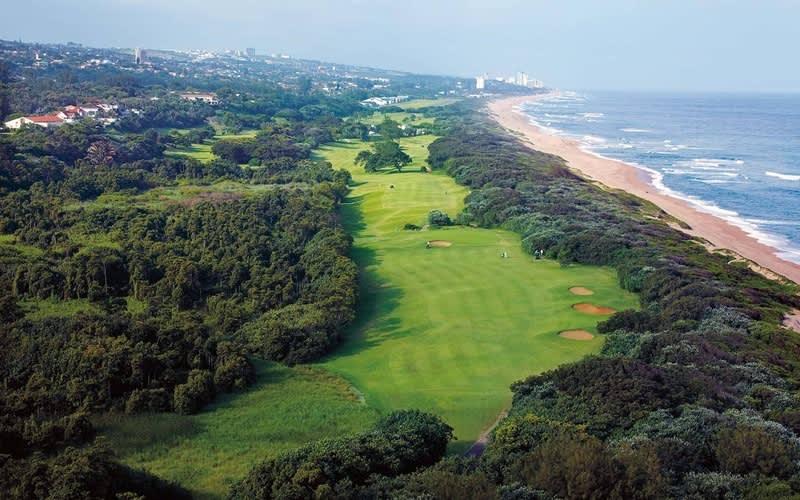
The Beachwood property covers slightly more than 42 hectares and occupies a notable coastal position north of central Durban. According to the court judgment, the land is bordered by Virginia Airport to the north, the Beachwood Mangrove Nature Reserve to the south and the sea to the east, while the M4 highway lies not far from its western boundary. The location has consequently made the property important not only to golfers but also to environmental, planning and property interests in the Durban area.
Beachwood has a long connection with golf. The court records that the golf course was established on the property in the early 1930s. Beachwood Golf Club subsequently merged with Durban Country Club in the early 1990s, and the course was revamped before reopening in 1996. Its history therefore stretches across several generations of South African golf and forms part of Durban’s broader sporting heritage.
The latest court case arose from efforts by Friends of Beachwood and neighbouring property owner James Te Riele to challenge decisions that enabled development of part of the property. The applicants sought to review and set aside decisions taken by provincial and municipal authorities relating to environmental and planning approvals. Justice Peter Olsen rejected the application, meaning those approvals remain in place.
One of the central issues concerned the historic restrictions attached to the property. The judgment explains that these conditions had traditionally restricted the land to golf or other recreational activities. The applicants argued that Beachwood should be regarded as an open-space asset with substantial community value. The court, however, found that the relevant authorities had considered the open-space implications when assessing the development proposals.
The judgment also dealt with the proposed extent of development. According to the Sunday Times report, the approved plans involve 38 subdivisions, while 77% of the property is to remain open space. The court therefore considered the development approvals within the broader context of the site’s environmental and spatial characteristics rather than treating the entire property as being converted to development.
The legal dispute is significant for golf because Beachwood represents the changing relationship between golf courses, land use and urban development. Golf courses often occupy large areas in desirable locations, particularly in established cities. When such properties experience financial, operational or membership pressures, questions can arise about whether the land should remain dedicated to golf or whether alternative uses should be considered.
In Beachwood’s case, the property’s ownership history is also relevant. The court records that Durban Country Club decided to sell the property in 2017. An auction was held, with Beachwood Investments becoming the successful bidder at a reported price of R108 million. The subsequent development process eventually produced the planning and environmental decisions challenged in court.
The current Beachwood golf operation also illustrates the complexity of the transition. The property’s present golf website describes Beachwood as a coastal golf destination and states that it has opened to the public. It also describes golf facilities including a driving range, putting green, pro shop and other amenities.
At the same time, the proposed Beachwood Coastal Estate presents a different vision for the property. Its developers describe plans for a residential estate incorporating a new nine-hole, 18-tee golf facility, together with other lifestyle amenities. The development website says the new course is being designed by Novo Landscape and Golf Course Architects, represented by David Ussendorff and Dino de Abreu.
This means the court judgment does not simply represent a straightforward choice between golf and development. Rather, the proposals indicate a possible transformation of the property’s golfing character alongside residential and tourism uses. The proposed estate’s developers describe a new golf facility designed to maintain a connection with the property’s established sporting identity while changing the broader use of the land.
The environmental dimension is particularly important because the property is situated close to the Beachwood Mangrove Nature Reserve and the Durban coastline. The court judgment records the property’s boundaries and the environmental approvals required before the development could proceed. Provincial authorities were responsible for environmental approvals, while eThekwini Municipality and its planning structures dealt with municipal planning decisions.
The applicants also raised concerns about infrastructure, including sewerage, stormwater and roads. Justice Olsen found that the applicants had not sufficiently established their case on these matters, noting that relevant assessment reports had not been properly relied upon in the applicants’ submissions. The court therefore dismissed the challenge.
Another important aspect of the judgment involved timing. The court found that some complaints concerning provincial environmental approvals had been brought outside the applicable period and that no reasonable explanation had been provided for the delay. Consequently, those complaints could not be entertained by the court.
For South African golf, the Beachwood story highlights the pressures facing established courses in rapidly developing urban areas. A golf course is not simply a sporting venue: it can also represent open space, environmental land, recreational infrastructure and a valuable piece of real estate. Decisions concerning such properties can therefore involve multiple interests.
Beachwood’s coastal setting adds another layer. Images and descriptions of the course show fairways running through vegetation close to the Indian Ocean, while historical course information identifies its links-style characteristics. The course has consequently been associated with both golf and the distinctive natural environment of Durban’s northern coastline.
The property’s golf history also remains significant. Court documents trace the course to the early 1930s, while current Beachwood materials similarly describe the venue as having a long golfing heritage. This historical connection means that any change to the property represents more than a conventional real-estate transaction for people who associate the site with generations of golf in Durban.
However, the High Court judgment provides a legal determination rather than a sporting assessment. The court was asked to consider whether the administrative and planning processes and decisions should be reviewed. Its decision leaves the relevant approvals standing. The judgment does not, by itself, determine the future commercial performance of the proposed development or establish how golfers and the wider Durban community will respond to any future changes.
The next stage will therefore depend on the implementation of the approved plans and the development process. The proposed Beachwood Coastal Estate website describes residential properties, lifestyle facilities and a redesigned golf offering, while the existing Beachwood Golf Course website continues to promote golf activities at the site.
For golf observers, the case is noteworthy because it demonstrates how the future of golf facilities can intersect with environmental protection, property development and municipal planning. South Africa has a large and diverse golf industry, and many courses occupy land that has considerable value beyond sport. Beachwood provides a particularly visible example because of its history, coastal location and proximity to protected natural areas.
Ultimately, the Durban High Court’s decision removes a significant legal obstacle to the approved development plans. The property remains connected to golf, but the nature of that connection may change substantially as development progresses. For Durban’s golfing community, residents, developers and environmental stakeholders, the next phase will show how the property’s historic golfing identity can coexist with the new plans for its future.



