




“South Africa’s commercial property sector has entered September 2026 with renewed optimism, as first-time buyers (FTBs) now represent 54.5% of all loan applications, reshaping demand in office, retail, and mixed-use spaces. With the South African Reserve Bank holding the prime lending rate at 10.50%, affordability incentives and regional hotspots are fueling growth across Johannesburg, Cape Town, and Durban.”
The South African commercial real estate market has long been a barometer of economic confidence, reflecting shifts in consumer demand, investor sentiment, and macroeconomic stability. In September 2026, the sector is witnessing a remarkable transformation: first-time buyers (FTBs) have surged into the market, accounting for 54.5% of all loan applications. This unprecedented trend is reshaping the landscape of office, retail, and mixed-use developments, signaling a democratization of property ownership and a new era of inclusivity in commercial investment.
Interest Rate Stability and Market Confidence
At the heart of this surge lies the South African Reserve Bank’s (SARB) decision to hold the prime lending rate steady at 10.50% and the repo rate at 7.00%. While these rates remain elevated compared to pre-2024 levels, their stability has created a predictable environment for investors and buyers. Developers and institutional investors now have the confidence to plan long-term projects without the fear of sudden financing shocks. Analysts suggest that if inflation continues to ease—currently at 5.5%—a modest rate cut could occur in Q4 2026, further boosting affordability.
First-Time Buyers Entering Commercial Real Estate
Traditionally, FTBs have focused on residential properties. However, the current wave of activity is spilling into commercial real estate, particularly small-scale office spaces, retail shops, and mixed-use developments. Government subsidies such as FLISP (Finance Linked Individual Subsidy Program) and the R1.2 million transfer duty exemption have lowered entry barriers, enabling new investors to participate in commercial hubs like Johannesburg, Cape Town, and Durban. This democratization of ownership is diversifying the investor base, reducing reliance on large institutional players, and fostering community-driven development.
Regional Hotspots
- Johannesburg: Strong demand for office conversions into mixed-use spaces, driven by hybrid work models and urban regeneration.
- Cape Town: Retail and hospitality-linked commercial properties are thriving, buoyed by tourism recovery and international investment.
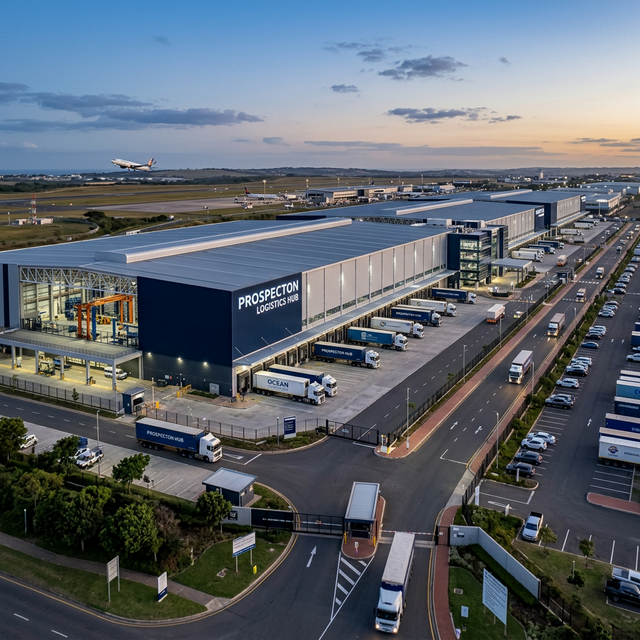
- Durban: Logistics and warehousing developments are expanding rapidly, supported by port activity and regional trade flows.
These hotspots highlight regional disparities in growth, with mid-market properties (R1.5m–R3.5m) showing the strongest appreciation at 4–5% year-on-year.
Economic Climate and Affordability
South Africa’s inflation cooling to 5.5% has eased household and business debt burdens, creating a more favorable environment for investment. The affordability of mid-market properties is attracting a new wave of buyers who previously viewed commercial real estate as inaccessible. This shift is expected to stimulate broader economic activity, from construction to retail expansion, reinforcing the sector’s role as a growth engine.
Risks and Challenges
Despite the optimism, challenges remain. Vacancy rates in certain office segments are still elevated, reflecting the lingering impact of remote work. Retail nodes outside prime urban centers face slower recovery, while logistics developments must contend with infrastructure bottlenecks. Moreover, while FTB participation is encouraging, their limited experience could expose them to risks in property management and financing.
Outlook
Looking ahead, the South African commercial real estate sector appears poised for sustained growth. If inflation continues to ease and interest rates remain stable, the market could witness further democratization, with FTBs solidifying their role as key drivers of demand. Regional hotspots will continue to shape investment strategies, while government incentives will ensure inclusivity remains at the forefront of property ownership.



