




“The AllFashion Sourcing Cape Town Expo 2026 showcased how accessories have evolved into cultural identity markers and sustainability drivers, with eco-friendly handbags, bamboo sunglasses, and heritage-inspired jewelry taking center stage. With exports expected to rise by 15% in 2026, South Africa is positioning itself as a global hub for sustainable fashion innovation.”
South Africa’s fashion industry is undergoing a profound transformation, and nowhere was this more evident than at the AllFashion Sourcing Cape Town Expo 2026. Traditionally seen as secondary embellishments, accessories have now emerged as powerful symbols of sustainability, cultural identity, and global competitiveness. This year’s showcase revealed how handbags, belts, sunglasses, and jewelry are no longer mere add-ons but central to the narrative of eco-conscious fashion.
Cultural Identity Through Accessories
One of the most striking aspects of the Expo was the way accessories reinforced South Africa’s cultural heritage. Designers incorporated Ndebele and Zulu motifs into handbags, belts, and jewelry, ensuring that each piece carried a story. Beadwork, long a hallmark of African artistry, was elevated into a storytelling device, with geometric patterns symbolizing resilience, community, and pride. Accessories became cultural markers, embedding South African identity into wearable art that resonates globally.
Sustainability and Innovation
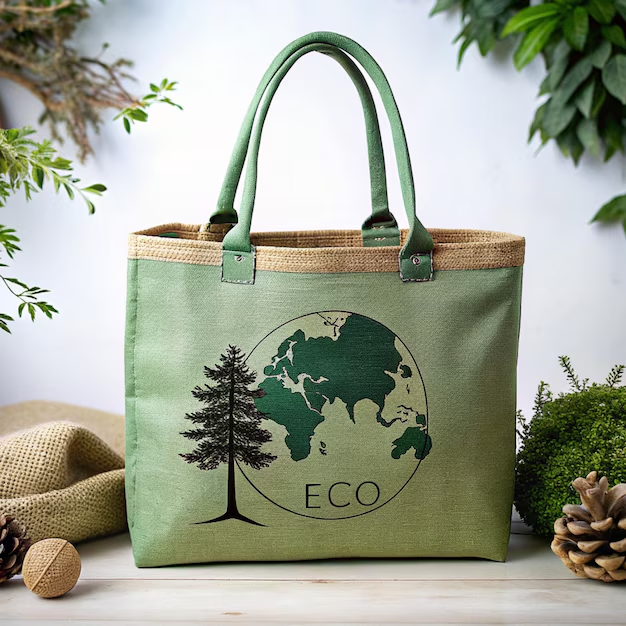
The Expo emphasized eco-friendly materials, showcasing handbags crafted from recycled plastics, belts made from plant-based leathers, and sunglasses with bamboo frames. This focus on sustainable innovation aligned with global trends toward circular fashion. By reducing waste and embracing renewable resources, South African designers demonstrated that luxury and sustainability can coexist. Accessories, often overlooked, were presented as scalable solutions for sustainable fashion, capable of reducing environmental impact while maintaining high-end appeal.
Global Competitiveness
South Africa’s accessory exports are projected to grow by 15% in 2026, a testament to the country’s rising influence in global fashion markets. International buyers were particularly impressed by the fusion of heritage and sustainability, noting that South African accessories offer something unique: products that are both eco-conscious and culturally rich. This dual appeal is reshaping the narrative of African fashion, positioning the country as a hub for innovation and creativity.
Key Highlights from the Expo
- Jewelry Renaissance: Beaded necklaces and gemstone-studded earrings blended traditional artistry with modern elegance.
- Eco-Friendly Sunglasses: Bamboo frames became a symbol of renewable design.
- Heritage Handbags: Recycled plastic handbags adorned with indigenous motifs showcased circular fashion.
- Plant-Based Belts: Vegan leathers offered cruelty-free alternatives without sacrificing style.
Broader Industry Implications
The rise of accessories as sustainability leaders reflects a broader shift in the fashion industry. Globally, consumers are demanding transparency, eco-consciousness, and cultural authenticity. South Africa’s accessory sector is uniquely positioned to meet these demands, offering products that tell stories while reducing environmental harm. This positions the country not only as a supplier but as a thought leader in sustainable fashion.
Conclusion
The AllFashion Sourcing Cape Town Expo 2026 was more than a trade show—it was a declaration of intent. Accessories are no longer secondary; they are central to the future of fashion. By merging sustainability with cultural identity, South Africa is carving out a unique space in the global fashion landscape. With exports set to rise and international recognition growing, the country is poised to lead Africa’s charge into a sustainable fashion future.



