




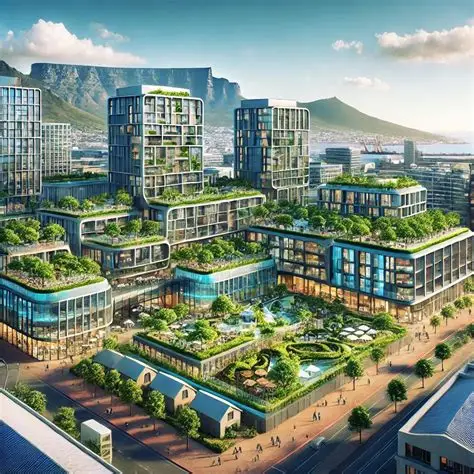
“South Africa’s property market is experiencing a dual dynamic: affordability pressures are slowing growth at the upper end, but first-time buyers and redevelopment projects are fueling resilience in the sub-R1.5 million segment. Investor confidence remains strong, particularly in commercial redevelopment and logistics land, underscoring real estate’s role in shaping urban renewal.”
The South African real estate development sector in July 2026 reflects a market of two halves. On one side, affordability ceilings driven by elevated interest rates are slowing national house price growth to 3.4%, below the inflation rate of 5.1%. On the other, the sub-R1.5 million market remains buoyant, propelled by first-time buyers now accounting for 51.6% of bond applications.
Drivers of Resilience
- Aggressive bank lending: Financial institutions are offering 100%+ loans, reducing deposit requirements, and enabling broader access.
- Infrastructure reliability: Buyers are prioritizing well-run municipalities, particularly in the Western Cape, where functional governance and off-grid features like solar and boreholes command premiums.
- Urban redevelopment: Auctions in Johannesburg, Durban, and Cape Town highlight strong investor appetite for redevelopment sites, industrial land, and lifestyle-driven residential complexes.
Investment Trends
At Aucor’s July auction in Johannesburg, investors demonstrated confidence in diverse portfolios:
- Commercial redevelopment sites in Durban attracted bids tied to expanding urban corridors.
- Industrial land in Gauteng saw demand from logistics and warehousing sectors.
- Vacant land in Cape Town was sought for lifestyle-driven residential projects, boosted by semigration trends.
- Residential complexes and student housing underscored the intersection of real estate and social infrastructure.
Economic Context
Despite affordability challenges, macroeconomic indicators provide cautious optimism:
- Repo rate: 7.00% (SARB MPC, July 2026).
- Prime lending rate: 10.50%.
- Household debt-to-income ratio: 62.8%.
- GDP growth: 1.4% year-on-year in Q1 2026.
Risks and Challenges
- Affordability ceiling: Household budgets remain stretched, limiting growth above R1.5 million.
- Policy uncertainty: Land reform debates continue to shape investor sentiment.
- Urbanization pressures: Rapid population growth in Johannesburg, Cape Town, and Durban is straining infrastructure.
Outlook
The outlook for the remainder of 2026 suggests cautious optimism. If inflation moderates and lending conditions remain supportive, the market could see renewed momentum. First-time buyers will continue to dominate, while redevelopment projects will anchor investment strategies.



