




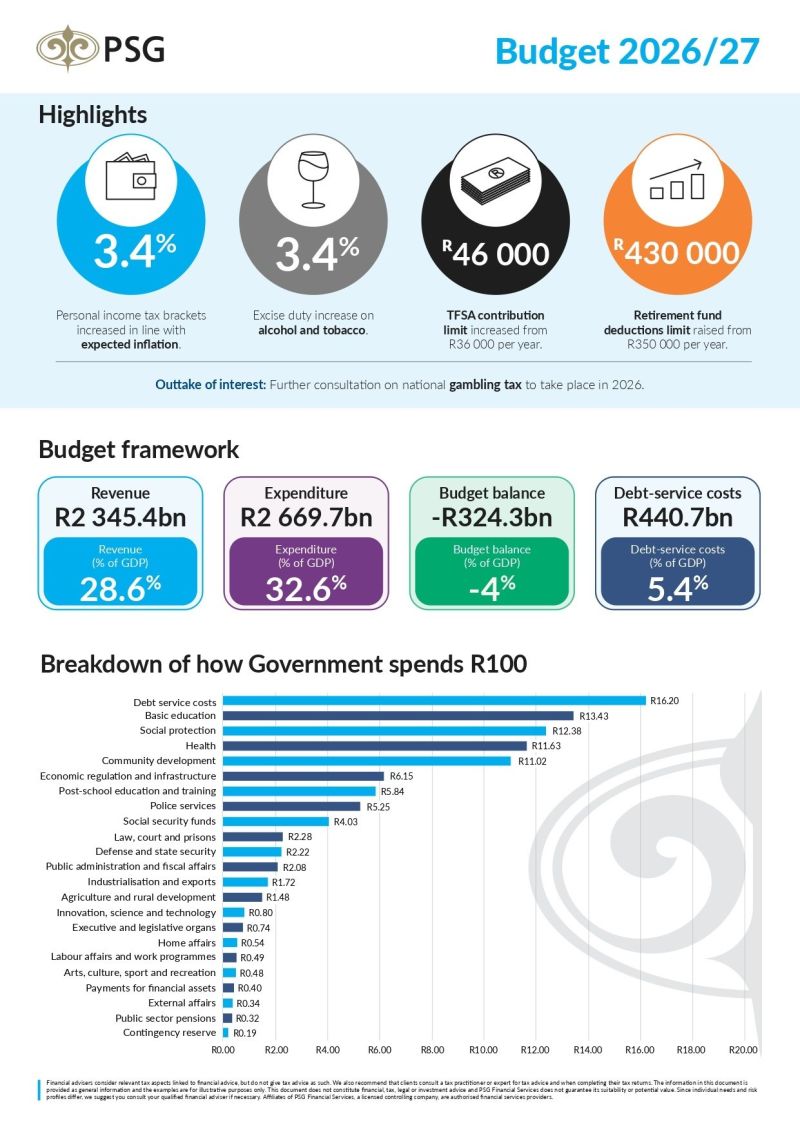
“The 2026 Budget marks a turning point, with debt-to-GDP stabilizing for the first time since 2008. South Africa achieved a primary surplus of 0.9% of GDP.”
South Africa’s fiscal policy has reached a milestone: debt-to-GDP has stabilized for the first time since the 2008 financial crisis. The National Treasury reports a primary surplus of 0.9% of GDP in 2025/26, signaling improved fiscal health.
Revenue collections exceeded projections by R28.8 billion, while expenditure was contained. Debt-service costs are now growing more slowly than overall spending, reducing fiscal risks. The government has withdrawn a planned R20 billion tax increase for 2026/27, citing strong fiscal outcomes.
The fiscal framework aims to reduce debt over the rest of the decade, supported by legislation requiring each administration to table a medium-term fiscal plan. This anchors sustainability and investor confidence.
Parliament has approved the 2026 Fiscal Framework, though concerns remain about high debt levels and limited developmental spending. Committees have called for stronger oversight, improved efficiency, and expanded social support.
The fiscal turnaround has already yielded benefits: South Africa secured its first credit rating upgrade in 16 years, borrowing costs have eased, and investor sentiment has improved.



