




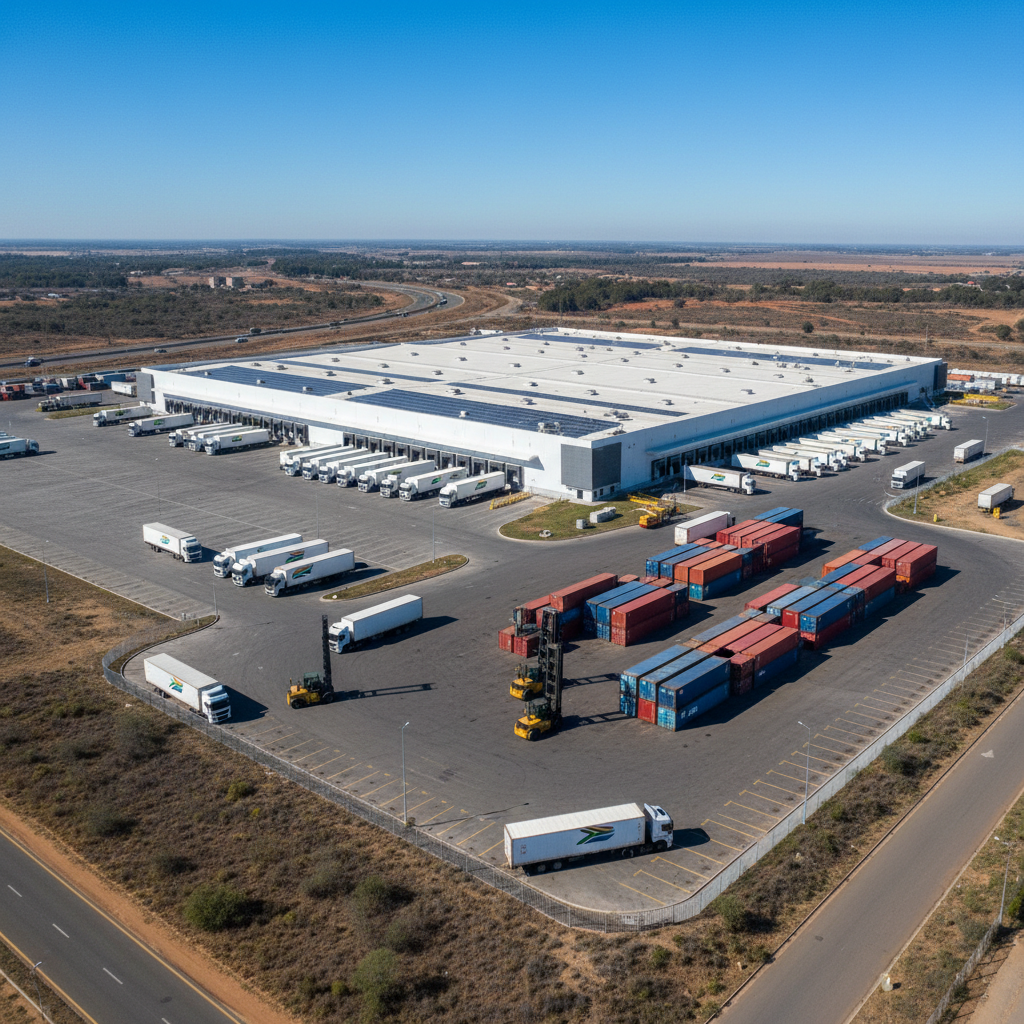
“Fortress Real Estate Investments has successfully raised R1.35 billion through a bookbuild to accelerate its logistics development pipeline, underscoring the growing demand for modern warehousing and distribution hubs in South Africa. This capital injection positions Fortress to meet rising e-commerce and supply chain needs while reinforcing investor confidence in industrial property.”
South Africa’s industrial real estate sector continues to demonstrate resilience and growth, with logistics emerging as the most dynamic subsector. On July 8, 2026, Fortress Real Estate Investments announced that it had successfully raised R1.35 billion via a bookbuild, pricing 55.67 million B ordinary shares at R24.25 per share. This move is designed to accelerate the rollout of Fortress’s logistics development pipeline and conclude retail opportunities, marking a significant milestone in the company’s expansion strategy.
Context: Industrial Real Estate Momentum
Industrial property has become the cornerstone of South Africa’s real estate market. While office and retail segments have faced challenges from hybrid work and shifting consumer behavior, logistics and warehousing have thrived due to:
- E-commerce growth driving demand for distribution centers.
- Supply chain restructuring requiring strategically located hubs.
- Resilient tenant demand from manufacturers, distributors, and retailers.
Fortress’s capital raise reflects these trends, positioning the company to capitalize on structural shifts in the economy.
Fortress’s Strategy
The R1.35 billion raised will be allocated to:
- Expanding logistics parks in key nodes such as Gauteng and Durban.
- Developing modern warehouses with sustainability features.
- Concluding retail-linked opportunities that complement logistics hubs.
By focusing on logistics, Fortress aligns with global REIT trends where industrial property consistently outperforms other asset classes.
Investor Confidence
The oversubscription of the bookbuild highlights strong investor appetite for industrial real estate. Fortress priced the shares at a 1% discount to its 30-day volume-weighted average price, ensuring competitive entry for investors while maximizing capital raised. This demonstrates confidence in Fortress’s operational track record and growth prospects.
Market Implications
The deal has several implications for South Africa’s industrial property market:
- Liquidity boost: The capital injection strengthens Fortress’s balance sheet.
- Pipeline acceleration: Projects that may have been delayed due to funding constraints can now proceed.
- Sector leadership: Fortress cements its role as a leading logistics-focused REIT.
Broader Industrial Trends
South Africa’s industrial real estate is being reshaped by:
- Urbanization: Concentration of logistics hubs near major cities.
- Technology adoption: Smart warehouses with automation and AI-driven inventory systems.
- Sustainability: Green building certifications and energy-efficient designs.
Fortress’s developments are expected to incorporate these trends, ensuring long-term competitiveness.
Challenges and Risks
Despite optimism, risks remain:
- Economic volatility: South Africa’s macroeconomic environment could affect tenant demand.
- Infrastructure constraints: Power shortages and transport bottlenecks may hinder logistics efficiency.
- Global uncertainty: Shifts in trade flows and geopolitical tensions could impact supply chains.
Fortress’s diversified strategy, however, aims to mitigate these risks.
Conclusion
Fortress Real Estate Investments’ R1.35 billion raise marks a pivotal moment for South Africa’s industrial property sector. By accelerating its logistics pipeline, Fortress is not only responding to immediate market demand but also shaping the future of industrial real estate in the country. The move underscores investor confidence, highlights logistics as the growth engine of real estate, and positions Fortress as a leader in delivering modern, sustainable, and strategically located industrial assets.



