




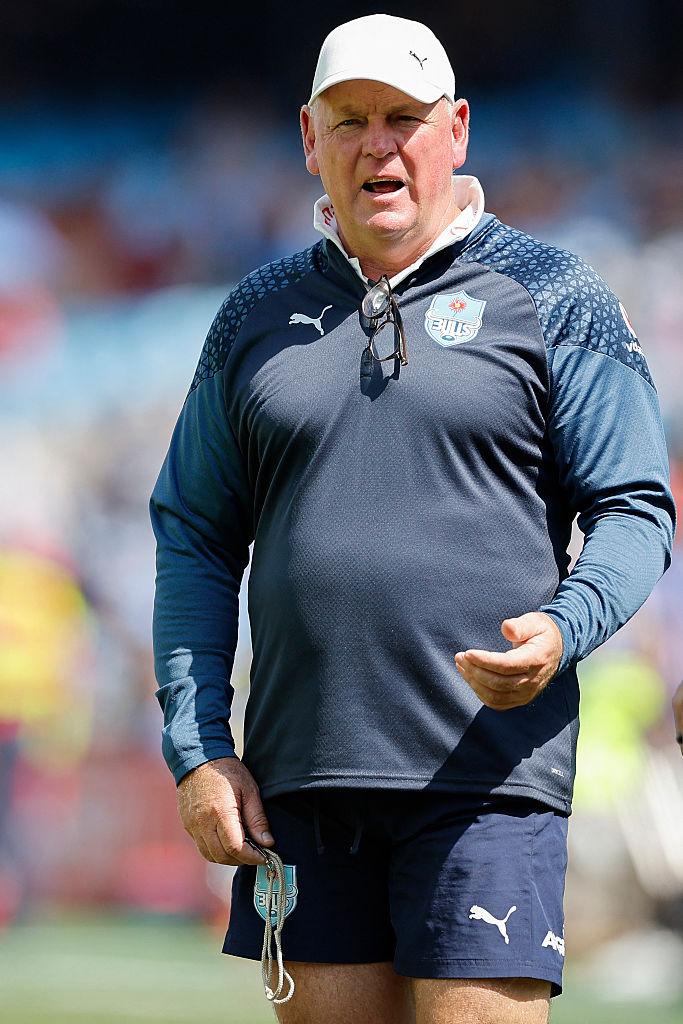
“Former Springbok head coach Jake White has reportedly emerged as the leading contender to become Fiji’s head coach ahead of the 2027 Rugby World Cup in Australia. The potential appointment could give Fiji a World Cup-winning coach with deep knowledge of South African rugby, creating an intriguing storyline for the next global tournament.”
South African rugby is waking up to the possibility of another familiar figure returning to the Test arena. Jake White, the 2007 Rugby World Cup-winning Springbok coach, has emerged as the leading contender to become Fiji’s head coach ahead of the 2027 Rugby World Cup in Australia, according to a report highlighted by SA Rugby Magazine on October 4. The development is significant because it could place one of South Africa’s most experienced international coaches directly in the path of the Springboks during the next global tournament cycle.
White, 62, is currently working as a consultant at Selborne College in East London after his spell as director of rugby at the Bulls ended. According to the report, he is on Fiji’s shortlist and is regarded in the country as the favourite for the position. Fiji have been without a permanent head coach since Mick Byrne stepped down in April, with Senirusi Seruvakula serving in an interim capacity.
The 2027 World Cup is now the next major destination for international rugby, and every coaching decision made during the current cycle can influence how teams prepare for the tournament. South Africa enter that period as the benchmark after winning the 2019 and 2023 World Cups and remaining among the strongest teams in the world. White knows the Springboks intimately, but he would also understand the demands of building a squad capable of challenging established powers.
Fiji would offer a different coaching challenge. The Pacific nation has long possessed extraordinary natural talent, but its international teams have worked to combine that flair with greater tactical structure, discipline and consistency. A coach with White’s background could be expected to focus heavily on preparation and organisation while allowing Fiji’s dangerous attacking players to retain their freedom.
That combination could make Fiji a serious threat at the 2027 World Cup. The Flying Fijians have already shown that they can compete with leading nations when their discipline and execution match their physical ability. Adding an experienced World Cup-winning coach could strengthen the areas that separate an exciting side from a genuine tournament contender.
White’s possible appointment would also represent a return to the international stage after several years in club rugby. His post-Springbok career has included coaching roles with the Brumbies, Sharks, Montpellier and Toyota Verblitz before he joined the Bulls. His career outside South Africa gave him experience with different rugby cultures and competitions, while his time with the Bulls kept him closely connected to the South African system. RugbyPass describes him as the coach who led South Africa to the 2007 World Cup and notes his extensive work across international and club rugby.
His knowledge of the modern game has also remained relevant. In September, White argued that the current Springbok side did not need major changes after South Africa’s 3-1 series victory over New Zealand. He said the chasing nations needed to close the gap, an assessment that reflected his understanding of the strengths that have made the Springboks so successful under Rassie Erasmus.
That perspective would be valuable to Fiji, but it could also make a White-led Fiji especially interesting for South Africa. A World Cup meeting between the Springboks and Fiji would carry an unusual layer of tactical familiarity. White would know the mentality, structures and tournament habits of South African rugby, while the Springbok coaching staff would understand precisely how White prepares teams.
Still, it would be wrong to assume that White could simply reproduce his South African methods in Fiji. Successful international coaching depends on adapting to the players available. Fiji’s greatest strengths are different from those of the Springboks. Their attacking instincts, broken-field running, offloading and one-on-one ability are central to their identity. A successful White tenure would therefore likely depend on combining his emphasis on structure with the creativity that makes Fijian rugby distinctive.
The World Cup is also approaching quickly. A new coach would have limited time to introduce systems, establish selection priorities and create a consistent international programme. Fiji’s players compete across different leagues, which makes alignment and preparation especially important.
For White, however, that pressure could be part of the attraction. He has repeatedly operated in environments where expectations are high and where tournament preparation matters as much as individual match results. His 2007 Springbok team was not merely talented; it was carefully constructed for the specific demands of a World Cup campaign. That experience is precisely what makes his reported candidacy so compelling.
The potential move also underlines the continuing influence of South African coaching in international rugby. South Africa has developed a deep coaching culture, with former Springbok players and coaches working across domestic and international competitions. White would be another example of a South African coach taking the country’s rugby knowledge abroad.
Meanwhile, the Springboks themselves are entering a demanding phase. Their recent campaign included a 3-1 triumph over New Zealand, followed by a narrow 42-38 defeat to Australia in Perth. Rassie Erasmus accepted responsibility for the loss and described it as an opportunity to assess players and combinations ahead of the next World Cup.
That context matters because Fiji’s coaching decision will unfold against a rapidly changing international landscape. South Africa are experimenting with depth while maintaining their established core. New Zealand remain a major rival. Australia are developing under Les Kiss. Northern Hemisphere nations are preparing for the new Nations Championship structure. Fiji therefore need to make every coaching decision count.
The immediate question is whether White will actually get the Fiji job. The current report describes him as the leading contender rather than confirming an appointment, so the situation remains subject to negotiations and official decisions.
Nevertheless, the possibility is already one of the most significant South Africa-related rugby developments of October 4. It connects a legendary chapter in Springbok history with the next global tournament and could reshape the balance of power in the Pacific.
If White takes charge, Fiji would gain more than a coach with a World Cup medal. They would gain a strategist who understands preparation, pressure and the fine margins of international tournament rugby. South Africa, meanwhile, could find themselves facing a familiar opponent guided by a coach who knows their rugby culture from the inside.
That is what makes the story bigger than a coaching appointment. It is potentially the beginning of a fascinating 2027 World Cup subplot: a South African World Cup-winning coach trying to build Fiji into a serious global force, while his former country prepares to defend its position at the top of world rugby.
For now, the appointment remains unconfirmed. The appointment would therefore be watched closely across South Africa, Fiji and the international rugby community. If the move happens, the 2027 World Cup could feature one of the most intriguing coaching match-ups of the tournament.



