




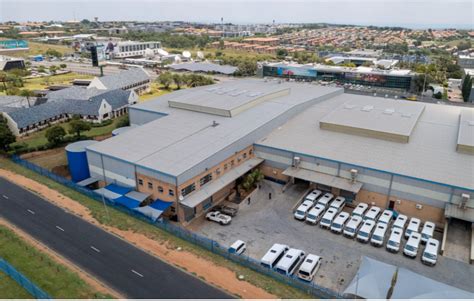
“South Africa’s industrial property sector is experiencing strong growth driven by logistics, warehousing demand, expanding e-commerce activity, and infrastructure improvements along major freight corridors. Demand for modern industrial facilities in Gauteng, Durban, and Cape Town has tightened vacancies and strengthened investor interest in logistics-focused real estate assets.”
South Africa’s industrial real estate sector is emerging as one of the country’s strongest-performing property segments as logistics activity, warehousing demand, and infrastructure investment continue to reshape commercial property markets. Industry observers increasingly view logistics-linked industrial assets as a strategic component of economic growth, reflecting changes in supply chains, the expansion of e-commerce, and renewed interest from investors seeking resilient property sectors. Recent market reports indicate that growing demand for warehouse and distribution facilities is transforming major logistics corridors throughout the country and creating significant opportunities for developers, occupiers, and institutional investors.
The momentum is particularly visible in Gauteng, Durban, and Cape Town, where logistics operators, retailers, and manufacturers are competing for modern industrial facilities. These regions have become focal points for investment as companies look for efficient locations capable of supporting increasingly complex supply-chain requirements. The result has been a strengthening industrial property market characterized by tightening vacancy levels, rising rentals in key locations, and increased development activity.
One of the most powerful forces behind the sector’s growth is the continued expansion of e-commerce. Online retail has increased the need for strategically located warehouse space that can facilitate both regional distribution and last-mile delivery services. Retailers and third-party logistics providers require sophisticated facilities equipped for inventory management, rapid order fulfillment, and fast transportation connections. As online consumer demand grows, warehouse operators are expanding their footprints in locations that offer quick access to population centers and transportation networks.
The growing importance of logistics infrastructure has also elevated the significance of the N3 corridor linking Durban and Johannesburg. Widely regarded as South Africa’s most important freight route, the corridor is attracting substantial investment due to its role in connecting manufacturing hubs, population centers, inland distribution facilities, and port infrastructure. Upgrades to transport facilities, logistics parks, and supporting infrastructure have enhanced the attractiveness of locations along this route, making them increasingly desirable for industrial property development.
Industrial property demand is not limited to transportation corridors alone. Investment in ports and rail-connected logistics facilities is creating additional growth opportunities across South Africa. Enhancements at Durban and Richards Bay terminals, alongside private sector logistics developments, have improved the country’s capacity to handle freight and support large-scale distribution operations. These infrastructure improvements are helping create a more efficient logistics environment while encouraging companies to establish regional warehousing and fulfillment centers near major transport gateways.
Another fundamental market shift is occurring in corporate supply-chain strategy. Businesses increasingly favor inventory models that prioritize resilience and reliability, leading to greater demand for storage capacity and distribution infrastructure. Rather than maintaining lean inventories, many firms are investing in additional logistics capacity to protect themselves against supply disruptions. This trend has increased demand for warehouse facilities and further strengthened the industrial real estate market.
Gauteng remains the country’s leading industrial property market and continues to attract occupiers seeking large-scale distribution and warehousing solutions. As South Africa’s primary economic hub, the province benefits from extensive transportation links and access to major consumer markets. Demand for large-format warehouses and logistics facilities remains strong, while last-mile delivery operators are increasingly targeting strategic locations near major urban centers. According to industry reports, premium logistics assets in leading Gauteng nodes continue to attract considerable investor and occupier interest.
The Western Cape is also experiencing sustained industrial property growth. Industrial zones connected to Cape Town’s logistics network have recorded strong demand as businesses compete for limited high-quality warehouse space. Market reports indicate that logistics corridors in the region have experienced rental growth and declining vacancies, reinforcing the perception that industrial assets remain one of the province’s most attractive commercial property categories. The scarcity of modern facilities has further supported landlord confidence and encouraged new development activity.
Durban and the wider KwaZulu-Natal region continue to play a critical role in South Africa’s logistics future. The city’s strategic position as a gateway for imports and exports, combined with its connection to the N3 freight corridor, makes it an essential logistics node. Improvements in infrastructure and freight-related facilities are helping strengthen the region’s industrial property market and encouraging further investment in warehousing and distribution assets.
Investor confidence has strengthened considerably as industrial properties increasingly outperform other commercial real estate categories. While office and retail property markets continue adapting to changing economic conditions and evolving occupier preferences, logistics-focused industrial assets have emerged as a preferred investment class. The stability of long-term leases, growing occupier demand, and strategic importance of logistics facilities have enhanced the attractiveness of industrial real estate among institutional investors and property funds.
Real Estate Investment Trusts and professional property investors have taken note of these trends. Reports suggest that industrial assets are benefiting from stronger investment flows due to their resilience and ability to generate consistent rental income. Increasing transaction volumes and investor interest indicate confidence that logistics demand will remain a long-term structural driver of property performance.
Despite the positive outlook, challenges remain. Currency volatility continues to influence investment decisions, particularly among international investors evaluating opportunities in South African property markets. Infrastructure constraints, including congestion and operational inefficiencies in some transport systems, also highlight the importance of continuing investment and reform. Market participants acknowledge that addressing these issues will be important to maintaining growth momentum and supporting future industrial expansion.
Nevertheless, the overall outlook for South Africa’s industrial real estate sector remains highly favorable. The combination of e-commerce expansion, logistics modernization, infrastructure upgrades, and evolving supply-chain requirements has created a powerful foundation for continued growth. Industrial properties are increasingly viewed not merely as storage facilities but as critical infrastructure supporting national trade and economic development.
As South Africa strengthens its position within regional and continental trade networks, logistics assets are likely to become even more important. Modern warehouses, distribution centers, and transport-linked facilities are expected to play a central role in enabling economic activity, improving supply-chain efficiency, and supporting investment across multiple sectors. For developers, investors, retailers, and logistics operators, the industrial property market represents one of the clearest growth opportunities within the country’s commercial real estate landscape.
The evidence emerging from major logistics corridors and industrial nodes suggests that South Africa’s industrial property sector has entered a new phase of development. With demand continuing to outpace supply in key locations and infrastructure investment creating fresh opportunities, the market is increasingly positioned as a cornerstone of the country’s commercial property future. If current trends continue, industrial real estate could remain the defining success story of South Africa’s property sector for years to come.



