




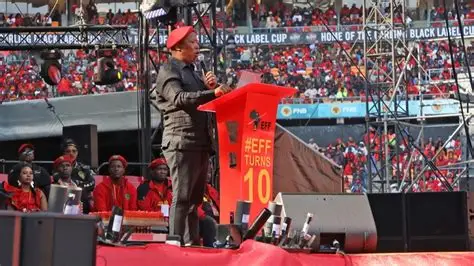
“Julius Malema has publicly denounced anti-immigration activists, accusing them of selectively targeting Black nationals while ignoring systemic racial inequalities. His remarks have ignited a nationwide debate on activism, race relations, and South Africa’s migration policies.”
South Africa’s political landscape was jolted today as Economic Freedom Fighters (EFF) leader Julius Malema launched a scathing attack on anti-immigration activists, accusing them of harboring racial biases and perpetuating divisions. His remarks, delivered at a rally, have quickly gone viral, sparking heated debates across social media, activist networks, and mainstream political discourse.
Background Context
Immigration has long been a contentious issue in South Africa. With rising unemployment, strained public services, and growing inequality, activists have increasingly mobilized against undocumented migrants. However, Malema’s intervention reframes the debate, suggesting that anti-immigration activism is less about economic justice and more about racial prejudice.
Malema’s Key Arguments
- Targeting Black Nationals: Malema accused activists of disproportionately focusing on African migrants from Zimbabwe, Mozambique, and Malawi, while ignoring white expatriates and investors.
- Fear of White Dominance: He argued that the real issue lies in South Africa’s continued economic dependence on white-owned capital, which activists fail to challenge.
- Solidarity Across Borders: Malema called for pan-African solidarity, urging South Africans to recognize shared struggles against colonial legacies.
Activist Reactions
- Pro-Immigration Groups: Organizations advocating for migrant rights welcomed Malema’s remarks, seeing them as a defense of vulnerable communities.
- Anti-Immigration Movements: Groups such as Operation Dudula condemned Malema, accusing him of ignoring the economic strain migrants place on local communities.
- Civil Society: Analysts noted that Malema’s intervention could polarize activism further, deepening divisions between nationalist and pan-Africanist movements.
Political Implications
Malema’s comments arrive at a critical moment as South Africa prepares for municipal by-elections later this year. His stance may consolidate support among migrant communities and progressive activists, but risks alienating voters concerned about unemployment and crime.
Social Media Response
Within hours, hashtags such as #MalemaVsActivists and #PanAfricanSolidarity trended on Twitter. Supporters praised his courage, while critics accused him of deflecting attention from domestic challenges.
Broader Activism Landscape
This controversy highlights a broader trend in South African activism: the tension between grassroots community struggles (focused on local service delivery and jobs) and ideological movements (focused on racial justice and pan-Africanism). The clash between these priorities reflects deeper fractures in the country’s political culture.
Expert Analysis
Political analysts argue that Malema’s remarks could reshape activism in three ways:
- Reframing Migration: Shifting the debate from economics to race.
- Polarizing Movements: Deepening divides between nationalist and pan-Africanist activists.
- Mobilizing Youth: Energizing younger activists who resonate with anti-colonial rhetoric.
Conclusion
Malema’s intervention has reignited debates on race, migration, and activism in South Africa. Whether his remarks will strengthen solidarity or deepen divisions remains uncertain, but one thing is clear: activism under politics is entering a new phase of confrontation and ideological contestation.



