




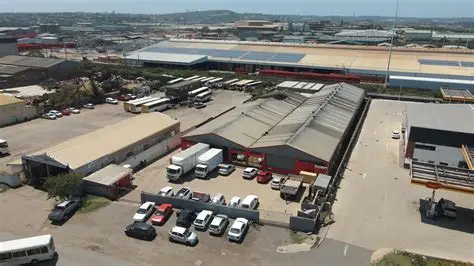
“A landmark auction in Mobeni, KwaZulu-Natal, saw an industrial property sold for R285 million, setting a new national record for industrial real estate. The deal highlights surging demand for logistics hubs and manufacturing facilities, positioning industrial property as the strongest performer in South Africa’s real estate market in 2026.”
South Africa’s industrial real estate sector has once again proven its resilience and attractiveness to investors. On August 2, 2026, a property in Mobeni, KwaZulu-Natal, was auctioned for R285 million, setting a new record for industrial property sales in the country. This transaction not only surpasses the previous high of R205 million for the Kyalami race track in 2014 but also signals a broader shift in investor sentiment toward industrial assets amid economic headwinds.
Market Context
The sale comes at a time when office and retail property markets continue to struggle with oversupply and sluggish demand. In contrast, industrial property has emerged as the cornerstone of real estate portfolios, buoyed by:
- Logistics demand linked to e-commerce growth.
- Low vacancy rates across major hubs.
- Rental escalations in Cape Town, Durban, and Johannesburg.
Why Mobeni Matters
Mobeni’s strategic location near Durban Port, one of Africa’s busiest, makes it a prime logistics hub. Industrial properties in this area are critical for:
- Warehousing and distribution.
- Manufacturing resilience.
- Supply chain efficiency.
The record-breaking sale underscores the scarcity of well-located industrial assets and the willingness of investors to pay premium prices for properties that support trade and logistics.
Economic Implications
- Job Creation: Increased investment in industrial zones can generate employment in logistics, warehousing, and manufacturing.
- Small Business Growth: Improved infrastructure benefits SMEs reliant on industrial suppliers and storage facilities.
- Rental Pressures: Rising property values may increase rental costs, challenging startups and informal traders.
Investor Confidence
Real Estate Investment Trusts (REITs) and property funds are increasingly shifting focus from struggling retail assets to industrial properties. The Mobeni sale reinforces industrial real estate as a stable income stream, outperforming volatile office and retail markets.
Risks and Challenges
Despite the optimism, risks remain:
- Global slowdown due to geopolitical tensions.
- Rising construction costs that may limit new developments.
- Sector dependency on manufacturing and retail performance.
Regional Highlights
- Cape Town: Rental growth surged 14% in 2025, now matching Durban’s levels for the first time in decades.
- Durban & Johannesburg: Continue to dominate logistics demand but face rising competition from Cape Town.
- Pretoria & Gqeberha: Moderate growth, benefiting from national logistics expansion.
Conclusion
The Mobeni auction sets a new benchmark for South Africa’s industrial real estate sector, reflecting strong investor confidence and the sector’s resilience amid economic uncertainty. As logistics, e-commerce, and manufacturing continue to drive demand, industrial property is poised to remain the most attractive asset class in the country’s real estate landscape.



