




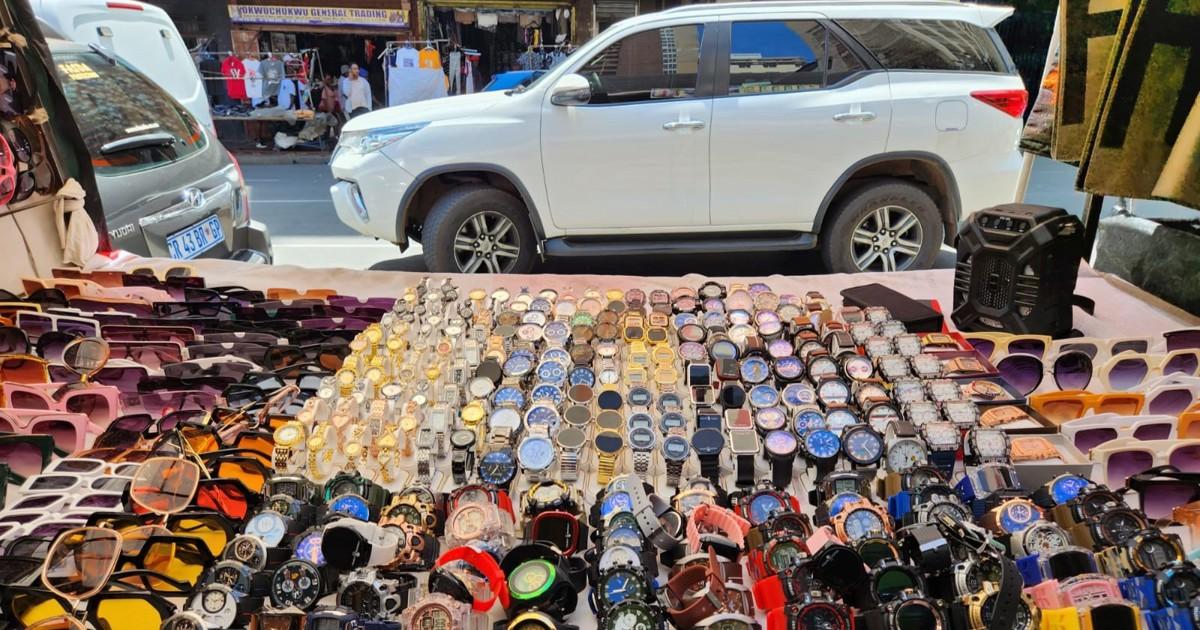
“South African authorities seized more than 62,000 suspected counterfeit products in a multidisciplinary operation in Johannesburg’s central business district, with the estimated value exceeding R160 million. The haul reportedly included branded clothing, footwear, watches, jewellery, sunglasses and cosmetics, highlighting the challenges counterfeit goods pose for legitimate fashion businesses, consumers and intellectual property owners.”
Johannesburg Counterfeit Goods Crackdown Raises Concerns for South Africa’s Fashion Accessories Industry
South Africa’s fashion industry is facing renewed attention on the risks associated with counterfeit products following a major law-enforcement operation in Johannesburg’s central business district. Authorities reportedly seized more than 62,000 suspected counterfeit items valued at over R160 million, including branded clothing, footwear, watches, jewellery, sunglasses and cosmetics. The operation, reported on 17 October, is significant for fashion retailers, accessory designers, brand owners and consumers across the country.
Although the crackdown is not exclusively about fashion accessories, the inclusion of jewellery, watches and sunglasses makes it particularly relevant to this sector. These products often depend on distinctive designs, recognisable branding, material quality and consumer confidence. When counterfeit versions enter the marketplace, they can undermine legitimate businesses while exposing customers to products whose origins and quality may be uncertain.
The operation also highlights a broader question for South Africa’s fashion economy: how can consumers enjoy accessible fashion while legitimate designers, manufacturers and retailers receive fair protection for their work?
A major operation targets suspected counterfeit trading
According to published reports, the National Counterfeit and Illicit Goods Unit conducted a multidisciplinary operation in Johannesburg’s CBD with support from the South African Police Service’s Public Order Policing Unit in Pretoria, the South African Revenue Service’s Customs Division and brand-protection representatives.
Authorities executed search-and-seizure warrants at several identified shops within a retail building. The resulting seizure reportedly exceeded 62,000 items, with an estimated value of more than R160 million. Police described the operation as part of broader national efforts to combat the illegal trade, manufacture and distribution of counterfeit and illicit goods.
The reported seizure demonstrates the scale at which suspected counterfeit merchandise can circulate through commercial environments. However, the available reporting does not establish that every retailer in the area was involved in unlawful activity, nor does the seizure alone establish the final legal outcome for individual products or traders.
That distinction matters because effective enforcement must combine evidence gathering, lawful procedures and appropriate action against confirmed infringements.
For the fashion accessories sector, the operation is a reminder that counterfeit trading is not simply a dispute between luxury brands and inexpensive alternatives. It can affect the wider network of designers, suppliers, retailers and customers who rely on legitimate commerce.
Why jewellery, watches and sunglasses matter
Fashion accessories play a distinctive role in the clothing industry. A handbag, necklace, pair of sunglasses, bracelet or watch can become the defining element of an outfit, communicating personal taste and helping consumers express their identity.
For independent South African designers, accessories can also provide an opportunity to develop recognisable products without producing an entire clothing collection. A carefully designed piece of jewellery or a distinctive bag can establish a brand’s identity and attract repeat customers.
However, this commercial opportunity depends partly on consumers recognising the value of original design and craftsmanship.
Counterfeit accessories can imitate logos, shapes, packaging or other recognisable features. Customers may consequently struggle to distinguish authentic products from imitations, particularly when merchandise is advertised online or sold through informal channels.
The risks vary by product. A counterfeit watch may have unreliable components, while imitation jewellery may contain materials that have not been adequately tested. Sunglasses raise additional concerns because their appearance does not establish whether their lenses provide appropriate ultraviolet protection.
These possibilities should not be confused with proof that every seized item presented a specific safety defect. Rather, they illustrate why the origin, construction and verifiable specifications of accessories matter to consumers.
The economic pressure on legitimate fashion businesses
Counterfeiting creates challenges for businesses that invest in design, product development, manufacturing, distribution and customer service.
Independent accessory designers may spend considerable time developing a distinctive product, sourcing suitable materials and establishing relationships with suppliers. Established brands may invest in research, quality control, retail operations and intellectual property protection.
When unauthorised copies enter the market, these businesses can face competition from sellers who may not carry equivalent development, compliance or quality-assurance costs.
Price competition is not inherently unfair. Legitimate South African businesses can compete through affordable materials, efficient production, simpler designs and direct-to-consumer sales. The central concern arises when merchandise misrepresents its identity, infringes protected rights or enters the market through unlawful channels.
For smaller labels, the consequences may include lost sales, reputational damage and increased costs associated with protecting their work. Customers who unknowingly purchase an imitation may also blame the genuine brand if the product disappoints.
The reported Johannesburg seizure therefore has implications beyond the immediate enforcement action. It highlights the importance of maintaining a marketplace where businesses can compete on price, quality, originality and service without relying on deceptive branding.
Consumers need better ways to verify products
Consumers can reduce their exposure to counterfeit merchandise by paying attention to the information available before purchasing accessories.
First, buyers should examine the seller. Established retailers, authorised stockists and clearly identifiable businesses generally provide more opportunities to verify a product’s provenance than anonymous sellers offering little contact information.
Second, customers should question unusually low prices for products represented as premium or luxury goods. A discount is not proof of counterfeiting, but a price that appears inconsistent with the product’s claimed origin warrants further investigation.
Third, buyers should inspect descriptions, packaging, labels, materials and return policies. Missing information, inconsistent branding and pressure to complete a purchase immediately can justify additional caution.
For branded products, consumers can consult the manufacturer’s official website or customer-service team to check whether the seller is authorised. Receipts and transaction records should also be retained.
When buying sunglasses, shoppers should look for reliable information about lens specifications and ultraviolet protection. With jewellery, they should request clear information about materials and any relevant metal or gemstone claims.
These measures cannot guarantee authenticity, but they can help consumers make more informed purchasing decisions.
The growing importance of local designers
South Africa has a diverse creative economy that includes jewellery makers, leatherworkers, accessory designers and independent fashion entrepreneurs. Their products can reflect regional influences, individual artistic approaches and contemporary interpretations of African design.
Protecting legitimate businesses is therefore relevant to the development of local creative industries. Designers need opportunities to establish commercial identities, reach customers and benefit from demand for their work.
At the same time, enforcement should not be interpreted as a rejection of affordable fashion or second-hand shopping. Consumers can legitimately purchase inexpensive products, pre-owned designer goods and unbranded accessories. The key distinction is whether products are honestly represented and sold in accordance with applicable law.
Second-hand fashion, in particular, can support reuse and extend the life of existing products. However, buyers of pre-owned branded accessories should still take reasonable steps to verify authenticity when it matters to their purchase.
For emerging designers, clear product descriptions, original photography, transparent pricing and consistent branding can help customers understand what they are buying and why a product offers value.
Online marketplaces add another challenge
Fashion accessories are increasingly promoted through social media, online marketplaces and direct messaging. These channels allow small businesses to reach customers without the expense of maintaining a traditional retail shop.
Nevertheless, digital commerce can make verification more difficult when sellers operate through anonymous profiles, use copied product photographs or provide limited information about their stock.
Consumers should check seller histories, independent reviews, payment protections and written return policies where available. They should also be cautious when product photographs, descriptions and branding appear inconsistent.
Online platforms, legitimate retailers and brand owners can contribute by improving reporting processes, identifying suspicious listings and providing clearer guidance on authentic merchandise.
However, responsibility should not rest on consumers alone. Effective responses require cooperation between enforcement agencies, customs officials, intellectual property owners, retailers and online marketplaces.
The Johannesburg operation demonstrates the role of coordinated enforcement, although the published reports do not establish the specific contribution or results of every participating organisation beyond their stated involvement.
Enforcement and intellectual property protection
Counterfeit trading raises questions about trademark protection, product representation, consumer rights and lawful commerce. South Africa’s intellectual property framework provides mechanisms through which rights holders can protect qualifying trademarks and other protected creations.
The appropriate legal response depends on the facts, the rights involved and the applicable legislation. An allegation or seizure should not automatically be treated as a final judicial finding against every person associated with a shop or product.
Brand owners can support enforcement by maintaining accurate product records, documenting suspected infringements and working through appropriate legal and regulatory channels.
Retailers can reduce risk by checking suppliers, retaining invoices and confirming the legitimacy of branded stock before offering it for sale.
For customers, reporting suspected counterfeits through appropriate official or platform channels may help investigators identify patterns. People should avoid making unsupported public accusations against individual sellers.
The aim is to protect consumers and legitimate commerce while respecting due process.
What the crackdown means for South African fashion
The seizure of more than 62,000 suspected counterfeit products in Johannesburg represents a substantial enforcement development, particularly because the reported haul includes accessories that are central to everyday fashion consumption.
Nevertheless, the long-term effect will depend on more than a single operation. Sustained enforcement, reliable supply chains, consumer education and accessible routes for legitimate businesses to report infringement will all matter.
Fashion companies can strengthen customer confidence by explaining how their products are made, identifying authorised sellers and communicating clear standards for materials and quality. Smaller designers can benefit from learning about available intellectual property protections and maintaining evidence of their original work.
Consumers, meanwhile, do not have to choose between personal style and responsible purchasing. Affordable accessories can be original, honestly described and suitable for everyday use. What matters is understanding the product’s origin and avoiding merchandise that relies on deception.
As South Africa’s creative economy continues to develop, a trustworthy marketplace can support both established brands and emerging designers. Protecting legitimate trade also gives customers a better basis for deciding which products deserve their money.
The Johannesburg crackdown is an important reminder that fashion accessories are not merely decorative purchases. They form part of a commercial ecosystem involving creativity, employment, product standards and consumer confidence.
Conclusion: The reported seizure highlights the need for continued action against counterfeit trading in South Africa. For the fashion accessories industry, the challenge is to protect original design and consumers without undermining legitimate affordable fashion. Stronger verification, responsible retail practices and coordinated enforcement can help create a marketplace in which originality, quality and fair competition are valued.



