




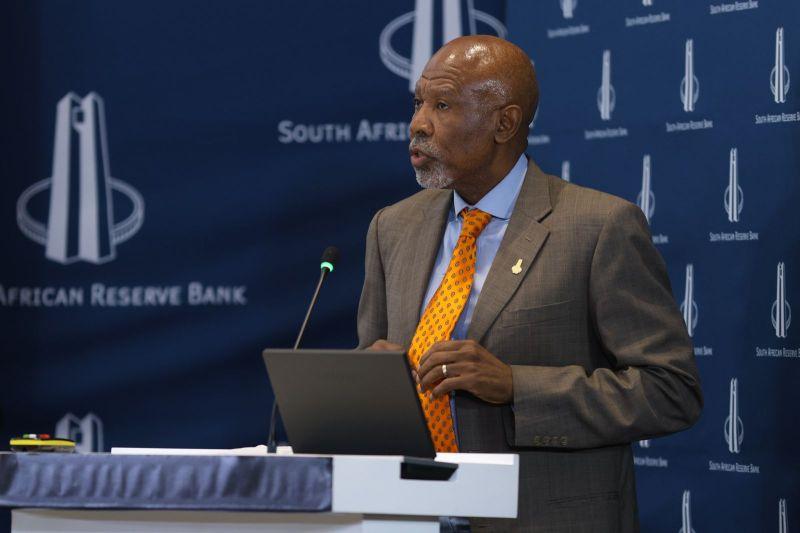
“South African Reserve Bank Governor Lesetja Kganyago has emphasised that structural economic reforms, rather than relying primarily on interest-rate adjustments, are essential to improving South Africa’s long-term economic growth. His warning comes as the country continues to experience weak economic expansion, with average annual growth of approximately 0.8% between 2015 and 2025 and the Reserve Bank projecting that growth could reach around 2% only by 2029.”
South African Reserve Bank Governor Lesetja Kganyago has emphasised that structural economic reforms, rather than relying primarily on interest-rate adjustments, are essential to improving South Africa’s long-term economic growth. His warning comes as the country continues to experience weak economic expansion, with average annual growth of approximately 0.8% between 2015 and 2025 and the Reserve Bank projecting that growth could reach around 2% only by 2029.
South Africa’s prolonged low-growth crisis puts structural reforms in the spotlight
Johannesburg, 30 October 2026 – South Africa’s economic growth challenges have once again come under scrutiny following remarks by South African Reserve Bank (SARB) Governor Lesetja Kganyago, who has warned that the country cannot depend on monetary policy alone to overcome its prolonged economic stagnation. His message places structural economic reforms, improved government efficiency, stronger infrastructure investment and a more productive business environment at the centre of the country’s efforts to achieve sustainable economic expansion.
Speaking at a dinner hosted by the Italian-South African Chamber of Trade and Industries in Johannesburg on 29 October, Kganyago explained that South Africa’s economic difficulties are deeply rooted in domestic structural weaknesses. Although interest rates influence inflation, borrowing costs and economic activity, they cannot independently resolve the institutional, infrastructure and productivity challenges preventing the economy from expanding faster.
The governor’s assessment highlights the seriousness of South Africa’s economic growth problem. According to figures presented in his address, the country’s economy recorded average annual growth of approximately 4.3% between 2000 and 2007. However, growth subsequently weakened considerably, averaging just 0.8% annually between 2015 and 2025. This prolonged slowdown has affected income growth, employment opportunities, investment confidence and the country’s ability to improve living standards.
One particularly concerning consequence has been the decline in income per person over the past decade. Even when the overall economy expands, population growth can reduce the economic benefits experienced by individual households if national output does not increase sufficiently. Consequently, weak economic growth has made it increasingly difficult for South Africa to generate enough employment opportunities, expand household incomes and reduce widespread poverty.
Kganyago’s remarks therefore raise an important economic policy question: how can South Africa move from persistently weak growth towards a stronger, more competitive and inclusive economy?
His central argument is that the answer lies in improving the productive capacity of the economy rather than expecting changes in the repo rate to solve every economic problem.
Structural weaknesses continue to restrict economic performance
South Africa possesses substantial economic advantages, including natural resources, developed financial institutions, an established industrial base, modern commercial infrastructure and access to regional and international markets. Nevertheless, these advantages have not translated into sufficiently strong economic growth.
The Reserve Bank governor identified domestic structural constraints as major contributors to the country’s disappointing economic performance. These include electricity supply problems, inefficient logistics infrastructure, administrative obstacles, regulatory uncertainty, weak productivity and institutional limitations.
For several years, electricity shortages have been among the most significant obstacles facing South African businesses. Repeated load-shedding disrupted manufacturing operations, reduced business productivity, increased operating expenses and discouraged investment in electricity-dependent industries.
Kganyago highlighted the economic consequences of the electricity crisis, noting that the Reserve Bank estimated load-shedding reduced economic growth by approximately 1.7 percentage points in 2023. The number of days affected by load-shedding reportedly increased from 35 in 2020 to approximately 300 in 2023.
These figures illustrate how infrastructure failures can damage economic performance beyond the electricity sector itself. When manufacturers cannot operate consistently, production declines. When businesses experience interruptions, delivery schedules become unreliable. When companies invest in generators and alternative electricity systems, additional resources are diverted away from productive expansion.
The consequences extend to small businesses, which frequently have fewer financial resources to absorb unexpected operating expenses. Restaurants, retailers, workshops, agricultural enterprises and manufacturing companies can experience substantial financial pressure when electricity becomes unreliable.
However, improvements in electricity availability provide grounds for cautious optimism. The governor indicated that the energy availability factor has recovered towards levels last experienced approximately a decade ago.
Although improved electricity supply is encouraging, sustainable economic progress requires continued investment in generation, transmission infrastructure, electricity distribution and a competitive energy market. Reliable energy is essential for attracting investment, expanding industrial production and improving the competitiveness of South African businesses.
Investment and productivity remain central economic challenges
Another significant concern raised by Kganyago is South Africa’s declining investment performance.
According to the governor, investment declined from approximately 20% of national output in 2008 to around 14% in 2026. This reduction highlights a persistent weakness in the country’s ability to expand productive capacity.
Investment is an essential component of long-term economic development. Businesses require capital to establish factories, purchase machinery, improve technology, expand production facilities and employ additional workers. Governments also need infrastructure investment to improve transport networks, electricity supply, water systems and public services.
When investment remains weak, economic expansion becomes more difficult because existing infrastructure and production facilities cannot support substantial increases in output.
The governor also challenged the assumption that South Africa’s economic difficulties are primarily caused by insufficient available capital. He pointed towards productivity, administrative barriers and institutional obstacles as important constraints.
This distinction is important because investment decisions depend on more than the availability of money. Investors also consider regulatory certainty, infrastructure reliability, expected returns, political stability, access to markets and the efficiency of public institutions.
For example, a company may have sufficient funding to establish a manufacturing facility but delay its investment if electricity connections, water infrastructure, licensing procedures or freight transportation cannot be secured reliably.
Similarly, international investors may choose competing markets when administrative procedures are complicated or when uncertainty increases the cost of doing business.
South Africa therefore needs an environment in which private companies can invest confidently, compete effectively and expand production without unnecessary administrative delays.
Improving productivity will also require investment in skills development, technology, education, research and innovation. A more productive workforce can produce greater economic value, improve industrial competitiveness and support higher wages over time.
Interest rates cannot independently solve unemployment
The governor’s comments also challenge expectations that monetary policy should be used as the primary instrument for generating employment and economic growth.
The South African Reserve Bank has an important responsibility to protect the value of the currency through maintaining price stability. Interest-rate decisions influence borrowing costs, consumer spending, business investment, inflation expectations and financial conditions.
However, the relationship between interest rates and economic growth is complicated.
Lower interest rates can encourage households to borrow and spend more. They can also make it cheaper for businesses to finance expansion projects. Nevertheless, cheaper borrowing does not automatically create investment opportunities or eliminate structural barriers.
A business will not necessarily expand simply because interest rates decline if it cannot obtain reliable electricity, transport its products efficiently or access the necessary skilled employees.
Similarly, lower borrowing costs cannot independently resolve unemployment caused by inadequate skills, geographical barriers, weak labour demand and limited economic opportunities.
Kganyago noted that unemployment has remained above 33%, regardless of whether interest rates have been relatively high or low. He identified skills mismatches, spatial barriers, labour-market rigidities and low potential economic growth as important contributors.
South Africa’s unemployment challenge is particularly serious because it affects household income, consumer spending, social stability and government finances.
When fewer people participate in productive employment, the economy loses potential output. Government also faces increased pressure to provide social assistance while receiving less tax revenue than a stronger employment environment could generate.
Consequently, improving employment requires a broader economic strategy that combines education, vocational training, infrastructure development, labour-market participation and private-sector expansion.
Inflation remains a major consideration for monetary policy
Although the governor emphasised structural reforms, inflation remains an important challenge for South Africa’s economic outlook.
The country has experienced renewed inflationary pressure as higher international energy costs have affected domestic fuel prices, transport expenses and production costs.
Statistics South Africa’s September 2026 figures showed annual consumer inflation increasing to 4.5%, compared with 4.4% in August.
The South African Reserve Bank has also adjusted monetary policy in response to changing inflation risks. Since March 2026, the policy rate has increased by a cumulative 50 basis points, according to the governor’s address.
The Reserve Bank adopted a 3% inflation target in November 2025, with a tolerance band of one percentage point on either side. This framework is intended to strengthen price stability and improve the credibility of monetary policy.
Kganyago explained that the central bank cannot prevent an international fuel-price shock from initially increasing domestic prices. However, it can respond to the risk that temporary increases become embedded in broader inflation expectations, wage negotiations and business pricing decisions.
This distinction is important for households and businesses.
Higher inflation reduces purchasing power, particularly among lower-income households that spend a large proportion of their income on food, transport and essential services.
Businesses also face higher production expenses, while workers may demand increased wages to compensate for rising living costs.
If inflation becomes persistent, the Reserve Bank may need to maintain restrictive monetary conditions for longer, potentially increasing the cost of borrowing.
The governor indicated that the bank’s economic models suggest current monetary policy settings should be sufficient to bring inflation back towards the 3% target as the temporary fuel shock fades.
However, monetary authorities will continue monitoring inflation developments before making further decisions.
The next scheduled Monetary Policy Committee interest-rate announcement is 19 November 2026.
Continued reforms offer opportunities for economic recovery
Despite the difficult economic outlook, Kganyago identified several developments that could support stronger growth over the medium term.
One important initiative is Operation Vulindlela, the government’s reform programme involving the Presidency and National Treasury.
The programme focuses on addressing structural constraints in key economic sectors, including electricity, freight logistics, water and municipal services.
These sectors are essential because they provide the infrastructure required for businesses to operate and households to access basic services.
In electricity, reforms are intended to improve competition, expand generation capacity and strengthen transmission infrastructure.
In logistics, improvements to railways, ports and freight transportation could reduce delays, lower operating costs and improve South Africa’s export competitiveness.
For the mining industry, more reliable freight infrastructure could support mineral exports and increase the sector’s contribution to national output.
Agricultural producers could also benefit from more efficient transportation systems, particularly when moving fresh produce and other time-sensitive products to domestic and international markets.
Water infrastructure is another important priority. Businesses, farms and communities require reliable water supplies to support production, public health and economic activity.
Municipal service improvements are equally important because local governments play a significant role in maintaining roads, water networks, electricity distribution and other essential infrastructure.
The National Treasury’s 2026 Medium-Term Budget Policy Statement also places emphasis on macroeconomic stability, structural reform and stronger state capacity.
These priorities demonstrate that economic recovery requires coordination between fiscal policy, monetary policy and practical improvements in public administration.
Kganyago also highlighted progress in stabilising public finances and improvements in South Africa’s borrowing environment. Lower long-term borrowing costs can create opportunities for government and private-sector investment, although the benefits depend on continued economic and fiscal credibility.
The government must therefore ensure that reform announcements translate into measurable improvements in infrastructure delivery, productivity and service provision.
Rand Desk+2
South Africa’s revised economic position attracts attention
An important development providing additional context to the growth debate is Statistics South Africa’s recent revision of national economic measurements.
On 29 October 2026, Statistics South Africa announced that a benchmarking and rebasing exercise had increased the estimated size of South Africa’s economy by approximately 5%.
According to Reuters, nominal gross domestic product for 2025 was revised from approximately R7.64 trillion to R8.04 trillion.
The exercise changed the GDP calculation’s base year from 2015 to 2022 and incorporated previously under-recorded economic activities, including self-generated electricity, certain mining and manufacturing activities, and e-hailing services.
Mining, finance and trade recorded some of the largest increases in measured output.
The revised figures strengthen South Africa’s position as the largest economy in sub-Saharan Africa, ahead of Nigeria in nominal dollar terms.
However, the revision should not be confused with an immediate increase in actual economic production. Rebasing improves the measurement of economic activity; it does not mean the country suddenly produced 5% more goods and services.
Nevertheless, the revised figures have important implications for economic analysis. For example, a larger measured GDP can improve certain debt-to-GDP calculations and provide policymakers with a more accurate understanding of the economy’s structure.
It also highlights the importance of recognising economic activities that were previously inadequately captured in national statistics.
The development reinforces the need for South Africa to build on its existing economic strengths while addressing the structural weaknesses preventing faster growth.
Reuters
The role of government in creating a competitive economy
Kganyago’s assessment places considerable responsibility on government institutions to improve the country’s economic environment.
Successful structural reform requires more than policy announcements. It requires effective implementation, accountability, institutional coordination and measurable outcomes.
For example, improving freight transportation requires cooperation between government departments, infrastructure operators, private logistics companies and industrial businesses.
Similarly, electricity-sector reform requires clear regulations, investment certainty and effective coordination between electricity producers, transmission operators and distributors.
Government must also improve the efficiency of regulatory processes. Excessive administrative requirements can discourage entrepreneurship, delay infrastructure projects and increase the cost of establishing businesses.
Small and medium-sized enterprises are particularly important in this regard. They contribute to employment creation, innovation, local economic development and competition.
Making it easier for entrepreneurs to register businesses, obtain licences, access finance and participate in government procurement could strengthen economic activity.
Furthermore, improving education and technical training would help address the skills shortages affecting several industries.
South Africa requires workers with relevant technical, digital, engineering, financial, agricultural and manufacturing skills to support its long-term economic transformation.
A stronger relationship between educational institutions and employers could help ensure that graduates acquire qualifications aligned with actual labour-market requirements.
What the economic outlook means for households and businesses
The Reserve Bank’s warning has significant implications for ordinary South Africans.
For households, weak economic growth means employment opportunities may remain limited, while inflation and borrowing costs continue influencing disposable income.
Consumers with mortgages, vehicle finance and other loans must consider that monetary policy decisions will continue responding to inflation developments rather than simply attempting to stimulate economic activity.
For businesses, the message is that improvements in the broader operating environment will be essential for long-term growth.
Companies operating in manufacturing, agriculture, transport, mining, retail and construction will benefit from reliable infrastructure, efficient logistics and predictable regulations.
Investors will also be watching whether government reforms produce tangible improvements.
South Africa’s ability to attract domestic and international investment will depend partly on its capacity to demonstrate that infrastructure challenges, administrative obstacles and institutional weaknesses are being addressed.
The country’s financial markets may respond positively to improved fiscal discipline and lower inflation expectations. However, stronger financial market performance does not automatically translate into increased employment or improved living standards.
Ultimately, economic growth must become visible through higher production, stronger household incomes, expanding businesses and more employment opportunities.
Outlook: Economic reforms will determine South Africa’s growth trajectory
The Reserve Bank currently projects that South Africa’s economic growth could reach approximately 2% by 2029. Although this would represent an improvement on the country’s recent performance, it remains below the stronger growth rates needed to address unemployment and widespread economic inequality.
Kganyago believes faster structural reform could create opportunities for stronger medium-term growth, with scenarios developed by National Treasury and the Bureau for Economic Research suggesting additional potential.
The challenge will be ensuring that these opportunities become reality.
South Africa must strengthen electricity infrastructure, modernise transportation networks, improve municipal services, support entrepreneurship and increase investment in productive industries.
Equally important, government must maintain macroeconomic stability, strengthen public institutions and create an environment in which businesses can operate confidently.
The governor’s central message is therefore a significant reminder that sustainable economic development cannot be achieved through interest-rate adjustments alone.
Monetary policy can protect price stability and support confidence, but long-term economic expansion requires productive investment, efficient infrastructure, institutional effectiveness and structural transformation.
As South Africa approaches the final months of 2026, attention will increasingly focus on whether government reforms can deliver meaningful improvements in the real economy.
For millions of unemployed people, struggling households and businesses seeking opportunities to expand, the ultimate measure of success will not simply be better economic forecasts or improved financial market indicators.
It will be a stronger economy capable of creating jobs, increasing incomes, supporting investment and improving living standards.
The coming years will therefore be important in determining whether South Africa can finally move beyond its prolonged period of weak economic growth.



