




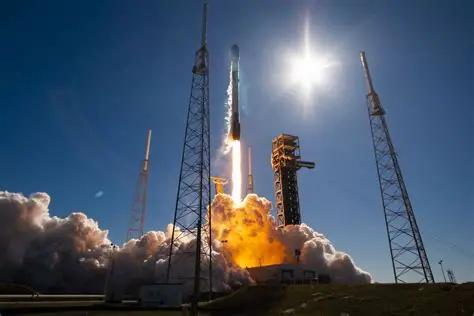
“A pioneering South African project will send rooibos seeds from the Cederberg to the International Space Station in October, exposing them to microgravity and space radiation before returning them for scientific study. The initiative, led by the South African Rooibos Council, MaxIQ Space, and SANSA, integrates agriculture, space research, and STEM education for learners nationwide.”
South Africa is preparing for a groundbreaking scientific mission that bridges agriculture and space exploration. The Rooibos in Space initiative, announced in Cape Town on 16 July 2026, will send rooibos seeds from the Cederberg region to the International Space Station (ISS). This mission represents the first time seeds from an indigenous South African plant species—and indeed the first seeds from the African continent—will travel to space.
Background: Rooibos and Heritage
Rooibos, meaning “red bush” in Afrikaans, is a native plant that has become a global symbol of South African agriculture. Known for its naturally caffeine-free, antioxidant-rich tea, rooibos is cultivated primarily in the Cederberg region, about 250 km north of Cape Town. Its cultural and economic significance makes it an ideal candidate for a mission that combines heritage with cutting-edge science.
The Mission
- Launch Date: October 2026 (exact date pending operational schedules).
- Rocket: SpaceX Falcon 9.
- Duration in Orbit: Approximately six weeks aboard the ISS.
- Return: Seeds expected back on Earth by December 2026 or January 2027.
The seeds will be housed in a NanoLab container, exposed to microgravity and space radiation. Upon return, they will be compared with control seeds to study germination, growth, resilience, and yield.
Scientific Goals
- Plant Biology: Understanding how microgravity affects seed structure and viability.
- Space Research: Evaluating radiation effects on plant DNA.
- Education: Engaging learners in real-world experiments.
This initiative is designed not only to advance scientific knowledge but also to inspire the next generation of South African researchers.
Educational Impact
Seven schools in the Cederberg region will lead the comparative experiments, planting returned seeds alongside controls. Students across South Africa will also participate by designing the mission’s official space patch. This broad engagement reflects SANSA’s commitment to scientific literacy and skills development.
Partnerships
- South African Rooibos Council (SARC): Driving agricultural involvement.
- MaxIQ Space: Providing technical expertise and educational integration.
- SANSA (South African National Space Agency): Offering institutional support and scientific oversight.
Together, these organizations are ensuring that the mission is both scientifically rigorous and socially inclusive.
Broader Context
South Africa has been steadily expanding its role in global space science. From the MeerKAT telescope’s cosmic discoveries to investments in the Square Kilometre Array (SKA), the country is positioning itself as a hub for astronomy and space research. The rooibos mission adds a unique agricultural dimension to this trajectory, showcasing how space exploration can intersect with everyday life.
Potential Outcomes
- Scientific: Insights into plant resilience under extreme conditions.
- Agricultural: Possible innovations in crop development and sustainability.
- Educational: Strengthened STEM pathways for South African learners.
- Cultural: Elevating rooibos as a symbol of national pride and scientific progress.
Conclusion
The Rooibos in Space initiative is more than a scientific experiment—it is a statement of South Africa’s ambition to merge tradition with innovation. By sending rooibos seeds to orbit, the country is not only contributing to global space science but also inspiring its youth to imagine futures where agriculture, technology, and exploration converge.



