




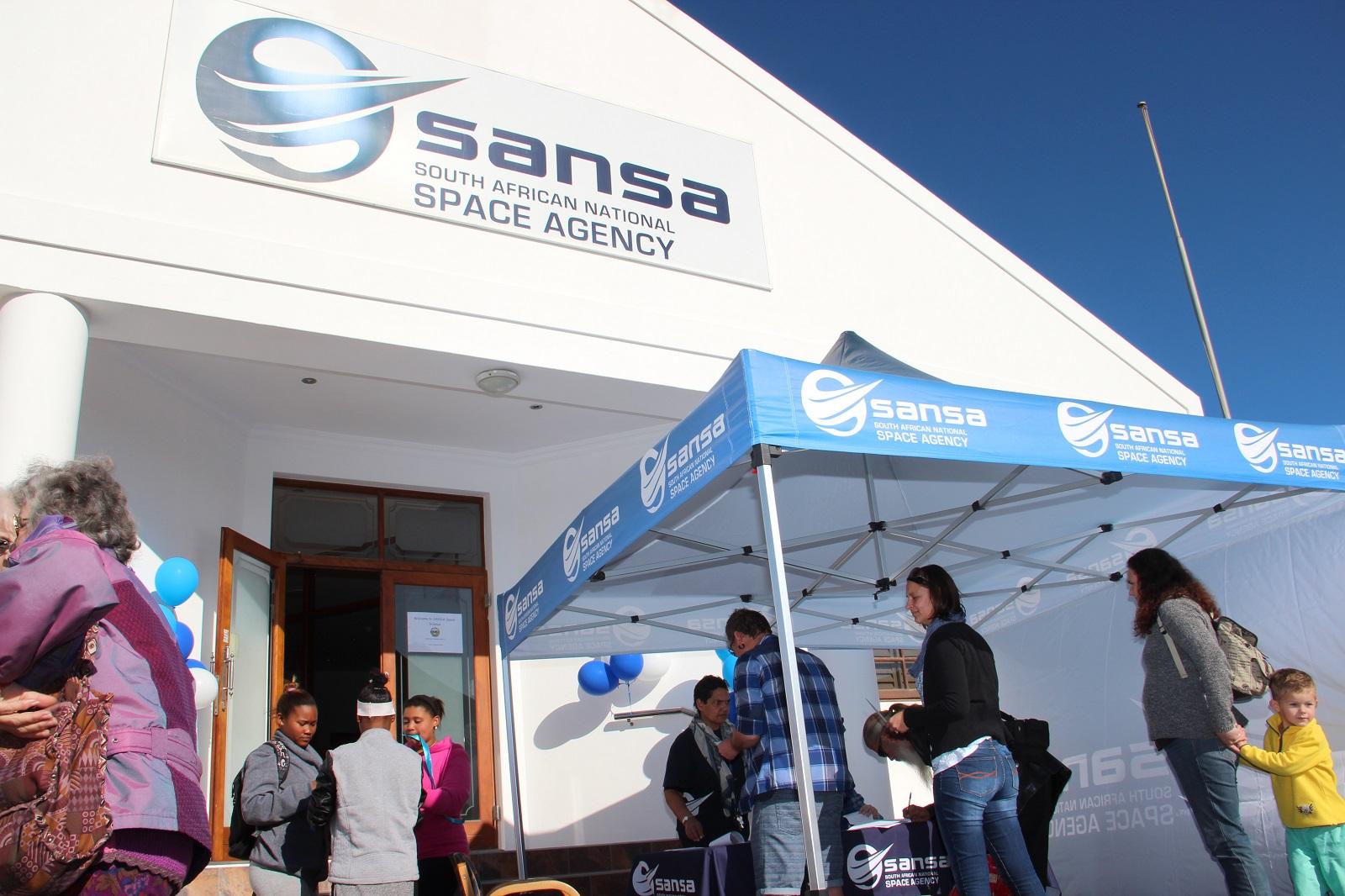
“The South African National Space Agency is hosting its annual Space Science Open Day at its Hermanus facility on 3 October 2026, allowing the public to interact with researchers, scientists and engineers while learning about space science and its applications. The event comes as South Africa continues developing capabilities in space weather, satellite applications, Earth observation, scientific research and broader space-sector skills.”
South Africa’s space sector is putting science and public engagement at the centre of the country’s space ambitions on Saturday, 3 October 2026, as the South African National Space Agency (SANSA) hosts its annual Space Science Open Day in Hermanus, Western Cape.
The event at SANSA’s Space Science Facility is designed to bring members of the public closer to the country’s space-science activities. According to SANSA, the programme allows adults and children to engage with researchers, scientists and engineers and explore how space science and technology contribute to everyday life. The open day runs from 09:00 to 14:00 and admission is free, although registration is required.
The Hermanus event provides a useful window into an aspect of the South African space programme that extends well beyond rocket launches and astronauts. Space science is also concerned with monitoring the Sun, understanding conditions in the space environment and determining how those conditions can affect technologies and infrastructure on Earth.
SANSA’s Space Science facility is particularly significant because the agency hosts Africa’s only Space Weather Regional Warning Centre operating as part of the International Space Environment Service. The centre monitors solar activity and provides information, warnings and forecasts that are relevant to communication, navigation, defence, aeronautics and other sectors.
Bringing Space Science Closer to the Public
The open day includes interactive exhibitions, hands-on science activities, children’s science shows, public lectures, facility tours and demonstrations involving SANSA researchers and external exhibitors. The programme also includes displays from stakeholders and opportunities for visitors to learn about space weather and space technology.
This approach places science engagement alongside research and technical development. For young people in particular, direct contact with scientists and engineers can provide a practical introduction to careers involving astronomy, engineering, satellite technology, data analysis, physics and other science, technology, engineering and mathematics fields.
SANSA’s broader science-engagement programme reflects this emphasis on developing interest in space among younger generations. Its recent activities have included programmes involving young innovators and Mars-rover technology. The agency reported in September that young innovators tested self-built Mars rover prototypes at its Hartebeesthoek facility.
The activities demonstrate that South Africa’s space ecosystem is not limited to established institutions. Educational programmes, research organisations, technology developers and young innovators all form part of the wider environment required to develop future space capabilities.
Why Space Weather Matters
One of the most important responsibilities highlighted by the Hermanus facility is space-weather monitoring.
Space weather describes changes in the space environment caused largely by activity from the Sun. Solar eruptions and changes in the solar wind can influence Earth’s magnetic environment. Depending on their intensity, such events can interfere with radio communications, satellite operations, navigation systems and other technological infrastructure.
SANSA’s latest space-weather information provides an example of the continuous monitoring involved in this work. On 2 October, its bulletin reported very low solar activity, background-level X-ray flux and relatively quiet geomagnetic conditions, with the planetary Kp index reported at levels of 0–1.
The significance of such monitoring is that space-weather services are intended to provide information before or during conditions that could affect users of vulnerable technologies. Aviation, telecommunications, navigation and other sectors can use space-weather information as part of operational planning.
This makes space science a practical national service rather than an activity concerned only with distant astronomical objects.
South Africa’s Broader Space Ambitions
The Hermanus open day also takes place against the backdrop of broader efforts to strengthen South Africa’s space sector.
South Africa has developed capabilities in Earth observation, space science and satellite-related applications through institutions including SANSA and research partners. SANSA’s current portfolio includes space science, Earth observation, space exploration projects, research and data products.
Earth observation has become particularly relevant to South Africa because satellite information can support environmental monitoring, disaster response, agriculture, water management and infrastructure planning.
SANSA has recently used satellite Earth-observation intelligence to analyse the impact of the Hernic Ferrochrome tailings dam collapse near Brits, demonstrating how space-derived information can contribute to understanding events on the ground.
The agency has also been developing satellite-based tools aimed at helping municipalities, regulators and water managers respond to environmental and climate-related challenges. Recent reporting on SANSA’s work has highlighted applications involving air quality, flooding and water resources.
These applications illustrate an increasingly important connection between space technology and everyday public services.
A New Regulatory Environment
South Africa’s space ambitions are also connected to changes in the regulatory environment.
At its September 2026 meeting, Cabinet approved publication of the proposed South African Space Industry Regulatory Bill, 2026 for public comment. According to the government, the proposed legislation would replace the Space Affairs Act of 1993 with a modern regulatory framework for the country’s space industry.
The government says the proposed framework would address emerging commercial space activities, oversight, liability and insurance requirements, international obligations, investment, innovation, research and skills development.
The proposed legislation therefore forms part of a wider conversation about how South Africa regulates a space sector that has changed substantially since the original legislation was introduced.
For researchers, technology companies and educational institutions, the development of a modern regulatory framework could affect how future commercial and scientific activities are organised. However, the Bill’s ultimate effects will depend on the legislative process, its final provisions and implementation.
Connecting South Africa to International Space Exploration
South Africa’s role in space also extends to international exploration programmes.
NASA and SANSA have previously cooperated on lunar exploration through the Lunar Exploration Ground Sites programme. A communications site at Matjiesfontein in the Western Cape was developed as part of efforts supporting NASA’s Artemis programme and future lunar exploration. NASA and South African authorities formalised cooperation around the project in 2022.
Matjiesfontein’s involvement illustrates how South Africa can contribute to international space missions without necessarily operating its own crewed spacecraft.
Ground infrastructure, communications, scientific observations, data processing and specialist expertise are all important elements of modern space exploration. Countries with appropriate geographic locations and technical capabilities can therefore participate in major international missions through specialised infrastructure and partnerships.
Space and South African Agriculture
Another South African space initiative demonstrates how space research is increasingly being connected with terrestrial industries.
The Rooibos in Space programme is preparing to send South African rooibos seeds to the International Space Station during October. The project involves exposing seeds to the space environment before returning them to Earth for comparison with control seeds.
The project links space science with agricultural research and STEM education. Learners from schools in the Cederberg region are expected to participate in activities associated with the experiment, while the programme provides an opportunity to study how plants respond to conditions associated with spaceflight.
The initiative is notable because rooibos is indigenous to South Africa’s Cederberg region. The experiment consequently connects a globally recognised South African agricultural product with an international space-research environment.
The Importance of Skills
Behind every satellite, space-weather forecast, Earth-observation product or scientific experiment is a workforce with specialised knowledge.
For South Africa, developing this workforce is an important part of maintaining and expanding space capabilities. Public events such as the SANSA Space Science Open Day can help expose students and families to scientific careers at an early stage.
SANSA’s recent activities involving Mars-rover testing, for example, demonstrate how engineering challenges can be used to introduce young people to robotics, programming, mechanical design and planetary exploration concepts.
Such programmes do not immediately produce a new generation of professional space scientists, but they can provide practical exposure to the types of problems encountered in the sector.
Looking Ahead
The Hermanus open day therefore represents more than a single public event. It brings together several strands of South Africa’s developing space ecosystem: scientific research, space-weather monitoring, education, public engagement, technology development and international cooperation.
At the same time, the country’s space programme is evolving within a changing policy environment. The proposed Space Industry Regulatory Bill points towards a more modern regulatory framework, while projects involving Earth observation, lunar communications, agricultural research and STEM education demonstrate the range of activities connected to space.
For visitors attending the Hermanus event, the most immediate experience will be practical and educational: exhibitions, demonstrations, lectures, tours and interaction with scientists and engineers. For the wider country, however, the event provides an opportunity to examine how space science is increasingly connected to communications, navigation, environmental monitoring, disaster response, education and economic activity.
South Africa’s space story is consequently not confined to distant planets or spectacular launches. It includes the monitoring of the Sun from Hermanus, the use of satellites to understand events on the ground, partnerships supporting lunar exploration, experiments involving indigenous crops and programmes designed to prepare young people for technical careers.
As the country considers a new regulatory framework for its space industry and continues building research and technical capacity, public understanding will remain an important part of that development. The SANSA Space Science Open Day on 3 October provides a visible example of that effort, opening the doors of one of the country’s important space-science facilities and allowing the public to see how space research connects with life on Earth.



