




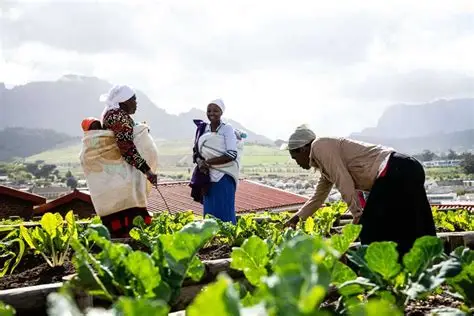
“SAS, in collaboration with dataDecisions.ai and The Dream, has launched a data‑driven program to help South African micro‑farmers optimize crop decisions and strengthen food security. By analyzing seasonal growth cycles and market pricing, the initiative enables farmers to maximize yields and income under resource‑constrained conditions.”
South Africa’s micro‑farmers, often overlooked in mainstream agricultural policy, are receiving a transformative boost through SAS’s “Data for Good” initiative. This program leverages advanced analytics to empower small‑scale farmers in the Cradle of Humankind region, where farming is typically informal, resource‑constrained, and vital for household survival.
The Microeconomic Context
Micro‑farming plays a crucial role in South Africa’s local food systems. Unlike commercial agriculture, these small plots directly support household nutrition and community resilience. However, micro‑farmers face persistent challenges:
Unstable yields due to unpredictable weather and limited irrigation.
Restricted market access, leaving farmers vulnerable to middlemen and fluctuating prices.
Lack of technology and financing, which prevents scaling production.
These challenges highlight the microeconomic importance of interventions that reduce inefficiencies and improve decision‑making at the household level.
SAS’s Data‑Driven Approach
SAS applied analytics to seasonal crop data, growth cycles, and market pricing. The system helps farmers answer critical questions:
Which crops are most profitable under current conditions?
When should planting occur to maximize yield?
How can limited resources like water and labor be allocated efficiently?
By reducing guesswork, farmers can make informed decisions without expensive sensors or digital infrastructure.
Key Findings
Resilient crops identified: Certain vegetables and grains showed higher profitability and stability across four seasons.
Improved resource allocation: Farmers learned to prioritize water and labor for crops with higher market returns.
Market integration: Data insights created pathways for farmers to participate more predictably in local markets.
Economic Implications
At the microeconomic level, this initiative strengthens household income and food security. It reduces vulnerability to shocks and enhances farmers’ bargaining power. At the macro level, it contributes to stabilizing local food systems and reducing reliance on imports.
Voices from the Field
Hadley Christoffels, founder of dataDecisions.ai, emphasized: “Food security will not be solved by commercial agriculture alone. Micro‑farmers must be treated as essential contributors to the formal economy, not as an afterthought.”
Broader Impact
Social dignity: Farmers gain recognition as contributors to the economy.
Community resilience: Local food availability reduces hunger risks.
Economic opportunity: Predictable income allows reinvestment in farming tools and education.
Challenges Ahead
Despite the success, challenges remain:
Scaling the initiative beyond pilot regions.
Ensuring sustained access to data and training.
Integrating micro‑farmers into broader supply chains.
Conclusion
SAS’s initiative represents a landmark in South Africa’s microeconomic development. By empowering micro‑farmers with data, the program strengthens food security, enhances household income, and integrates informal farming into the broader economy. This story underscores the importance of microeconomic interventions in shaping resilient communities and sustainable growth.



