




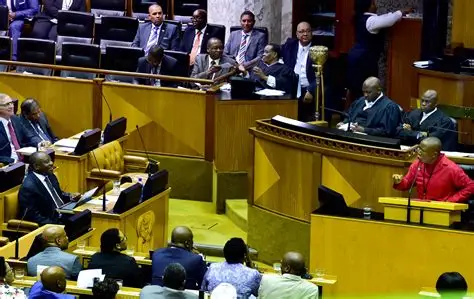
“South Africa has officially enacted the Constitution Eighteenth Amendment Act, a landmark reform that expands the High Court’s jurisdiction and enhances judicial oversight of Parliament and the executive. The move is expected to improve accountability, streamline governance, and bolster investor confidence ahead of the 2026 Local Government Elections.”
South Africa has entered a new constitutional era with the enactment of the Constitution Eighteenth Amendment Act, a sweeping reform that strengthens judicial oversight and expands the High Court’s jurisdiction. Published in the Government Gazette and now officially in force, the amendment represents one of the most significant constitutional changes since the democratic transition of 1994. It comes at a critical juncture, as the Government of National Unity (GNU) faces mounting pressure to demonstrate accountability and stability ahead of the 2026 Local Government Elections.
Background and Context
South Africa’s constitutional democracy is built on the principle of separation of powers. Over the past three decades, disputes over land reform, employment equity, and healthcare regulation have exposed the limits of parliamentary and executive authority. The judiciary has increasingly become the arbiter of these conflicts, often through Constitutional Court interventions. Previous amendments focused on fiscal discipline and administrative reforms, but this latest change directly addresses judicial independence and constitutional enforcement.
The GNU, formed after the 2024 elections, has struggled with ideological divisions on key policy issues. The enactment of the Eighteenth Amendment is therefore both a legal and political milestone, signaling a renewed commitment to democratic governance.
Key Provisions
- Expanded High Court Jurisdiction: The High Court now has broader authority to adjudicate constitutional matters, reducing reliance on the Constitutional Court for preliminary disputes.
- Strengthened Oversight Mechanisms: Parliament and executive actions are subject to stricter judicial review, reinforcing accountability.
- Erratum Notice: Corrections in the Gazette ensure clarity in the application of the amendment, minimizing ambiguity in interpretation.
These provisions collectively aim to enhance transparency, accountability, and efficiency within South Africa’s governance structures.
Political Implications
The amendment is expected to reshape the balance of power between the judiciary, Parliament, and the executive. For opposition parties, it provides a stronger legal framework to challenge government decisions. For the ruling coalition, it is a demonstration of commitment to accountability, potentially boosting investor confidence and public trust.
Economic and Investor Confidence
South Africa’s economy has faced challenges including energy insecurity, inflationary pressures, and sluggish growth. By strengthening judicial oversight, the amendment reassures investors that governance will be subject to stricter checks and balances. This could improve perceptions of political risk and encourage foreign investment, particularly in sectors such as energy, mining, and infrastructure.
Public Reaction
Civil society organizations have welcomed the amendment, noting its potential to curb executive overreach. Legal experts argue that expanded High Court jurisdiction will reduce bottlenecks at the Constitutional Court, improving efficiency in constitutional adjudication. However, some critics caution that increased judicial involvement in political matters could lead to tensions between branches of government.
Link to Upcoming Elections
With the 2026 Local Government Elections approaching, the amendment is seen as a strategic move to reinforce democratic governance. It provides opposition parties with stronger legal tools while signaling to voters that the GNU is serious about accountability. This could influence electoral dynamics, particularly in municipalities where governance failures have eroded public trust.
Conclusion
The Constitution Eighteenth Amendment Act marks a turning point in South Africa’s constitutional journey. By expanding judicial oversight and strengthening accountability, it addresses long-standing governance challenges while setting the stage for more transparent and efficient democratic processes. As the country prepares for the 2026 elections, the amendment stands as both a legal safeguard and a political statement of intent.



