




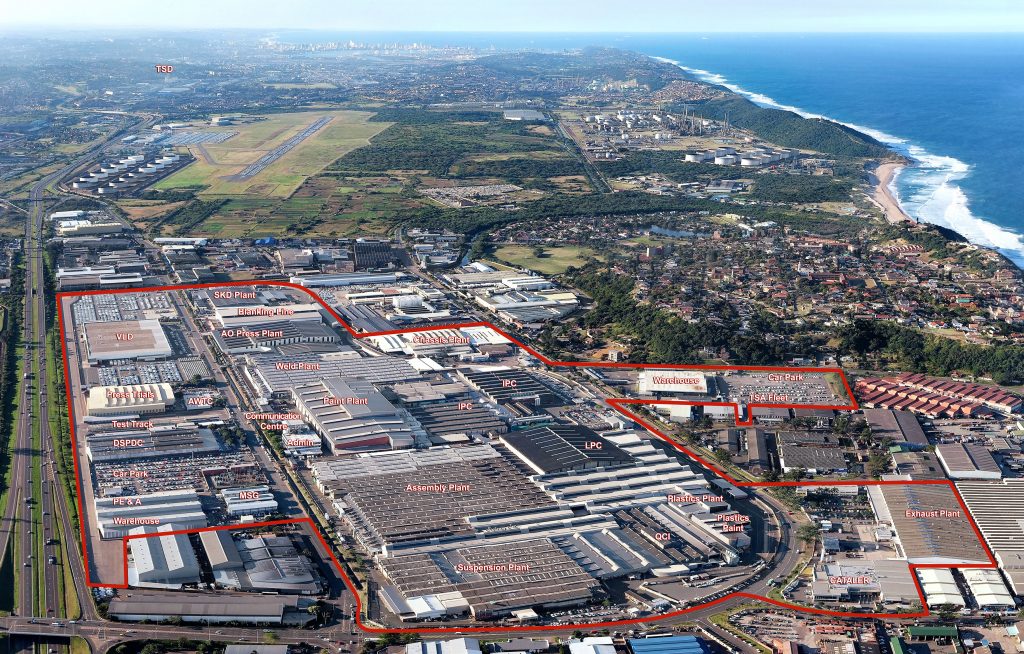
“South Africa is launching a R750 billion investment drive into Special Economic Zones (SEZs) to reverse decades of industrial decline and strengthen its manufacturing base. The initiative coincides with Toyota’s record R10.4 billion expansion in Durban, signaling renewed confidence in the country’s industrial real estate sector.”
South Africa’s industrial real estate sector is entering a transformative phase. At the SEZ Investment Conference in Durban on 17 July 2026, the Department of Trade, Industry and Competition (DTIC) unveiled plans to attract R750 billion ($46 billion) in investment into Special Economic Zones (SEZs) by April 2027. This ambitious initiative seeks to revive manufacturing, boost exports, and create sustainable jobs, marking a decisive step in reversing decades of deindustrialization.
Background: Decline of Manufacturing
- Manufacturing’s share of GDP has fallen from 24% in 1994 to just 11% today.
- Chronic power shortages, port inefficiencies, and global competitiveness challenges have eroded South Africa’s industrial base.
- The decline has weakened the export sector, reduced job creation, and heightened reliance on commodity cycles.
The SEZ Investment Plan
- Target: R750 billion in commitments by April 2027.
- Funding sources: Infrastructure investments, development finance institutions, and private lenders.
- Investor appetite: Earlier this year, more than R890 billion was pledged at the national investment forum, much of it earmarked for industrial sites.
- Objectives:
- Expand manufacturing capacity in automotive, textiles, and agro-processing.
- Strengthen export competitiveness through improved logistics.
- Create thousands of sustainable jobs.
- Diversify South Africa’s trade portfolio beyond raw commodities.
Toyota’s Landmark Investment
A tangible example of this industrial push is Toyota’s R10.4 billion investment in its Prospecton plant in Durban—the largest in Toyota South Africa’s history.
- Enabled rollout of the ninth-generation Hilux bakkie, a flagship product for domestic and export markets.
- Expected to create thousands of direct and indirect jobs.
- Strengthens South Africa’s automotive export base.
- Demonstrates coordinated efforts between government, labour, and industry.
SEZs as Engines of Growth
- SEZs currently host 224 companies, with cumulative investment of R31.7 billion and more than 28,000 direct jobs created.
- They offer tax incentives, infrastructure support, and regulatory flexibility to attract investors.
- Acting Deputy Director General of Trade, Maoto Molefane, emphasized SEZs as “the cornerstone of South Africa’s manufacturing revival.”
Challenges Ahead
- Energy crisis: Persistent load-shedding threatens industrial productivity.
- Logistics bottlenecks: Port inefficiencies undermine export competitiveness.
- Global competition: South Africa must offer competitive tax incentives and infrastructure to attract investors.
- Labour relations: Coordinated efforts between unions, government, and industry are critical to sustaining momentum.
Strategic Implications for Real Estate
- Industrial real estate demand is expected to surge as SEZs expand.
- Developers will benefit from government-backed infrastructure projects.
- Investors are likely to prioritize logistics hubs, automotive clusters, and agro-processing facilities.
- The initiative could reposition South Africa as a continental leader in industrial real estate development.
Conclusion
South Africa’s R750 billion SEZ investment plan represents a turning point for its industrial real estate sector. By combining government incentives, private capital, and flagship projects like Toyota’s Durban expansion, the country aims to reclaim its position as a manufacturing powerhouse. Success will depend on overcoming energy and logistics challenges, but the momentum generated at the Durban conference signals a renewed confidence in South Africa’s industrial future.



