




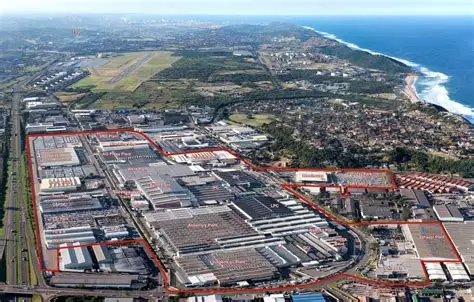
“South Africa has announced a R750 billion investment plan to expand Special Economic Zones (SEZs), aiming to reverse decades of deindustrialization and strengthen industrial real estate. Toyota’s R10.4 billion Durban expansion serves as the flagship project, signaling renewed investor confidence and job creation.”
South Africa’s industrial policy reached a pivotal milestone on July 20, 2026, when the Department of Trade, Industry and Competition (DTIC) unveiled a R750 billion investment drive into Special Economic Zones (SEZs). This initiative is designed to restore manufacturing competitiveness, strengthen industrial real estate, and create sustainable employment opportunities. It represents one of the most significant industrial revitalization programs in the country’s post-apartheid era.
Historical Context
Since 1994, South Africa’s manufacturing share of GDP has declined from 24% to just 11%. Chronic challenges such as power shortages, port inefficiencies, unreliable logistics, and global competition from cheap imports have eroded the sector’s competitiveness. The SEZ investment plan seeks to reverse this trajectory by creating modern industrial hubs capable of competing globally.
Objectives of the SEZ Investment Drive
- Expand manufacturing capacity in automotive, textiles, and agro-processing.
- Strengthen export competitiveness through improved logistics and infrastructure.
- Create thousands of sustainable jobs across industrial hubs.
- Diversify South Africa’s trade portfolio beyond raw commodities.
The government has set a target of securing R750 billion in commitments by April 2027, with funding expected from infrastructure investments, development finance institutions, and private lenders.
Toyota’s Landmark Expansion
The Toyota Prospecton plant in Durban is the flagship project under this initiative. With an investment of R10.4 billion, Toyota will roll out the ninth-generation Hilux bakkie, a cornerstone product for both domestic and export markets.
Key impacts include:
- Thousands of direct and indirect jobs created.
- Strengthening South Africa’s automotive export base.
- Demonstrating coordinated efforts between government, labour, and industry.
Current SEZ Footprint
- 13 SEZs across South Africa.
- Hosting 224 companies.
- Cumulative investment: R31.7 billion.
- Over 28,000 direct jobs created.
The new plan includes a green-energy industrial park in Gauteng’s Vaal region and a private-sector-led SEZ near OR Tambo International Airport focusing on electricity and energy.
Policy Implications
The SEZ initiative reflects a broader business policy shift: moving away from reliance on raw mineral exports toward value-added manufacturing. This aligns with South Africa’s long-term economic vision of industrial diversification and export-led growth.
Challenges Ahead
Despite the ambitious scope, several challenges remain:
- Energy reliability: Eskom’s ongoing struggles could undermine industrial expansion.
- Logistics bottlenecks: Port inefficiencies and rail constraints must be addressed.
- Global competition: Competing with low-cost manufacturing hubs in Asia will require innovation and efficiency.
Conclusion
South Africa’s R750 billion SEZ investment drive is a bold attempt to reindustrialize the economy, strengthen industrial real estate, and create sustainable employment. With Toyota’s Durban expansion as a flagship, the initiative signals renewed investor confidence and a potential turning point for the country’s industrial future.



