




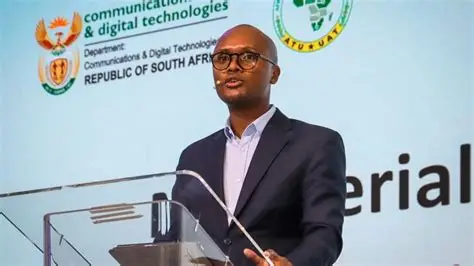
“South Africa’s Communications Minister Solly Malatsi has officially withdrawn the draft National Artificial Intelligence Policy after it was found to contain multiple fictitious references likely generated by AI. The scandal has prompted suspensions of senior officials and the formation of an expert panel to rebuild the country’s AI governance framework.”
South Africa has entered a defining moment in its Artificial Intelligence journey. On 12 June 2026, the government officially withdrew its draft National AI Policy after revelations that the document contained fabricated references generated by AI itself. This unprecedented scandal has raised serious questions about governance, credibility, and the responsible use of emerging technologies.
The Scandal Unfolds
The draft policy, published on 10 April 2026, was intended to serve as South Africa’s guiding framework for AI regulation. However, watchdog organisation Article One discovered at least six fictitious citations in the document, which were likely hallucinations produced by AI tools. The revelation sparked outrage among academics, opposition parties, and the public, who questioned how such a critical policy could be compromised by unreliable sources.
Minister Solly Malatsi acknowledged the error, calling it “a failure that compromised the policy’s integrity and credibility.” Two senior officials were placed on precautionary suspension pending investigation. The scandal highlighted the dangers of over-reliance on AI without sufficient human oversight.
Official Withdrawal
On 4 June 2026, Malatsi signed the notice of withdrawal, which was gazetted on 12 June 2026. The statement was brief but decisive: “The Draft South Africa National Artificial Intelligence (AI) Policy was published for public comments and is withdrawn entirely effective from the date of publication.”
This withdrawal leaves South Africa temporarily without a national AI policy, creating a vacuum at a time when AI adoption is accelerating globally. According to Microsoft’s Global AI Diffusion Report, South Africa’s AI usage reached 23.1% in Q1 2026, placing it 46th out of 147 economies. Yet, the gap between the Global North and South continues to widen.
Building a New Framework
In response, Malatsi has assembled a “dream team” of experts to rebuild the policy. The panel includes leading figures such as Benjamin Rosman (University of the Witwatersrand), Vukosi Marivate, and Allison Gillwald, among others. Rosman, who chairs the review, emphasised that the new framework must balance innovation with accountability.
The Department of Communications and Digital Technologies (DCDT) has set a target to finalise the revised policy by November 2026, with public consultation expected in January 2027. This timeline aims to minimise the risks of a prolonged policy vacuum.
Implications for Business and Society
The scandal underscores the importance of human judgement in AI governance. As IT-Online noted, businesses in South Africa face a critical choice: move beyond pilot projects and embed AI at scale, or risk falling behind. Only 20% of companies are currently capturing 74% of AI-driven value, highlighting a growing divide between leaders and laggards.
For society, the incident is a reminder that AI is not infallible. While the technology offers transformative potential, its misuse can erode trust and credibility. South Africa’s challenge is to ensure that AI adoption is accompanied by robust ethical and regulatory safeguards.
Conclusion
The withdrawal of South Africa’s draft AI policy is more than a bureaucratic correction—it is a wake-up call. It reveals both the promise and peril of Artificial Intelligence in governance. As the country rebuilds its framework, the stakes are high: success could position South Africa as a leader in responsible AI adoption, while failure could deepen the digital divide.



