




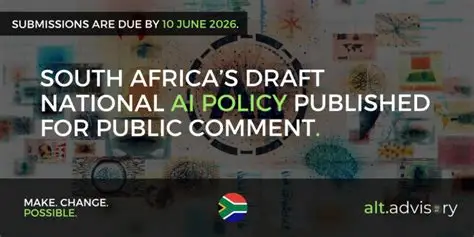
“South Africa’s Communications Minister Solly Malatsi has officially withdrawn the draft National Artificial Intelligence Policy after it was found to include at least six fictitious sources generated by AI. A new expert panel has been appointed to craft a credible replacement, signaling a reset in the country’s approach to AI regulation.”
Introduction
Artificial Intelligence (AI) has rapidly become a cornerstone of global technological development, influencing sectors from healthcare to finance. In South Africa, the promise of AI is immense, but recent events have highlighted the risks of rushing policy development without rigorous oversight. On June 12, 2026, the government officially withdrew its draft National AI Policy after revelations that the document contained fabricated references generated by AI itself. This scandal has sparked debate about governance, credibility, and the future of AI regulation in the country.
Background of the Draft Policy
The draft AI policy was first published on April 10, 2026, in the Government Gazette. It aimed to establish guiding principles for AI adoption across industries, addressing ethical use, data governance, and innovation. However, within weeks, watchdog group Article One flagged that several citations in the policy were fictitious, likely produced by generative AI tools. This discovery undermined the integrity of the policy and raised questions about the department’s internal review processes.
The Fallout
Following the revelation, two senior officials were placed on precautionary suspension. Minister Solly Malatsi admitted that the issue was not merely technical but a fundamental breach of trust. In his statement, Malatsi emphasized that South Africa “deserves better” and that the department had failed to meet the standards expected of a body tasked with shaping digital policy. The withdrawal was gazetted on June 4, 2026, marking a formal end to the flawed draft.
Public and Political Reaction
The scandal triggered widespread backlash. Opposition parties criticized the government for negligence, while civil society groups demanded greater transparency in policy-making. The incident also fueled skepticism about AI’s role in governance, with many questioning whether reliance on AI tools without human oversight could compromise democratic processes.
Formation of the Expert Panel
In response, Malatsi appointed a “dream team” of AI experts to rebuild the policy. The panel includes leading figures such as Professor Benjamin Rosman (University of the Witwatersrand), Dr. Vukosi Marivate, Allison Gillwald, Heather Irvine, Tshepo Feela, Jabu Mtsweni, and Lufuno Tshikalange. Rosman, who will chair the panel, has been instrumental in advancing AI research in South Africa and emphasized the importance of credibility and accountability in policy development.
Implications for AI Governance
The withdrawal underscores several critical lessons:
- Integrity in policy-making: AI tools must be used responsibly, with human oversight ensuring accuracy.
- Trust in institutions: Citizens must have confidence that government policies are based on reliable information.
- Global competitiveness: South Africa risks falling behind in AI adoption if governance frameworks are not credible.
Expert Perspectives
Rosman and other panel members have highlighted the need for a balanced approach—one that fosters innovation while safeguarding against misuse. They argue that AI regulation should not stifle creativity but must establish clear ethical boundaries.
Future Outlook
The new panel is expected to deliver a revised draft policy later in 2026. This version will likely emphasize transparency, accountability, and collaboration with industry stakeholders. If successful, South Africa could position itself as a leader in responsible AI governance on the continent.
Conclusion
The withdrawal of South Africa’s draft AI policy is both a setback and an opportunity. While the scandal exposed weaknesses in the government’s processes, it also paved the way for a more credible, expert-driven approach. As AI continues to reshape economies and societies, South Africa’s ability to craft a robust policy will determine its role in the global digital landscape.



