




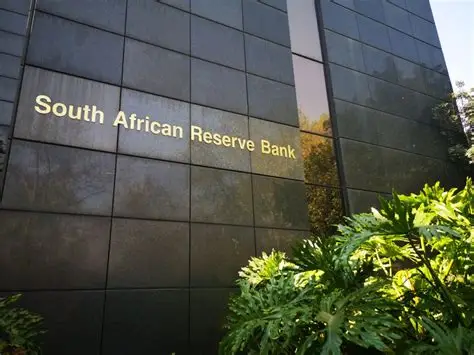
“The SARB’s Monetary Policy Committee (MPC) announced on August 24, 2026, that the repo rate will remain unchanged at 7.00%, keeping the prime lending rate at 10.50%. This decision provides stability for households managing mortgages and signals confidence in the banking sector amid moderating inflationary pressures.”
The South African Reserve Bank (SARB) has once again taken center stage in shaping the country’s financial landscape. On August 24, 2026, the Monetary Policy Committee (MPC) announced its decision to hold the repo rate steady at 7.00%, a move that directly impacts millions of South Africans, from homeowners managing monthly bond repayments to banks recalibrating lending strategies. This decision comes at a critical juncture, balancing the need to support fragile economic growth while keeping inflationary risks in check.
Why the Repo Rate Matters
The repo rate is the benchmark interest rate at which the SARB lends money to commercial banks. By holding it at 7.00%, the SARB ensures that the prime lending rate remains at 10.50%. For households, this translates into stable monthly repayments on mortgages and other loans. For banks, it provides a predictable environment to manage liquidity and credit risk.
Relief for Homeowners
For existing homeowners, the unchanged repo rate is a welcome reprieve. Consider a typical R2 million home loan over 20 years: at the current prime rate of 10.50%, monthly repayments remain constant. This stability allows households to budget more effectively, freeing up funds for other expenses or savings. Analysts note that this decision could bolster consumer confidence, particularly among middle-income families who have been squeezed by rising living costs.
Impact on Prospective Buyers
For first-time buyers, the SARB’s decision creates a window of opportunity. While borrowing costs remain higher than the ultra-low rates seen earlier in the decade, the current stability allows for more confident financial planning. Banks are expected to leverage this environment to attract new customers, offering competitive mortgage packages and innovative financing solutions.
Banking Sector Implications
Commercial banks such as Standard Bank, Absa, Nedbank, FNB, and Capitec are likely to benefit from the SARB’s cautious stance. By avoiding further rate hikes, the central bank reduces the risk of loan defaults, stabilizing the credit environment. This decision also supports banks’ profitability, as stable rates encourage lending activity without significantly increasing credit risk.
Inflationary Pressures and Economic Growth
The SARB’s decision reflects a delicate balancing act. Headline inflation fell to 4.3% in July, down from 5.0% in June, largely due to lower fuel prices. However, core inflation, which excludes volatile food and energy costs, rose for the fifth consecutive month to 4.2%, signaling underlying price pressures. Economists warn that if fuel prices rise again due to geopolitical tensions, inflation could rebound, forcing SARB to reconsider its stance.
Global Context
South Africa’s monetary policy decisions do not occur in isolation. Global factors, including the fragile peace talks in the Middle East and fluctuating oil prices, weigh heavily on SARB’s calculations. The rand has performed favorably against the dollar in recent weeks, offering some breathing room. Yet, uncertainty remains high, with investors closely watching whether SARB can maintain credibility in the face of external shocks.
Expert Opinions
Economists remain divided. Frank Blackmore of KPMG South Africa argues that only a permanent end to the Middle East conflict will stabilize fuel prices and give SARB clarity. Meanwhile, Jee-A van der Linde of Oxford Economics Africa believes SARB faces an “argument for cutting, holding, and hiking,” underscoring the complexity of the decision.
Conclusion
The SARB’s decision to hold the repo rate at 7.00% reflects cautious optimism. For households, it means stability in mortgage repayments; for banks, it signals a predictable lending environment. Yet, with core inflation rising and global uncertainties looming, the central bank’s next move remains highly anticipated. September’s MPC meeting will be closely watched, as South Africa navigates the fine line between growth and inflation control.



