




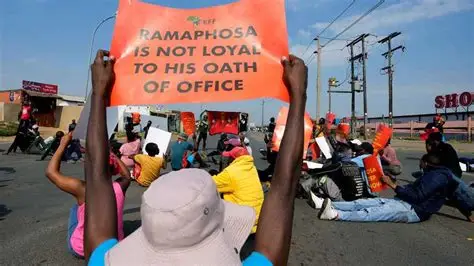
“The latest Social Research Foundation (SRF) poll reveals ANC support has dropped to 37%, while the DA has risen to 30%, narrowing the gap to just seven points. This reflects growing public dissatisfaction with corruption scandals, failing infrastructure, and economic stagnation, positioning the November 2026 elections as a potential turning point in South Africa’s democratic history.”
South Africa’s political landscape is undergoing one of its most dramatic transformations since the end of apartheid. The ruling African National Congress (ANC), once the dominant force in national politics, is now facing unprecedented challenges as public opinion shifts sharply in favor of opposition parties.
Historical Context
For decades, the ANC commanded comfortable majorities, buoyed by its liberation legacy. However, scandals such as the Phala Phala controversy, persistent failures in service delivery, and rising unemployment have eroded trust. By 2019, cracks in ANC dominance were evident, and by 2024, coalition politics became the norm.
Current Polling Data
- ANC support: 37%
- DA support: 30%
- Gap: 7 points
This narrowing margin is historic. The DA, once seen as a regional party, has capitalized on discontent, presenting itself as a credible national alternative.
Public Opinion Drivers
- Corruption Concerns: The ANC’s handling of scandals has deeply undermined confidence.
- Service Delivery Failures: Cities like Johannesburg and Tshwane face collapsing infrastructure, unreliable electricity, and water shortages.
- Economic Stagnation: High unemployment and inequality remain entrenched.
- Immigration & GNU: Divisions over immigration and skepticism about the Government of National Unity (GNU) formed in 2024 further fuel discontent.
DA’s Rising Momentum
The DA’s campaign strategy focuses on Gauteng, where polling places it ahead of the ANC. Its manifesto emphasizes:
- Job creation
- Reliable service delivery
- Anti-corruption measures
This resonates strongly with urban voters who feel neglected.
Broader Implications
The November 2026 elections could mark a historic realignment. If the ANC falls below 40%, coalition politics will dominate, potentially reshaping governance. The DA’s rise also signals a shift toward issue-based politics rather than liberation-era loyalty.
Public Sentiment on Leadership
Polls show declining favorability for ANC leaders, while opposition figures gain traction. The question of Ramaphosa’s succession looms large, with voters skeptical of continuity under ANC leadership.
Conclusion
South Africa stands at a crossroads. The November elections will not only test the ANC’s resilience but also determine whether opposition parties can translate momentum into governance. Public opinion has clearly shifted, and the electorate appears ready for change.



