




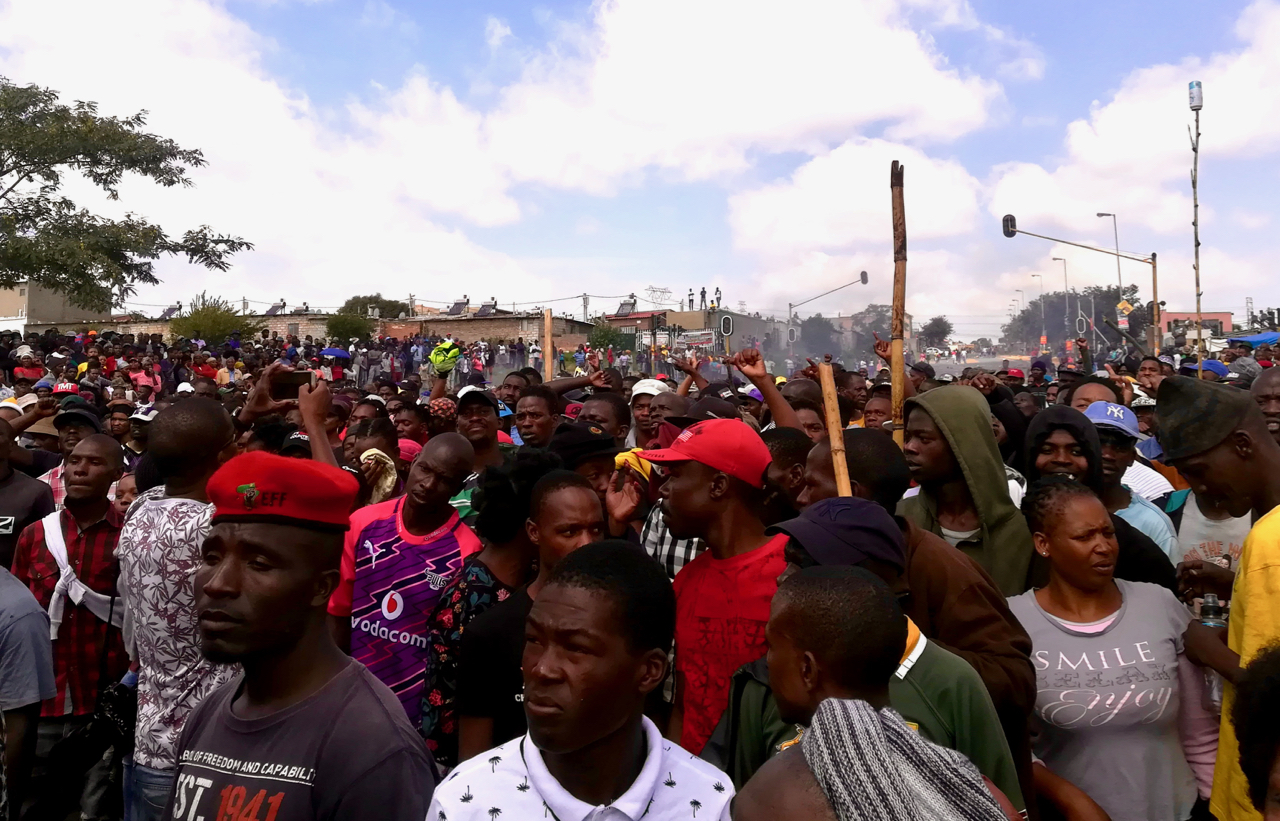
“Anti-migrant activists in Johannesburg’s Alexandra township escalated protests by raiding homes and forcibly removing immigrants, handing them over to police. The raids mark a dangerous shift from peaceful marches to vigilante enforcement, raising fears of violence, economic disruption, and diplomatic fallout across Africa.”
South Africa is facing one of its most volatile political activism crises in recent years. On July 9, 2026, anti-migrant protesters in Johannesburg’s Alexandra township went beyond marches and slogans, breaking into homes and forcibly removing immigrants. This escalation has transformed the anti-migrant movement from political protest into vigilante enforcement, sparking outrage, fear, and urgent debate about the role of activism in shaping national policy.
Background of the Movement
The anti-migrant activism wave has been building for months, fueled by frustrations over unemployment, crime, and weak economic growth. Activist groups such as March and March, led by former radio presenter Jacinta Ngobese-Zuma, have demanded tighter border controls, mass deportations, and prioritization of South Africans in schools and healthcare. Flyers advertised “peaceful marches” followed by “door-to-door” actions, signaling a deliberate strategy to escalate pressure on the government.
The July 9 Escalation
In Alexandra, protesters broke down doors, entered homes, and seized individuals suspected of being undocumented immigrants. Among those taken were a Malawian woman and her child, as well as a Zimbabwean man who insisted he was legally resident under the Zimbabwean Exemption Permit. Police vans were present, raising questions about whether authorities tacitly allowed activists to conduct searches before formal custody was taken.
National Spread of Protests
The activism was not confined to Johannesburg. Similar marches occurred in Soweto and Durban, with protesters wielding sticks and flags. Organizers have vowed to continue weekly Thursday protests until their demands are met, creating a sustained cycle of activism that risks spiraling into violence.
Government Response
President Cyril Ramaphosa has repeatedly warned against scapegoating immigrants, emphasizing that unemployment and service delivery failures are structural issues. His government insists that immigration enforcement is the responsibility of the state, not private citizens. Yet the presence of police at the raids has raised concerns about blurred lines between activism and state authority.
Economic Implications
Economists warn that driving out migrants could backfire. Migrants contribute significantly to South Africa’s economy, making up about 5% of the population and contributing an estimated 9% to GDP. They fill critical labor gaps in farming, construction, hospitality, and retail, while also running spaza shops that support local communities. Disruptions to these sectors could worsen unemployment and reduce consumer choice.
Diplomatic Fallout
The raids have strained relations with neighboring countries, particularly Malawi and Zimbabwe, whose citizens were directly targeted. Migrant-rights groups across Africa have condemned the actions, warning that South Africa risks isolating itself diplomatically if it allows activism to morph into vigilantism.
Activism vs. Vigilantism
The Alexandra raids highlight a critical distinction: activism seeks to influence policy through protest and advocacy, while vigilantism bypasses legal frameworks to enforce demands directly. By entering homes and seizing individuals, activists crossed into dangerous territory, undermining rule of law and raising the risk of false identification, intimidation, and violence.
Broader Political Context
South Africa’s activism landscape has historically been a powerful force for change, from anti-apartheid movements to labor strikes. However, the current anti-migrant activism reflects a populist turn, where economic frustrations are channeled into scapegoating vulnerable groups. This raises questions about the future of activism in South Africa: will it remain a tool for justice, or become a vehicle for exclusion and division?
Conclusion
The events of July 9 mark a turning point in South Africa’s political activism. What began as marches demanding policy change has escalated into door-to-door raids, blurring the line between protest and vigilantism. The government now faces a dual challenge: addressing legitimate economic grievances while protecting migrants from mob action. The outcome will shape not only South Africa’s immigration policy but also the credibility of activism as a democratic force.



