




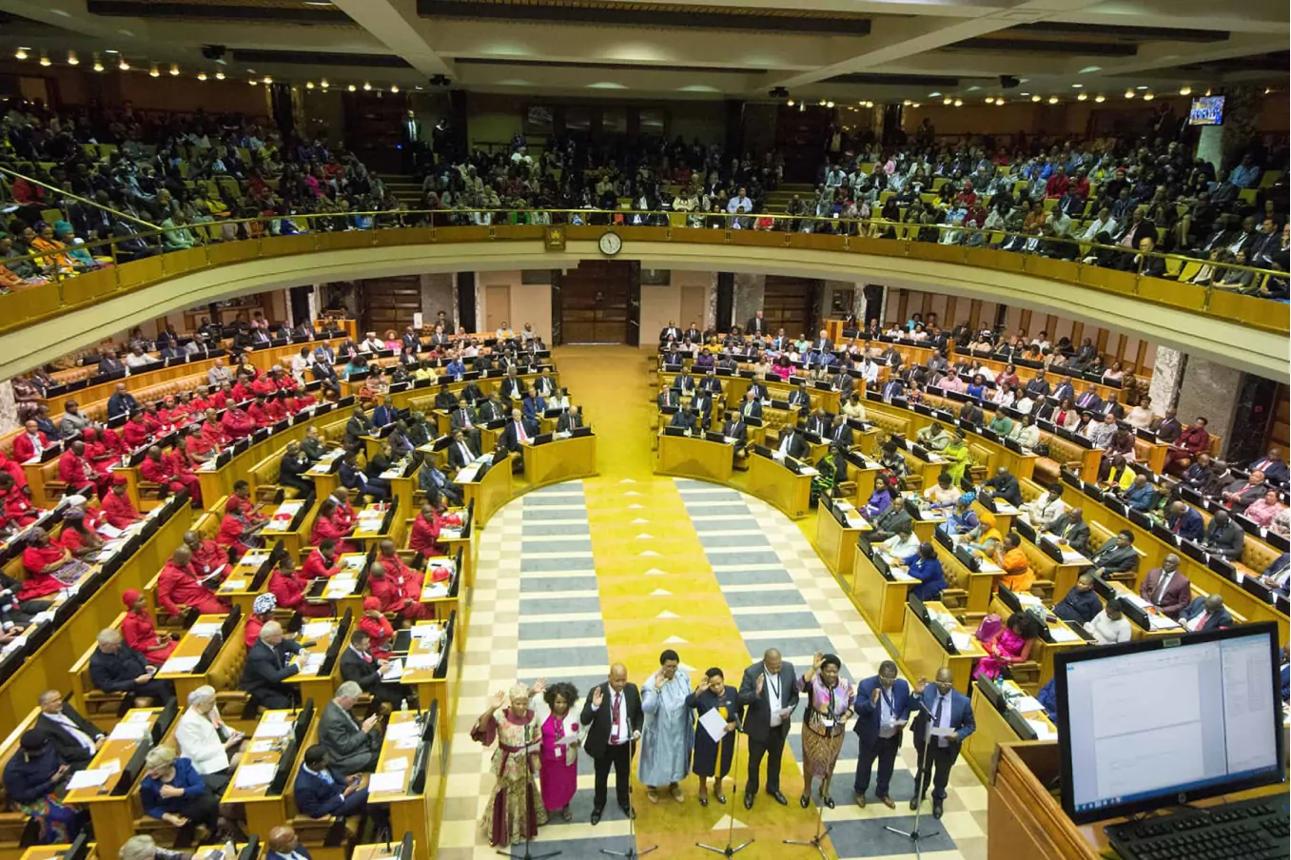
“South Africa’s proposed Conduct of Financial Institutions Bill is approaching formal parliamentary consideration after completing legal certification, marking an important step towards reforming financial-sector regulation following years of delays. Meanwhile, Parliament is under pressure to accelerate the Municipal Structures Amendment Bill, which seeks to establish clearer rules for coalition governments as the country faces an unprecedented number of hung municipalities.”
South Africa’s Financial Sector Conduct Bill Nears Parliament as Coalition Legislation Faces Pressure
South Africa is entering a significant period of legislative activity, with major proposed laws targeting financial-sector regulation and municipal coalition governance attracting renewed attention. The developments come amid growing pressure on Parliament to improve the pace of lawmaking and ensure that legislation responds effectively to the country’s changing political and economic circumstances.
The Conduct of Financial Institutions Bill, commonly known as the COFI Bill, is emerging as one of the most important financial regulatory reforms currently awaiting parliamentary processing. Meanwhile, the Local Government: Municipal Structures Amendment Bill, popularly called the Coalitions Bill, has become increasingly urgent following the November 2026 local government elections.
Financial Sector Conduct Bill Moves Towards Parliamentary Consideration
The proposed Conduct of Financial Institutions Bill has taken an important step towards parliamentary consideration after completing certification by state law advisers. Parliamentary officials are preparing to table the legislation, which seeks to establish a consolidated and comprehensive framework for regulating the conduct of financial institutions in South Africa.
According to reporting published by Moneyweb and Bloomberg on 13 November 2026, the bill has experienced considerable procedural delays despite receiving Cabinet approval earlier in the year.
The legislation has been in development since 2018 and represents an extensive effort to modernise financial-sector regulation. Its purpose is to replace fragmented and industry-specific rules with a more consistent framework governing how financial institutions conduct business and treat customers.
Finance Minister Enoch Godongwana published a notice of introduction and explanatory summary in April 2026. However, the bill remained delayed while undergoing legal vetting and certification.
Its anticipated parliamentary processing therefore represents a meaningful development in a legislative reform programme that has been underway for several years.
Why the COFI Bill Matters
South Africa’s financial sector includes banks, insurers, retirement funds, financial advisers and numerous other institutions providing financial products and services.
Historically, regulatory arrangements have developed through different pieces of legislation governing particular industries and activities. Although these arrangements have provided oversight, they have also contributed to regulatory complexity and inconsistencies.
The COFI Bill seeks to establish a more comprehensive approach to market conduct.
Its central objective is to strengthen protections for financial customers while ensuring that institutions operate transparently, responsibly and in accordance with consistent regulatory principles.
The proposed framework addresses financial institutions, supervised entities and representatives, including their compliance arrangements and responsibilities.
The legislation also seeks to strengthen governance obligations, regulate representatives and establish business principles applicable to financial institutions.
By consolidating regulatory requirements, the government aims to improve consistency across the financial sector and enhance the effectiveness of supervision.
The reform is particularly significant for consumers who depend on financial institutions for savings, insurance, investment and retirement services.
Implications for Financial Institutions
The proposed legislation could significantly affect how financial institutions organise their regulatory responsibilities and compliance systems.
A major feature of the reform is its emphasis on conduct rather than simply the institutional identity of a financial-services provider.
This approach is intended to create a more consistent regulatory environment in which institutions are assessed according to the activities they undertake and the products and services they provide.
Financial institutions may consequently need to review internal governance structures, compliance arrangements and operational responsibilities as the legislative framework develops.
However, the final implications will depend on the legislation’s parliamentary processing, eventual enactment and implementation arrangements.
The Financial Sector Conduct Authority is expected to play an important role within the broader market-conduct framework.
The reform also forms part of South Africa’s wider Twin Peaks regulatory model, which separates prudential supervision from market-conduct oversight.
The Prudential Authority focuses on financial institutions’ financial soundness, while the Financial Sector Conduct Authority oversees conduct and customer treatment.
The proposed COFI framework is intended to strengthen the market-conduct side of this arrangement.
Parliament Faces Pressure Over Legislative Delays
The progress of the COFI Bill has also highlighted broader concerns about parliamentary efficiency.
During a Programme Committee meeting in November, lawmakers reportedly expressed frustration over delays affecting several legislative initiatives.
National Assembly Speaker Thoko Didiza urged parliamentary committees and their chairs to prioritise legislative work and accelerate processing where possible.
The concerns reflect growing expectations that Parliament should deliver legislation efficiently while maintaining constitutional requirements, procedural safeguards and meaningful public participation.
The challenge is particularly important when legislation addresses urgent institutional or economic concerns.
However, accelerating lawmaking does not necessarily mean eliminating scrutiny.
Parliament must balance efficiency with the responsibility to consider proposed laws carefully, assess their implications and allow interested stakeholders appropriate opportunities to participate.
Coalition Legislation Becomes Increasingly Urgent
Another major legislative development concerns the Local Government: Municipal Structures Amendment Bill, which seeks to strengthen the framework governing coalition governments in municipalities.
The legislation has gained renewed significance following South Africa’s local government elections held on 4 November 2026.
The elections produced numerous municipalities without an outright majority for a single political party.
Approximately 138 municipalities, representing around 65% of metropolitan and local councils, are expected to require coalition arrangements, minority governments or other cooperative governing structures.
This political landscape has increased pressure on Parliament to establish clearer legal arrangements for coalition governance.
The Municipal Structures Amendment Bill was introduced in August 2026, shortly before the elections.
Its timing meant that parliamentary processing and public participation could not be completed before the new municipal councils were established.
Consequently, the legislation remains under consideration while political parties negotiate governing arrangements.
What the Coalitions Bill Proposes
The proposed legislation seeks to amend the Local Government: Municipal Structures Act of 1998.
Among its objectives are establishing clearer procedures for municipal council meetings, improving the appointment and removal of municipal office-bearers and addressing delays associated with council administration.
It also proposes provisions governing coalition agreements.
Under the proposed framework, coalition parties would be required to establish agreements regulating their participation in municipal governance.
Such agreements are intended to provide greater clarity concerning political cooperation, responsibilities and arrangements for managing disagreements.
The legislation also addresses procedures surrounding the election and removal of mayors, speakers and other municipal office-bearers.
These provisions are particularly relevant in municipalities where competing political parties must cooperate to establish governing majorities.
The bill aims to reduce uncertainty and improve institutional stability in councils where political alliances can change rapidly.
Coalition Guidelines Provide an Interim Response
While the Coalitions Bill remains under parliamentary consideration, Cooperative Governance and Traditional Affairs Minister Velenkosini Hlabisa issued Guidelines for Stable Coalitions in Local Government in November.
The guidelines are intended to assist municipalities in managing coalition negotiations and political transitions.
They provide practical guidance concerning coalition arrangements, municipal leadership structures, dispute resolution and institutional responsibilities.
The guidelines also include a template for coalition agreements and address procedures for managing instability within municipal governing arrangements.
However, they are not a substitute for legislation.
Their purpose is to provide interim assistance while Parliament continues processing the Municipal Structures Amendment Bill.
The distinction is important because legislation establishes legally binding rules through constitutional parliamentary procedures, whereas guidelines provide administrative direction within the existing legal framework.
Public Participation and Democratic Accountability
Both legislative initiatives highlight the importance of public participation in South Africa’s democratic system.
Financial-sector reform affects consumers, financial institutions, businesses and retirement beneficiaries.
Coalition legislation affects political parties, councillors, municipal administrations and communities dependent on local government services.
Stakeholders therefore have an interest in ensuring that proposed laws are properly scrutinised.
Public participation allows interested organisations and individuals to identify potential problems, recommend improvements and communicate practical concerns to lawmakers.
In the case of coalition legislation, transparency is particularly important because governing agreements can influence municipal priorities, budgets and service delivery.
Public access to coalition agreements could help residents understand political compromises and assess whether governing parties are fulfilling their commitments.
Similarly, financial-sector stakeholders may contribute expertise concerning regulatory implementation, compliance costs and customer protection.
Economic and Governance Implications
The COFI Bill could contribute to a more consistent financial regulatory environment if its objectives are successfully implemented.
Improved conduct regulation may strengthen confidence in financial services, support consumer protection and encourage responsible institutional behaviour.
Nevertheless, the benefits will depend on effective implementation, regulatory capacity and clarity concerning compliance obligations.
The Coalitions Bill presents a different but equally important challenge.
Municipal stability influences service delivery, infrastructure development, financial management and local economic activity.
Unstable political arrangements can create uncertainty around leadership, decision-making and administrative priorities.
A clearer coalition framework could help municipalities establish more predictable governing arrangements and improve accountability.
However, legislation alone cannot guarantee stable coalitions.
Political parties must also demonstrate willingness to cooperate, respect agreements and prioritise municipal responsibilities over short-term political competition.
The Road Ahead
The immediate priority for Parliament is to advance both legislative initiatives through their respective parliamentary processes.
For the COFI Bill, the anticipated tabling represents an important milestone after years of development and procedural delays.
For the Coalitions Bill, the challenge is to balance urgency with constitutional requirements and meaningful public participation.
South Africa’s new municipal political landscape makes coalition legislation particularly consequential.
At the same time, financial-sector reform remains important for improving regulation and strengthening consumer protection.
The coming parliamentary period will therefore be significant for determining how quickly these proposals advance and whether lawmakers can translate policy objectives into effective legislation.
Ultimately, the success of both initiatives will depend not only on their passage but also on implementation, accountability and institutional cooperation.
South Africa’s legislative agenda is increasingly shaped by the need to respond to complex political and economic realities. The COFI Bill and Coalitions Bill illustrate how Parliament is being challenged to modernise regulatory frameworks while strengthening democratic governance.
Their progress will remain an important indicator of the country’s capacity to deliver legislative reforms that respond to public needs and support institutional stability.



