




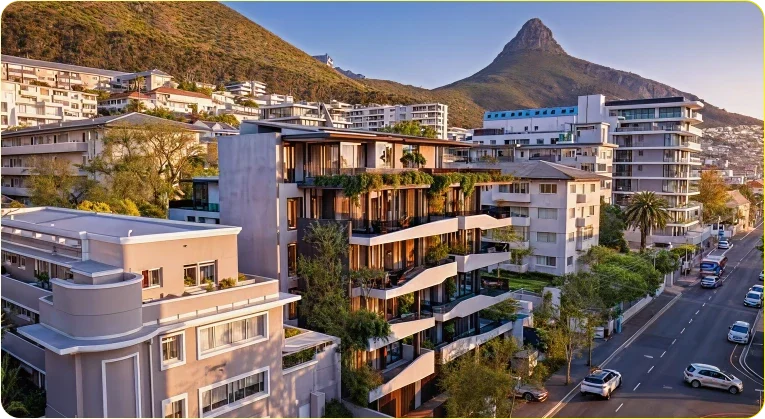
“South Africa’s property development market is recovering moderately in 2026, with average property prices rising 4.3% year-on-year and land values climbing to R13,000 per square meter. However, coastal hubs are thriving with international investment and tourism-driven demand, while inland provinces face stagnation due to weak infrastructure and economic headwinds.”
South Africa’s real estate development sector in 2026 is entering a critical recovery phase, marked by cautious optimism among investors, developers, and buyers. While the national market shows moderate growth, the geographic divide between coastal prosperity and inland stagnation is widening, reshaping the country’s property investment landscape.
National Market Overview
- Average property prices: R1.7 million
- Land values: R13,000 per square meter
- Annual growth rate: 4.3%
This growth is fueled by lower interest rates, urban migration, and foreign investment, signaling renewed confidence in the sector.
Coastal Surge
Coastal regions such as Cape Town and the Garden Route are experiencing strong demand driven by:
- Lifestyle buyers and semigrants seeking better quality of life.
- International investors attracted by relatively low property prices compared to global coastal cities.
- Tourism recovery, boosting demand for mixed-use and residential developments.
Developers are prioritizing projects near economic hubs and tourist destinations, positioning coastal land as a safe haven investment.
Inland Stagnation
Inland provinces like Gauteng, Free State, and Limpopo are struggling due to:
- High unemployment and weaker economic activity.
- Infrastructure gaps and poor service delivery.
- Municipal tariff disputes, such as Mangaung’s refuse tariff case.
- Risks of unlawful occupation in social housing projects, undermining investor confidence.
This stagnation underscores the vulnerability of inland development to broader economic challenges.
Drivers of Growth
- Interest Rate Cuts: Repo rate dropped from 8.25% to 6.75%, making mortgages more affordable.
- Urban Migration: Continued movement toward metropolitan areas sustains demand.
- Foreign Investment: International buyers see South Africa as undervalued.
- Tourism Recovery: Coastal towns benefit from rising tourism.
Challenges Facing Development
- Unlawful Occupation: Weak enforcement in social housing projects.
- Infrastructure Gaps: Inland provinces lack adequate service delivery.
- Legal Disputes: Municipal tariff challenges add uncertainty.
Investment Outlook
- Short-Term: Moderate growth, coastal outperforming inland.
- Medium-Term: Stronger recovery possible if infrastructure projects and housing reforms succeed.
Conclusion
South Africa’s real estate development market in 2026 reflects both promise and peril. Coastal regions are thriving, offering lucrative opportunities for developers and investors, while inland provinces highlight the urgent need for policy reforms and infrastructure investment. The future of balanced growth depends on bridging this divide, ensuring that inland markets can share in the recovery momentum.



