




“South Africa’s property development sector is buoyed by stable borrowing costs and surging demand for affordable housing, particularly in coastal regions. Industrial land expansion in Gauteng and KwaZulu-Natal, alongside growing foreign investment, is reshaping the national property landscape.”
South Africa’s real estate development market in August 2026 reflects a sector that has managed to balance inflationary pressures with investor confidence. The South African Reserve Bank’s (SARB) decision to maintain the repo rate at 7.0% and the prime lending rate at 10.5% has created a predictable lending environment, reassuring developers and buyers alike. This stability has allowed developers to plan long-term projects without the fear of sudden interest rate hikes, while buyers benefit from consistent mortgage repayment expectations.
The affordable housing segment remains the most active, with properties below R1.2 million attracting strong demand. First-time buyers, particularly those aged 25–34, are entering the market in record numbers, with confidence levels reaching 90%. This demographic shift is reshaping the housing landscape, as developers race to secure vacant plots in peri-urban areas. However, supply constraints remain a challenge, with limited land availability slowing down the pace of new developments.
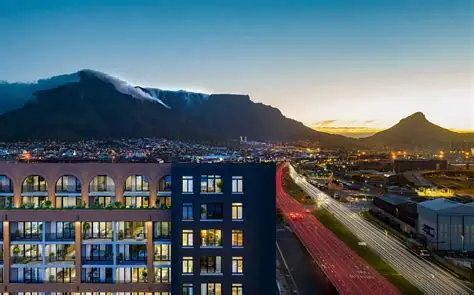
Regionally, Cape Town continues to dominate as South Africa’s premium property market, with average property prices at R3.35 million—well above the national average of R1.95 million. The Garden Route, including towns such as George and Knysna, has seen annual land value appreciation of 6.5%, driven by lifestyle appeal and semigration trends. Gauteng, while experiencing modest growth of 2.8%, is witnessing significant industrial land expansion in Johannesburg’s peri-urban zones, creating new opportunities for logistics and manufacturing hubs.
KwaZulu-Natal’s Cornubia Industrial Park expansion highlights the growing demand for warehousing and logistics facilities, positioning the province as a key player in South Africa’s industrial property sector. Meanwhile, Mpumalanga and Limpopo are seeing the emergence of smaller industrial parks designed to support regional manufacturing and agricultural processing, diversifying the country’s property development portfolio.
Foreign investment continues to play a crucial role, with international developers and investors showing renewed interest in South Africa’s property market. The combination of stable borrowing costs, competitive mortgage packages from major banks, and regional demand shifts has created a favorable environment for both residential and industrial development.
Looking ahead, the sector faces challenges such as supply constraints, infrastructure bottlenecks, and the need for sustainable development practices. However, the current trajectory suggests that South Africa’s real estate development market is well-positioned for steady growth, supported by strong demand in affordable housing and industrial expansion.



