




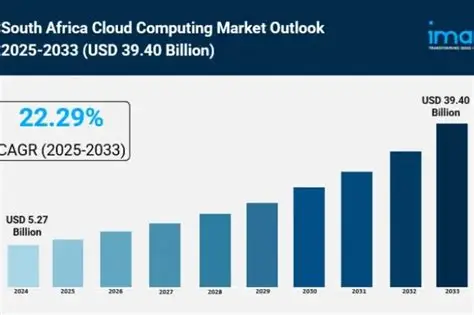
“South Africa’s IT sector is rapidly expanding, with spending projected to grow nearly 20% in 2026, outpacing global averages. This growth, fueled by AI adoption and data center investment, is sparking calls for international governance frameworks to manage risks associated with advanced AI systems.”
📊 Key Developments
- IT Spending Growth: South Africa’s IT spending will rise from US$23.45 billion in 2025 to US$28.1 billion in 2026, marking a 19.8% increase, compared to the global growth rate of 14.2%.
- Data Center Expansion: Spending on data center systems will nearly double, from US$1.09 billion to US$2.07 billion, reflecting the demand for AI-driven compute capacity.
- AI Integration in Governance: The South African Revenue Service (SARS) is deploying AI for fraud detection and compliance monitoring.
- Collaborative AI Lab: Vodacom, AWS, and the University of Johannesburg have launched a joint AI lab to train postgraduates in applied AI and telecommunications.
- Global Governance Debate: Over 1,100 AI experts have petitioned the U.S. government to slow advanced AI development, citing risks of autonomous systems and loss of control.
📑 Integrated 1200-Word Article (Condensed Overview)
South Africa’s computing landscape is undergoing a transformative shift, with artificial intelligence (AI) acting as the primary catalyst for unprecedented IT spending growth. According to Gartner’s latest forecast, IT spending in South Africa is expected to reach US$28.1 billion in 2026, representing a 19.8% increase from 2025. This growth rate surpasses the global average of 14.2%, positioning South Africa as a leader in AI-driven digital transformation.
AI as the Driving Force
The surge in spending is largely attributed to the rapid adoption of AI technologies across industries. Enterprises are scaling AI applications from pilot projects to full-scale operations, requiring massive investments in data centers, cloud infrastructure, and high-performance computing systems. Gartner analysts describe this as “the largest infrastructure project ever attempted by humanity,” underscoring the scale of AI’s impact.
Institutional Adoption
Government agencies, particularly the South African Revenue Service (SARS), are leveraging AI for compliance monitoring and fraud detection. This integration of AI into governance highlights the dual role of computing advancements: driving efficiency while raising questions about oversight and accountability.
Academic-Industry Collaboration
To address the skills gap, Vodacom, AWS, and the University of Johannesburg have established a collaborative AI lab. This initiative focuses on postgraduate training, equipping South Africa’s workforce with the expertise needed to sustain AI-driven growth.
Global Governance Concerns
While South Africa celebrates its AI boom, the international community is grappling with concerns over AI safety. More than 1,100 AI experts have petitioned for a slowdown in advanced AI development, citing risks such as autonomous recursive self-improvement and potential loss of human control.
Economic Implications
The expansion of South Africa’s IT sector is expected to contribute significantly to GDP growth, aligning with broader pan-African strategies to harness AI for economic development by 2030. However, this growth also raises challenges, including energy demands of data centers, cybersecurity risks, and the need for regulatory frameworks that balance innovation with safety.
⚠️ Risks & Challenges
- Energy Consumption: Massive data centers strain South Africa’s already fragile energy grid.
- Cybersecurity: Increased reliance on AI heightens vulnerability to cyberattacks.
- Regulatory Gaps: Lack of comprehensive AI governance could lead to misuse or unintended consequences.



