




“World Athletics has instructed Athletics South Africa to remove suspended president James Moloi in line with an independent disciplinary panel’s findings and to overhaul its constitution within six months, warning that failure to comply could lead to international sanctions. The dispute has raised concerns about the future of South African athletes, including their eligibility for international competitions, the recognition of performances and records, and preparations for major championships.”
Athletics South Africa Faces Governance Crisis as World Athletics Demands Urgent Reforms
A critical moment for South African athletics
South African athletics is facing a defining moment as international authorities demand urgent governance reforms at Athletics South Africa (ASA). The dispute has placed the national federation under intense scrutiny and raised concerns about whether administrative instability could undermine the progress made by the country’s athletes on the international stage.
World Athletics has instructed ASA to implement the findings of an independent disciplinary panel concerning suspended president James Moloi. It has also established a six-month deadline for constitutional reform, warning that failure to meet the requirements could result in sanctions, including possible suspension of the federation. The developments have attracted widespread attention because South Africa continues to produce internationally competitive sprinters, middle-distance runners and road-racing athletes.
The situation illustrates the importance of effective administration in professional sport. Although athletes are judged primarily on their performances, their ability to compete internationally also depends on functioning federations, credible selection procedures, financial accountability and compliance with international regulations.
World Athletics demands immediate action
According to reporting by Business Day, World Athletics communicated its concerns to ASA after a fact-finding mission led by Zakhele Dlamini, president of the Southern African Confederation of Athletics and vice-president of the Confederation of African Athletics.
The investigation identified problems involving decision-making, divisions within the executive board, uncertainty surrounding officials’ authority and potential conflicts of interest between national and provincial structures. World Athletics considered these issues evidence of broader weaknesses requiring a comprehensive response rather than isolated disciplinary measures.
The international governing body subsequently called for the implementation of the disciplinary panel’s findings concerning Moloi. The panel, chaired by retired judge Basheer Waglay, reportedly found Moloi guilty of two charges relating to the misuse of ASA funds and recommended his removal from the presidency and executive board.
World Athletics also instructed ASA to revise its constitution to strengthen transparency, accountability and institutional independence. The proposed reforms are intended to establish clearer responsibilities, improve oversight and ensure that the federation operates in the interests of the sport rather than individual officeholders.
Financial accountability at the centre of the dispute
The controversy follows an investigation into ASA’s financial practices. Reporting by IOL Sport and Sunday World states that Moloi was suspended in October 2025 following concerns arising from a forensic investigation into his use of the federation’s corporate credit card.
The investigation reportedly examined nearly 400 transactions made between May 2023 and April 2024. It identified more than R300,000 in unauthorised or personal expenditure, alongside spending-limit breaches and transactions that required further explanation.
These findings became central to subsequent disciplinary proceedings. The independent panel’s recommendation that Moloi be removed increased pressure on ASA’s leadership to demonstrate that disciplinary decisions would be implemented consistently.
Financial accountability is particularly important for a national sporting federation because its resources support activities extending well beyond senior international competitions. These include athlete development, coaching, provincial programmes, competition administration and the identification of emerging talent.
A credible financial system helps ensure that resources are allocated according to sporting priorities. It also reassures sponsors, public institutions, clubs and athletes that funds are being managed responsibly.
However, the long-term implications extend beyond one individual. The central question is whether ASA can establish safeguards that prevent similar controversies from recurring, regardless of who occupies its senior positions.
Why constitutional reform matters
World Athletics has called for substantial revisions to ASA’s constitution. These changes are intended to clarify the authority of the federation’s council, executive board, president and administrative structures.
One important principle is that the council should function as the supreme decision-making body, with voting rights clearly defined for accredited representatives. The proposed framework also seeks to prevent individuals from exercising multiple votes or representing overlapping constituencies in ways that could create conflicts of interest.
Independent disciplinary, electoral and financial oversight mechanisms are also central to the reform process. Clear procedures can help ensure that complaints are investigated fairly, elections are credible and officials are held accountable when rules are breached.
Furthermore, the international body has highlighted the importance of athlete representation, gender balance, term limits and transparency.
These provisions matter because athletics is a diverse sport involving professional competitors, community runners, school athletes, coaches, clubs and provincial associations. A federation’s constitution must provide a workable system for balancing their interests while ensuring that decisions are made fairly.
The reform process is therefore more than a technical exercise. If implemented effectively, it could establish a stronger foundation for South African athletics and reduce the likelihood of recurring disputes over authority.
The six-month deadline and possible consequences
World Athletics has given ASA six months to finalise and formally adopt a revised constitution. According to Business Day, the federation must provide a detailed timetable within one month of the relevant directive and work with World Athletics and the Confederation of African Athletics throughout the process.
Once the revised constitution is adopted, fresh elections must be organised within a further three-month period under the prescribed roadmap.
Zakhele Dlamini has been nominated as an independent observer for the constitutional reform and election process. His involvement is intended to provide oversight as the federation works towards meeting the international requirements.
The consequences of non-compliance could be serious. World Athletics has warned that failure to adopt an acceptable constitution within the prescribed period, or deliberate obstruction of the process, could result in the matter being referred to its council for consideration of sanctions under Article 13.
A potential suspension must not be confused with a suspension that has already taken effect. The reporting available indicates that sanctions remain a possible consequence if the federation fails to comply with the requirements.
Nevertheless, the threat is significant because international participation depends on athletes and federations operating within the governing body’s rules.
What the crisis could mean for athletes
The biggest concern is the possible impact on competitors who have spent years preparing for international opportunities.
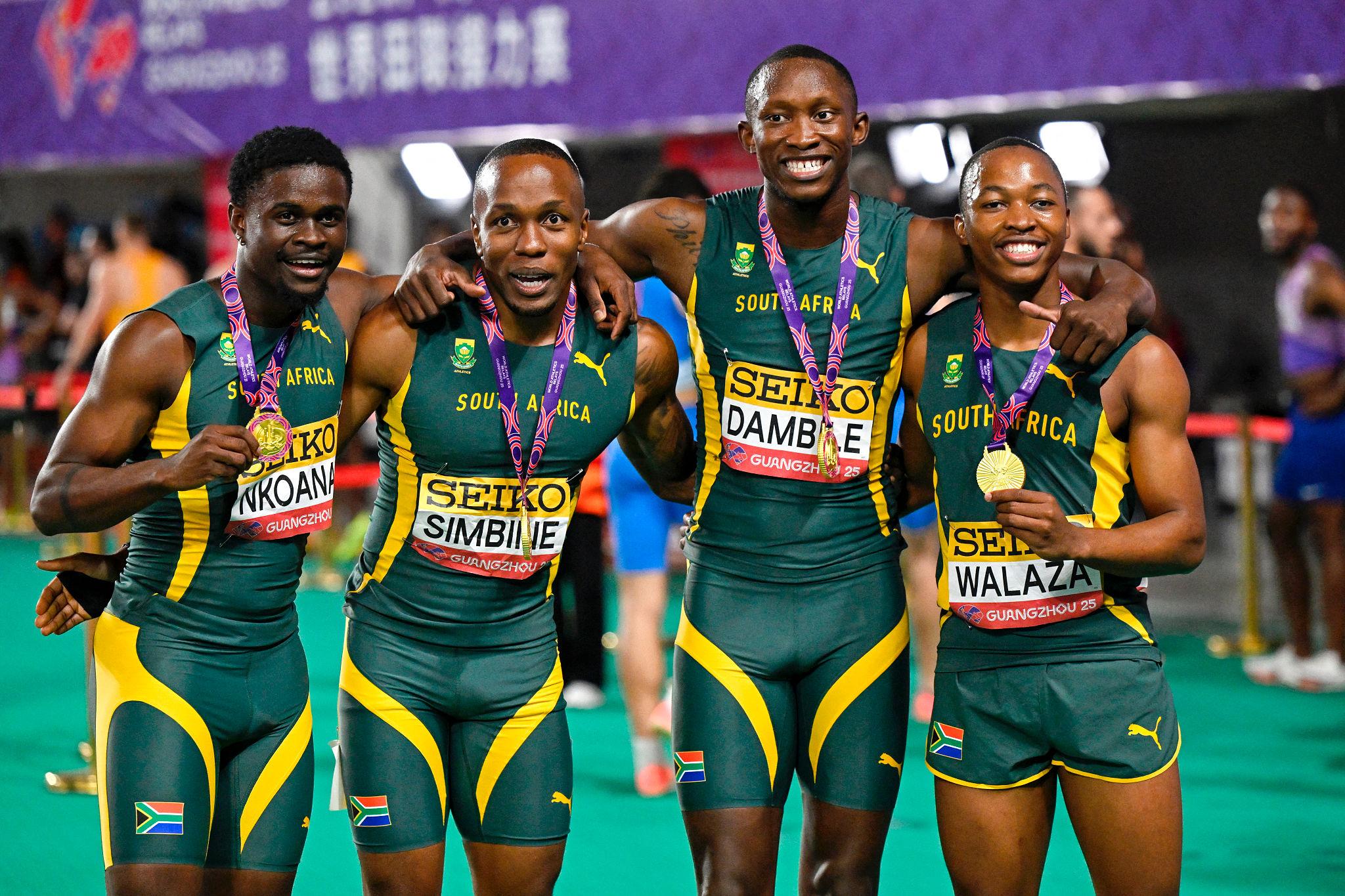
South Africa has developed a strong sprinting tradition, with athletes such as Akani Simbine, Bayanda Walaza and Sinesipho Dambile attracting attention through performances at major competitions. The country also has emerging talent in middle-distance running and road racing.
IOL Sport has highlighted the contrast between these sporting achievements and the federation’s administrative difficulties. Recent performances, including Tayla Kavanagh’s national 10km record and the achievements of South African sprinters, demonstrate the potential that effective support structures can help develop.
If ASA were suspended, athletes could face restrictions affecting international representation and access to recognised competitions. Depending on the scope and terms of any eventual sanction, participation, ranking opportunities and record recognition could also be affected.
Such consequences would reach beyond established stars. Younger competitors depend on national pathways to gain international experience, secure selection and measure themselves against the world’s best.
Coaches and support teams could also face uncertainty if competition plans, travel arrangements and selection processes were disrupted.
For that reason, resolving the governance dispute is not merely an administrative priority. It is essential to protecting the opportunities of athletes who have little control over decisions made by federation officials.
Implications for the 2027 and 2028 sporting calendar
The timing of the dispute is especially important as athletes prepare for future international competitions.
The 2027 World Athletics Championships and the 2028 Olympic Games represent major targets for competitors seeking to establish themselves among the world’s elite. Preparation for such events requires long-term planning, consistent competition opportunities and confidence in national selection systems.
A prolonged governance dispute could create uncertainty for athletes and their coaches. They need clarity about qualification pathways, administrative responsibilities and the processes through which national teams will be selected.
However, it would be premature to conclude that South African athletes will automatically miss either event. The available reports describe a threat of potential sanctions, not a confirmed exclusion from these championships.
The priority is therefore to resolve the underlying problems before they develop into restrictions that affect sporting participation.
ASA’s ability to demonstrate compliance could help restore confidence among athletes, sponsors, administrators and international partners.
Rebuilding trust across the sport
The crisis also raises questions about the relationship between national leadership and provincial athletics structures. A successful federation needs cooperation among its constituent members, clear decision-making processes and effective communication.
Disagreements are not unusual in large sporting organisations. Nevertheless, persistent disputes over authority can weaken strategic planning and make it difficult to deliver programmes consistently.
Constitutional reform offers an opportunity to establish clearer responsibilities and reliable mechanisms for resolving disagreements. Independent oversight can also help ensure that financial and disciplinary matters are handled transparently.
For athletes, meaningful reform should ultimately translate into better administration, dependable competition calendars and fair access to development opportunities.
Sponsors and supporters also need confidence that their contributions will be managed responsibly. Restoring that confidence may take time, but credible reforms would provide an important starting point.
What happens next?
ASA must now demonstrate that it can implement the required changes within the established timeframe. This includes addressing the disciplinary findings, finalising constitutional amendments, involving the appropriate representatives and preparing for fresh elections.
The process will require cooperation between the federation’s leadership, council members, provincial structures and international authorities. Transparent communication will be essential to ensuring that stakeholders understand the timetable and the decisions being made.
Ultimately, the success of the reform effort should be measured not only by whether deadlines are met, but also by whether the resulting governance system operates effectively.
South Africa has athletes capable of competing for honours on the world stage. Protecting their progress requires an organisation that can provide stable leadership, accountable financial management and credible sporting administration.
Conclusion
The governance crisis at Athletics South Africa has become one of the most consequential developments affecting the country’s athletics community. World Athletics’ six-month reform deadline and warning of possible sanctions have placed pressure on the federation to address leadership concerns and strengthen its constitution.
Although the threat of suspension remains conditional, the potential consequences make decisive action essential. Athletes should not have their careers disrupted by avoidable administrative failures.
The coming months will test ASA’s ability to restore confidence, improve accountability and establish a governance structure that serves the entire sport. If the federation completes meaningful reforms, the crisis could become an opportunity to build a stronger foundation for future generations.
For South African athletics, the ultimate objective must remain clear: ensuring that the achievements of its runners, sprinters and field athletes are supported by an organisation capable of protecting their opportunities and sustaining their international ambitions.



