




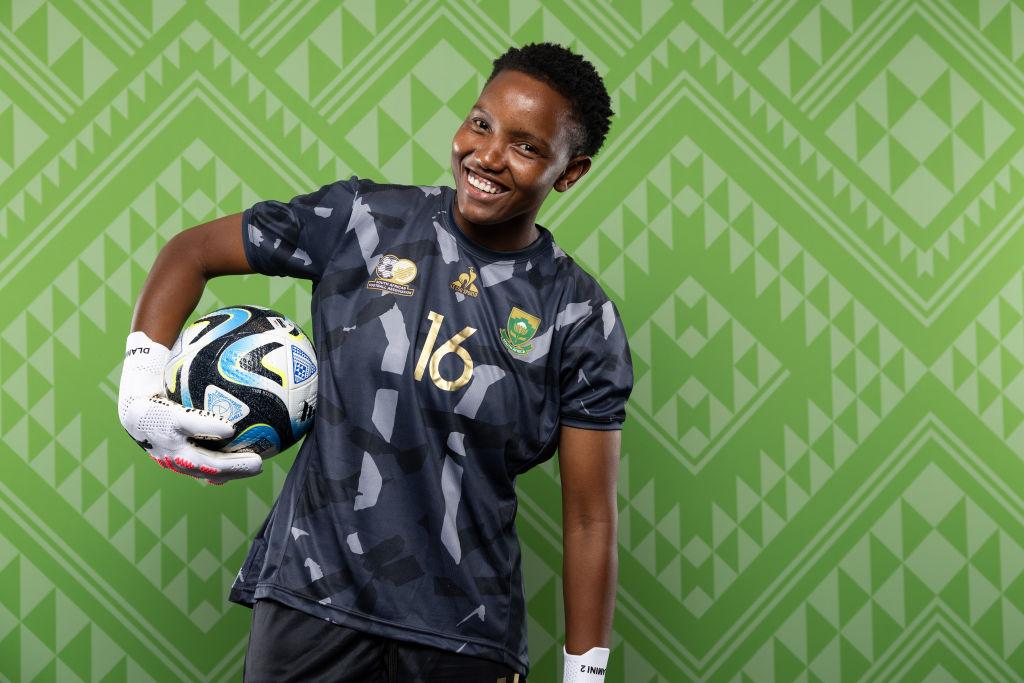
“Banyana Banyana goalkeeper Andile Dlamini has been withdrawn from South Africa’s squad for the FIFA Women’s World Cup intercontinental play-offs after suffering an injury during the CAF Women’s Champions League final in Egypt. University of the Western Cape goalkeeper Thandeka Ngcobo has been called up as her replacement ahead of the tournament in Rabat, Morocco, scheduled for 28 November to 5 December 2026.”
Banyana Banyana face major goalkeeper setback as Andile Dlamini misses crucial 2027 FIFA Women’s World Cup play-offs
South Africa’s senior women’s national football team, Banyana Banyana, have suffered an important setback ahead of their upcoming FIFA Women’s World Cup intercontinental play-offs after experienced goalkeeper Andile Dlamini was withdrawn from the squad because of injury. The development comes at a critical moment for the national team, which is preparing to compete in Morocco as it attempts to secure another opportunity to qualify for the 2027 FIFA Women’s World Cup in Brazil.
Dlamini, who represents Mamelodi Sundowns Ladies at club level, sustained the injury during the CAF Women’s Champions League final in Egypt. Her absence means that head coach Desiree Ellis will have to adjust her goalkeeping plans before the team begins its qualification campaign in Rabat.
The South African Football Association’s announcement has attracted attention because Dlamini is an experienced international goalkeeper who has played an important role in Banyana Banyana’s development and achievements. Nevertheless, the national team has moved quickly to strengthen its goalkeeping department by bringing in University of the Western Cape goalkeeper Thandeka Ngcobo.
The replacement will join Kaylin Swart and Kebotseng Moletsane as South Africa prepares for three important matches against Chinese Taipei, Ecuador and Uzbekistan.
Injury during the CAF Women’s Champions League final
Dlamini’s injury occurred during the CAF Women’s Champions League final played in Egypt on Sunday, 15 November 2026. Mamelodi Sundowns Ladies faced Morocco’s AS FAR in the continental competition’s final, but the South African club eventually suffered a 3-1 defeat.
Dlamini was substituted during the first half after sustaining the injury. Although there was initially hope that she might recover in time for national team duty, subsequent assessments meant that she could not continue with the travelling squad.
Her withdrawal represents a difficult development for both Sundowns Ladies and Banyana Banyana. International tournaments require reliable goalkeeping, particularly when teams face opponents with different playing styles and attacking approaches.
For South Africa, losing an established goalkeeper shortly before an important qualification tournament creates additional pressure on the technical team. However, the decision to replace her is necessary because the coaching staff must ensure that every selected player is physically prepared for the demands of international competition.
According to reporting by FARPost, Dlamini’s injury occurred during the final against AS FAR, while Thandeka Ngcobo was subsequently selected as her replacement.
Thandeka Ngcobo receives an important national team opportunity
The withdrawal of Dlamini has created an opportunity for Thandeka Ngcobo to demonstrate her abilities at senior international level.
Ngcobo plays for the University of the Western Cape, which has been enjoying a competitive season in South African women’s football. Her performances have attracted the attention of the national technical team, making her selection an important recognition of her progress.
Head coach Desiree Ellis has expressed confidence in the replacement goalkeeper, highlighting her performances during the season.
Ellis acknowledged that losing Dlamini was a major disappointment because of her experience. Nevertheless, she explained that international football also creates opportunities for other players to establish themselves and contribute to the team’s ambitions.
Ngcobo will work alongside Kaylin Swart and Kebotseng Moletsane in the goalkeeping department.
Her inclusion is particularly significant because international tournaments can provide young and emerging players with opportunities to develop their confidence, gain valuable experience and demonstrate their ability to compete at the highest level.
For Ngcobo, the upcoming tournament could become an important milestone in her football career. She will need to adapt quickly to the national team’s tactical requirements, establish communication with the defenders and demonstrate consistency during training and competition.
Her selection also reflects the importance of domestic women’s football in developing players who can eventually contribute to the national team.
Kaylin Swart and the responsibility of maintaining defensive stability
With Dlamini unavailable, Kaylin Swart becomes an especially important figure within the goalkeeping department.
Swart is an experienced Banyana Banyana international who understands the expectations associated with representing South Africa. Her presence provides valuable experience as the team prepares for a demanding qualification tournament.
Goalkeepers play a central role in maintaining defensive organisation. They must communicate effectively with defenders, anticipate attacking movements, make important saves and help their teams remain composed under pressure.
South Africa will need these qualities throughout the competition because every result could influence its chances of progressing.
Swart has also encouraged her teammates to remain united and focused on the common objective of qualifying for the World Cup. Her message highlights the importance of teamwork rather than relying on individual players.
Although Dlamini’s absence is disappointing, South Africa still has an opportunity to approach the competition with determination and confidence.
The coaching staff will therefore need to establish a clear understanding among the goalkeepers and defenders before the opening fixture.
South Africa’s road to the 2027 FIFA Women’s World Cup
The intercontinental play-offs represent an important opportunity for Banyana Banyana to keep their World Cup ambitions alive.
South Africa did not secure direct qualification through the 2026 Women’s Africa Cup of Nations. However, the team has another opportunity through the intercontinental qualification system.
The preliminary tournament will take place in Rabat, Morocco, from 28 November to 5 December 2026. Six national teams will participate: South Africa, Chinese Taipei, Ecuador, Ghana, Papua New Guinea and Uzbekistan.
The teams will compete in a preliminary phase, with the top two advancing to the decisive qualification stage.
According to FIFA, the final qualification phase will take place in February and March 2027. Six teams will compete in three single-match knockout encounters, with the three winners securing the remaining places at the FIFA Women’s World Cup in Brazil.
This format makes the preliminary competition extremely important. South Africa cannot afford to underestimate its opponents because every match will contribute to determining which teams advance.
Four African countries, Cameroon, Malawi, Algeria and Morocco, have already secured World Cup qualification after finishing among the top four at the 2026 Women’s Africa Cup of Nations.
Banyana Banyana’s important fixtures in Morocco
South Africa will face three opponents during the preliminary phase. The fixtures will test the team’s ability to maintain consistency, manage pressure and produce positive results.
The confirmed schedule is as follows:
| Date | Opponent | Kick-off (SA time) |
|---|---|---|
| 28 November 2026 | Chinese Taipei | 16:00 |
| 1 December 2026 | Ecuador | 21:00 |
| 5 December 2026 | Uzbekistan | 19:00 |
All three matches will take place at the Mohammed VI Football Complex in Rabat.
The opening encounter against Chinese Taipei will be particularly important because a positive start could provide the team with confidence for its remaining fixtures.
South Africa will then face Ecuador, before concluding the preliminary phase against Uzbekistan.
Each opponent presents a different challenge. Consequently, Ellis and her technical team will need to study their opponents carefully, identify weaknesses and prepare appropriate tactical approaches.
The players must also maintain their fitness and concentration throughout the competition.
FIFA confirmed the six participating nations and the preliminary tournament arrangements in its announcement on 20 November 2026.
Desiree Ellis faces an important coaching challenge
The injury setback creates an additional responsibility for Desiree Ellis, who must ensure that the team remains organised despite losing an experienced member of the squad.
Tournament preparation involves more than selecting talented players. Coaches must establish tactical discipline, develop combinations between players and prepare suitable alternatives when injuries or other unexpected circumstances affect the squad.
Ellis will need to make sure that the goalkeeping department is adequately prepared for different match situations.
She must also ensure that the defenders understand their responsibilities and maintain good communication with whichever goalkeeper is selected.
However, the coach has shown confidence in the squad’s ability to respond to difficulties.
Her comments about Ngcobo demonstrate that the technical team is prepared to give emerging players opportunities when circumstances demand it.
The upcoming tournament will therefore test the depth of South Africa’s squad and the effectiveness of its preparation.
Why Dlamini’s absence matters to South African women’s football
Andile Dlamini’s withdrawal is significant because experienced players provide more than their technical abilities.
Goalkeepers with considerable international experience understand how to manage difficult situations, organise defensive structures and maintain concentration during important matches.
Their knowledge can also help younger players develop confidence and understand the demands of international football.
Dlamini has been an important figure in South African women’s football, including during the country’s historic triumph at the 2022 Women’s Africa Cup of Nations.
Her absence will therefore be felt within the squad.
Nevertheless, football teams must learn to adapt when important players become unavailable. Injuries are part of competitive sport, and successful national teams need sufficient depth to overcome unexpected challenges.
Ngcobo now has an opportunity to demonstrate that she can contribute positively at international level.
Her performances at UWC have helped create this opportunity, and the coming weeks could become an important period in her development.
At the same time, South Africa will hope that Dlamini makes a full recovery and returns to competitive football when medically ready.
The importance of qualifying for Brazil 2027
Qualification for the 2027 FIFA Women’s World Cup would represent another important achievement for Banyana Banyana.
The tournament in Brazil will provide participating nations with an opportunity to compete against some of the strongest women’s football teams in the world.
For South Africa, reaching the competition would strengthen the country’s international football reputation and provide further encouragement for the development of women’s football.
It would also create opportunities for South African players to gain international exposure, attract attention from professional clubs and inspire young girls interested in pursuing football careers.
Women’s football in South Africa continues to benefit from national team participation, domestic competitions, club development and investment in talented players.
Clubs such as Mamelodi Sundowns Ladies and the University of the Western Cape contribute to this development by providing competitive environments where players can improve their abilities.
The progress of players such as Ngcobo demonstrates why investment in domestic women’s football remains important.
However, qualification will require more than individual talent. South Africa must demonstrate consistency, tactical discipline, teamwork and determination throughout the play-off process.
Conclusion: South Africa must turn disappointment into opportunity
Banyana Banyana’s preparations for the 2027 FIFA Women’s World Cup intercontinental play-offs have encountered an unexpected challenge following Andile Dlamini’s injury.
Her withdrawal is a disappointment because of her experience and contribution to South African football. Nevertheless, the selection of Thandeka Ngcobo provides an opportunity for another goalkeeper to demonstrate her abilities on the international stage.
With Kaylin Swart and Kebotseng Moletsane also available, Desiree Ellis will have options as she prepares the team for its matches in Morocco.
The upcoming fixtures against Chinese Taipei, Ecuador and Uzbekistan will require discipline, concentration and effective teamwork.
South Africa’s immediate objective is to finish among the top two teams in the preliminary phase and advance to the decisive qualification round.
Although Dlamini’s absence creates a difficult situation, Banyana Banyana still have an opportunity to pursue their World Cup ambitions.
The coming tournament will demonstrate whether the team can turn this setback into motivation and take another important step towards Brazil 2027.
For South African football supporters, the hope remains that Banyana Banyana will rise to the challenge, deliver strong performances and keep the country’s World Cup dream alive.



