




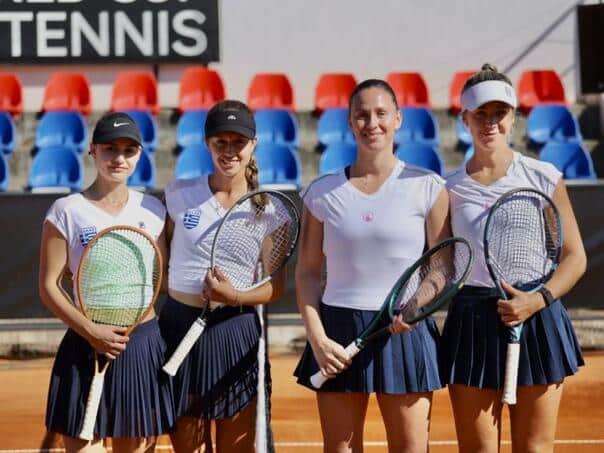
“South Africa’s Davis Cup campaign ended in disappointment as Bosnia and Herzegovina clinched a decisive 4–0 victory at Irene Country Club in Centurion. Despite tactical changes and spirited efforts, the South Africans were outplayed in both singles and doubles, leaving captain Pietie Norval’s squad to regroup for the 2027 playoffs.”
The Davis Cup remains one of tennis’s most prestigious team competitions, offering nations the chance to showcase their depth, resilience, and tactical acumen. For South Africa, the recent tie against Bosnia and Herzegovina in Centurion was billed as a crucial opportunity to advance toward the 2027 World Group I Play-offs. Instead, the encounter ended in a sobering 4–0 defeat, exposing both the challenges facing South African tennis and the formidable quality of their Eastern European opponents.
Day One: Singles Struggles
South Africa entered the tie with optimism, banking on home advantage at Irene Country Club’s hard courts at altitude. However, the opening day quickly turned against them. Philip Henning, South Africa’s top-ranked player, fell 6–4, 6–4 to Andrej Nedić, while Khololwam Montsi lost 6–4, 7–5 to Damir Džumhur. These defeats left the hosts trailing 2–0, with their margin for error eliminated.
Tactical Adjustments in Doubles
Recognizing the precarious situation, captain Pietie Norval made a bold tactical change for the doubles rubber. Initially, Alec Beckley was set to partner Thando Longwe-Smit, but Norval opted to pair Beckley with Henning, hoping the latter’s experience would tilt the balance. The Bosnian duo of Mirza Bašić and Nerman Fatić, however, proved too strong. Their consistent serving and clinical returns secured a 6–4, 6–4 victory, clinching the tie with an unassailable 3–0 lead.
Dead Rubber and Final Blow
With the tie already decided, Longwe-Smit faced Fatić in a dead rubber singles match. Despite flashes of resistance, Longwe-Smit succumbed 7–6, 6–1, sealing Bosnia and Herzegovina’s 4–0 sweep. The result underscored the visitors’ dominance and South Africa’s inability to convert critical points.
Post-Match Reflections
Henning acknowledged the narrow margins that defined the matches, noting that “a couple of break points here and there” could have changed the outcome. Norval, meanwhile, admitted surprise at the Bosnians’ quality, conceding that while South Africa had prepared thoroughly, their opponents executed at a higher level.
Implications for South African Tennis
The defeat carries significant implications. South Africa’s immediate hopes of promotion are dashed, forcing the team to regroup for the World Group II playoffs in early 2027. The loss also raises questions about depth in the squad, consistency under pressure, and the ability to adapt tactically against higher-ranked opponents.
Bosnia and Herzegovina’s Rise
For Bosnia and Herzegovina, the victory is a testament to their growing stature in world tennis. Led by experienced players like Džumhur and Bašić, the team demonstrated composure, tactical discipline, and resilience. Their progression to the World Group I Play-offs positions them as a rising force in the Davis Cup circuit.
Broader Context
South Africa’s defeat reflects broader challenges in African tennis, where infrastructure, funding, and player development often lag behind global standards. While individual talents like Montsi and Henning show promise, sustained investment and exposure to high-level competition are essential for future success.
Conclusion
The 4–0 defeat in Centurion is a harsh reminder of the competitiveness of the Davis Cup. For South Africa, it is back to the drawing board, with lessons to be learned and improvements to be made ahead of the 2027 playoffs. For Bosnia and Herzegovina, it is a moment of triumph, signaling their readiness to challenge stronger nations on the global stage.



