




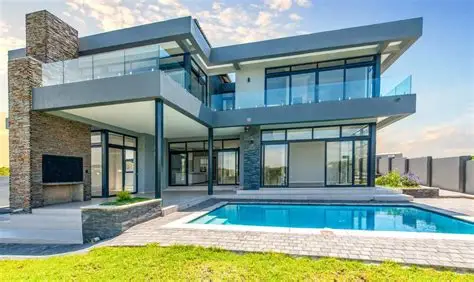
“South Africa’s luxury property sector is thriving, with estates in Cape Town and Gauteng commanding prices between R30 million and R80 million, fueled by semigration to coastal regions and international investment. Despite economic uncertainty, the premium market continues to expand, with the Western Cape accounting for nearly 10% of transactions above R4.5 million.”
South Africa’s luxury real estate market has entered a new phase of dynamism in August 2026, defying broader economic challenges and cementing its position as one of the most resilient sectors in the country’s property landscape. While affordability pressures weigh heavily on middle-income households, the upper end of the market is experiencing unprecedented growth, with buyers investing up to R80 million in secure, lifestyle-driven estates.
Market Trends
- Luxury transactions rising: Properties above R4.5 million now account for 5.2% of national transactions, up from 4% a year ago. In the Western Cape, this figure has surged to 9.9%, nearly one in ten property deals.
- Contribution to market value: The luxury segment contributes 27.6% of overall market value, highlighting its disproportionate impact relative to transaction volume.
- Estate dominance: Estates represent only 7% of housing stock, yet they generated R92.6 billion in sales in 2025, underscoring their outsized role in the premium market.
Regional Dynamics
- Cape Town: Average property prices stand at R3.35 million, well above the national average of R1.95 million. Estates such as Stonehurst, Silverhurst, and Steenberg Golf Estate have seen values climb to R60 million.
- Garden Route (George, Knysna): Land values are appreciating at 6.5% annually, driven by lifestyle appeal and migration from inland provinces.
- Gauteng: While growth is modest at 2.8%, luxury estates in Sandton and Pretoria East are recording sales in the R20–30 million range.
Drivers of Growth
- Stable interest rates: The South African Reserve Bank has maintained the repo rate at 7.00% and the prime lending rate at 10.50%, offering predictability in borrowing costs.
- Semigration trends: Movement from Gauteng and KwaZulu-Natal to the Western Cape continues to fuel demand, with families and professionals seeking coastal living and lifestyle amenities.
- International investment: Buyers from Europe and Asia are increasingly investing in South African coastal properties, attracted by favorable exchange rates and lifestyle appeal.
Lifestyle Appeal
Luxury estates are not just about property value—they represent secure, well-serviced environments with golf courses, equestrian facilities, eco-living, and recreational amenities. Buyers are hedging against failing municipal services by moving into estates that guarantee sustainability and lifestyle quality.
Risks and Challenges
- Supply constraints: Demand for luxury estates continues to outstrip supply, particularly in Cape Town.
- Economic sensitivity: High-end buyers remain cautious, with growth tied to broader economic sentiment.
Conclusion
South Africa’s luxury real estate market is thriving, with record-breaking estate sales, rising coastal demand, and international capital inflows reshaping the property landscape. While affordability pressures persist for the broader market, the premium segment continues to expand, reinforcing its role as a cornerstone of wealth preservation and lifestyle investment in 2026.



