




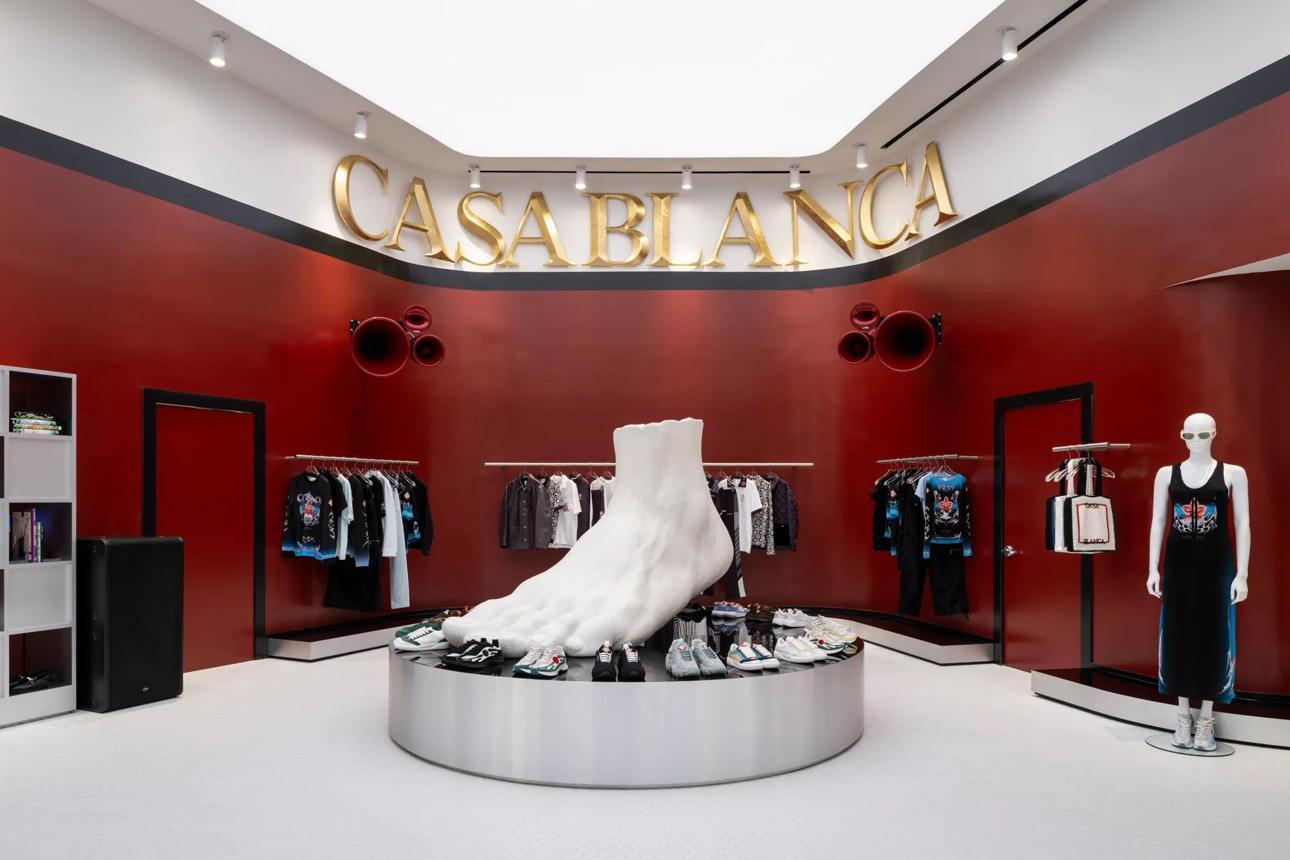
“Casablanca has opened its first dedicated South African boutique at Sandton City’s Diamond Walk, introducing local shoppers to its distinctive combination of Parisian sophistication, Moroccan cultural influences, expressive prints and contemporary luxury. The launch highlights growing opportunities for international luxury labels in South Africa while reinforcing Johannesburg’s position as a destination for premium fashion, designer retail and culturally distinctive shopping experiences.”
Expanded news article: Casablanca’s Johannesburg boutique signals a new chapter for luxury fashion in South Africa
A new destination for international luxury
Johannesburg’s luxury fashion market has welcomed a significant addition with the opening of Casablanca’s first dedicated South African boutique at Diamond Walk, Sandton City. The launch represents a further step in the development of the country’s premium retail sector, bringing a fashion house recognised for its expressive designs, cultural references and refined leisurewear closer to local consumers.
According to the announcement published by Community Newsroom on 21 October 2026, the boutique was established in partnership with Yawa Africa, following three years of collaboration to introduce and develop Casablanca’s presence in the South African market. The store offers customers an opportunity to experience the brand in a dedicated retail environment rather than encountering its collections solely through international fashion coverage or online shopping.
The opening is particularly relevant because luxury fashion increasingly depends on more than product availability. Consumers often want to understand the creative vision behind a collection, experience its materials and construction in person, and engage with the atmosphere associated with a designer’s identity.
For Casablanca, a permanent retail space provides an opportunity to communicate that identity directly. For Johannesburg, the boutique adds another international fashion destination to an established premium shopping environment.
Casablanca’s distinctive design identity
Founded in Paris in 2018 by creative director Charaf Tajer, Casablanca draws inspiration from French sophistication, Moroccan heritage, travel, sport and the glamour associated with leisure. Its approach brings together elements that might traditionally appear separate: relaxed sportswear, tailored clothing, colourful prints and luxurious textures.
Rather than relying exclusively on conventional formalwear, the label presents luxury as a lifestyle. Its aesthetic evokes destinations, hospitality, sporting culture and cinematic experiences, allowing clothing to communicate a particular mood as well as a sense of style.
This identity distinguishes Casablanca within an increasingly competitive international fashion market. Luxury shoppers can choose from numerous established houses, emerging designers and premium streetwear labels. A recognisable creative direction therefore becomes an important way for a brand to establish a connection with its audience.
The Johannesburg boutique translates this philosophy into its physical surroundings. The published announcement describes curved architectural forms, an evergreen and ivory palette, colourful accents and sculptural displays. A hand-laid mosaic monogram also references North African craftsmanship.
These elements make the store part of the brand’s presentation rather than simply a location where merchandise is displayed. The architecture, colour choices and materials are intended to reinforce the same visual language found in the collections.
Collections inspired by Egypt
The boutique opened with Casablanca’s Pre-Fall and Autumn/Winter 2026 collections, both of which explore Egypt through cinematic storytelling.
The collections draw on ancient architecture, desert landscapes and Egyptian café culture. These references connect fashion with places, memories and imagined journeys, creating a narrative that extends beyond individual garments.
The reported collection features printed silks, textured knitwear, elevated sportswear, refined tailoring and glamorous clothing influenced by cinematic imagery. Together, these elements demonstrate the house’s approach to balancing expressive design with practical wardrobe pieces.
For South African shoppers, the collection’s cultural references may also offer an alternative to fashion narratives centred exclusively on traditional European luxury. Casablanca combines Parisian fashion influences with North African heritage, illustrating how a global brand can draw from multiple cultural perspectives.
That approach is increasingly relevant to a fashion industry in which customers encounter international styles through social media, travel, digital publications and global retail platforms. Consumers can be interested in a label’s aesthetic while also wanting to understand the cultural influences behind its designs.
The collections’ cinematic direction provides a way to communicate that background. It gives shoppers a story to associate with the garments and creates continuity between the brand’s creative identity and its retail experience.
Why Sandton City matters
The decision to establish the boutique at Diamond Walk, Sandton City, places Casablanca within one of Johannesburg’s recognised premium shopping destinations.
Location is an important consideration for international luxury brands entering a new market. A suitable retail environment can help connect a designer with consumers who already visit the area to shop for premium clothing, accessories and lifestyle products.
A dedicated store can also provide opportunities to build customer relationships over time. Shoppers can return to explore new collections, compare different pieces and become familiar with the brand’s changing creative direction.
For Casablanca, the boutique establishes a more direct connection with South African customers. For the local retail sector, the opening contributes to the continued development of specialised fashion destinations where international labels and distinctive shopping experiences play an important role.
However, a prestigious location alone does not guarantee commercial success. Long-term performance will depend on customer demand, product selection, pricing, service, stock availability and the brand’s ability to maintain relevance.
The announcement confirms the boutique’s opening, but it does not provide sales figures, customer numbers or forecasts. Consequently, the wider commercial impact will need to be assessed through future developments rather than assumed from the launch itself.
Yawa Africa and the importance of local partnerships
The relationship between Casablanca and Yawa Africa is central to the South African expansion. According to the announcement, the partners have worked together for three years to establish the brand’s local presence.
Local partnerships can be valuable to international fashion houses because entering a market involves more than importing collections. Brands must understand local retail conditions, customer expectations, operational requirements and the competitive landscape.
A partner with regional knowledge can help coordinate these elements while supporting the brand’s identity. The opening of a dedicated boutique represents a progression from introducing a label to creating a permanent environment in which its collections can be presented.
For international designers, the challenge is to maintain consistency across markets while responding to local conditions. The store must reflect the creative vision of the fashion house, but its commercial operation also needs to work within South Africa’s retail environment.
The Casablanca launch illustrates how international brand expansion can involve collaboration between a global fashion business and local partners. Whether the partnership leads to additional stores or broader distribution remains unconfirmed by the announcement.
Competition and opportunity in luxury fashion
Casablanca’s arrival comes amid a wider evolution in South African luxury retail. International brands are competing not only on product quality and reputation but also on design originality, customer experience and the stories attached to their collections.
Other recent developments illustrate the diversity of this market. British luxury streetwear label Represent opened its first African flagship at Cape Town’s V&A Waterfront in August 2026 and announced a further Johannesburg store for October. Meanwhile, Lebanese designer Elie Saab’s collaboration with H&M launched in selected South African retail locations on 22 October.
These developments represent different commercial strategies. Represent is building a physical retail footprint for premium streetwear, while the Elie Saab and H&M collaboration introduces the designer’s signature glamour to a wider retail audience. Casablanca, by contrast, is establishing a dedicated boutique centred on its own creative world.
Together, the developments demonstrate that luxury fashion is not a single, uniform market. It includes traditional couture, premium ready-to-wear, luxury streetwear and collaborations that bring designer aesthetics to broader audiences.
For consumers, this variety offers more ways to engage with fashion. For brands, it increases the importance of understanding the audience they want to serve and ensuring that their positioning remains clear.
African creativity and the future of luxury
Casablanca’s expansion also arrives at a time when African designers are building greater international visibility.
South African label MaXhosa Africa, founded by Laduma Ngxokolo, presented its first runway show on the official Paris Fashion Week calendar in October 2026. The collection developed the label’s established knitwear language while exploring new silhouettes and materials.
This development is important because the luxury market can benefit from a wider range of creative perspectives. African designers bring distinctive cultural histories, techniques and visual languages to an international industry that has often been shaped by established European fashion centres.
The opportunity is not simply to reproduce international trends. It is to create work with a strong identity that can compete through design, construction, quality and storytelling.
Casablanca’s Moroccan influences and MaXhosa’s Xhosa cultural references represent different approaches to expressing heritage through contemporary fashion. Their business models are not identical, but both illustrate how cultural identity can contribute to a brand’s creative distinction.
For South African retailers, this changing landscape creates opportunities to serve consumers interested in both global luxury labels and African designers. A stronger local fashion ecosystem could also create more opportunities for creative collaboration, retail development and international exposure.
Nevertheless, meaningful progress requires sustained investment, reliable production, commercial discipline and access to customers. Cultural recognition must be supported by the infrastructure needed to develop and maintain a successful fashion business.
What the opening means for consumers
For customers in Johannesburg, Casablanca’s boutique provides direct access to the brand’s collections in a dedicated setting. Shoppers can explore the garments, assess their fit and materials, and experience the label’s presentation in person.
The opening also reinforces the importance of physical retail in an increasingly digital fashion economy. Online platforms make international brands easier to discover, but dedicated stores can offer a different experience through personal interaction, visual presentation and direct product inspection.
For consumers considering luxury purchases, however, the brand name should not be the only consideration. Quality, comfort, construction, versatility and personal preference remain important when evaluating whether a garment represents good value.
Luxury clothing is often a discretionary purchase, and consumers benefit from understanding the product, comparing available options and considering how frequently they will wear it.
Casablanca’s collections combine expressive visual elements with more relaxed clothing, potentially offering different ways to incorporate the label into a wardrobe. The suitability of any particular item will depend on the individual shopper’s needs and budget.
The boutique’s long-term success will ultimately depend on whether its products and service meet customer expectations beyond the initial excitement of the opening.
Outlook for Johannesburg’s luxury retail market
Casablanca’s first dedicated South African boutique marks a notable development for Johannesburg’s luxury fashion scene. It strengthens the city’s offering of international designer retail and provides a permanent setting for a brand whose identity combines French sophistication, Moroccan heritage and contemporary leisurewear.
The launch also reflects the importance of local partnerships, distinctive retail environments and compelling design narratives in international fashion expansion.
Yet the broader implications should be viewed realistically. One boutique does not establish the size or growth rate of South Africa’s luxury market, and the announcement does not disclose commercial performance data. Future sales, customer engagement and any subsequent expansion would provide stronger evidence of the brand’s position in the country.
For now, the opening at Diamond Walk gives Casablanca a new platform through which to introduce its collections to South African consumers. It also adds to a wider fashion conversation about the relationship between global luxury, cultural identity and the changing expectations of premium shoppers.
As Johannesburg continues to attract international fashion labels and develop opportunities for local designers, the central question will be whether retailers can translate attention into lasting customer relationships.
Casablanca’s new boutique provides an opportunity to do precisely that. Its next chapter in South Africa will depend on the strength of its collections, the experience it offers customers and its ability to establish a sustainable presence in a competitive market.
Article conclusion: Casablanca’s Johannesburg opening is a significant luxury retail development, bringing a distinctive international fashion house into a dedicated South African space. More broadly, it highlights a fashion landscape in which cultural storytelling, customer experience and design identity are increasingly important alongside the prestige of a luxury brand.



