




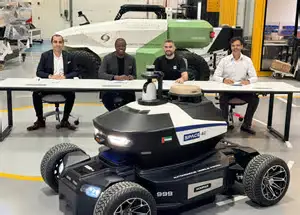
“At the Manufacturing Indaba 2026, the CSIR introduced robotics systems designed for precision manufacturing, automated assembly, and industrial inspection, aiming to boost efficiency and reduce costs. The initiative emphasizes upskilling workers to operate and maintain robotics, ensuring South Africa’s workforce adapts to Industry 4.0.”
South Africa’s manufacturing industry is entering a new era. At the Manufacturing Indaba 2026, hosted at the Sandton Convention Centre in Johannesburg, the Council for Scientific and Industrial Research (CSIR) unveiled a suite of robotics innovations that promise to reshape industrial processes. This showcase was not just a technological exhibition—it was a strategic intervention aimed at revitalizing South Africa’s industrial base, fostering resilience, and positioning the nation as a global leader in innovation-driven manufacturing.
Robotics at the Forefront
Among the technologies presented, robotics stood out as the most transformative. CSIR researchers demonstrated systems capable of:
- Precision manufacturing – ensuring accuracy in production lines.
- Automated assembly – reducing production time and minimizing human error.
- Industrial inspection – guaranteeing consistent product standards.
These systems are already being integrated into production lines, warehouses, and healthcare applications, signaling a broad impact across multiple sectors.
Economic and Industrial Impact
The introduction of robotics into South Africa’s manufacturing sector is expected to yield significant economic benefits:
- Reduced reliance on imported machinery, strengthening domestic production capacity.
- Enhanced industrial resilience, creating opportunities for local suppliers, engineers, and technicians.
- Improved productivity and reduced costs, enhancing competitiveness in global markets.
- Boosted exports, as industries adopt robotics-driven processes that meet international standards.
This shift could see South Africa’s manufacturing exports surge, positioning the country as a regional hub for robotics-driven industrial innovation.
Workforce Transformation
Automation often raises concerns about job displacement. However, CSIR emphasized that robotics will complement rather than replace human labor. The focus is on upskilling workers to operate, maintain, and innovate within robotics-driven environments. Training programs are being developed in collaboration with universities and technical colleges to prepare the next generation of engineers and technicians. This workforce transformation is critical for ensuring that South Africa’s labor market adapts to the demands of Industry 4.0.
Strategic Importance
South Africa’s embrace of robotics is not just about technology—it is about national resilience. By integrating robotics into manufacturing, the country reduces its vulnerability to global supply chain disruptions. Moreover, robotics-driven processes enhance quality control, ensuring that South African products meet international standards and remain competitive in export markets.
Global Context
Globally, robotics adoption has accelerated in countries like Germany, Japan, and China, where automation is central to industrial competitiveness. South Africa’s move signals its intent to join this global race, leveraging robotics to strengthen its industrial base and secure a foothold in international markets.
Challenges Ahead
Despite the optimism, challenges remain:
- High upfront costs of robotics systems.
- Need for sustained investment in training and education.
- Potential resistance from labor unions concerned about job security.
Addressing these challenges will require collaboration between government, industry, and academia to ensure that robotics adoption is inclusive and sustainable.
Conclusion
The CSIR’s robotics showcase at the Manufacturing Indaba 2026 marks a turning point for South Africa’s manufacturing industry. By embracing robotics, the nation is not only modernizing its industrial base but also empowering its workforce, strengthening its economy, and positioning itself as a leader in innovation-driven manufacturing. The journey ahead will require careful navigation of challenges, but the potential rewards—economic growth, industrial resilience, and global competitiveness—make robotics a cornerstone of South Africa’s future.



