




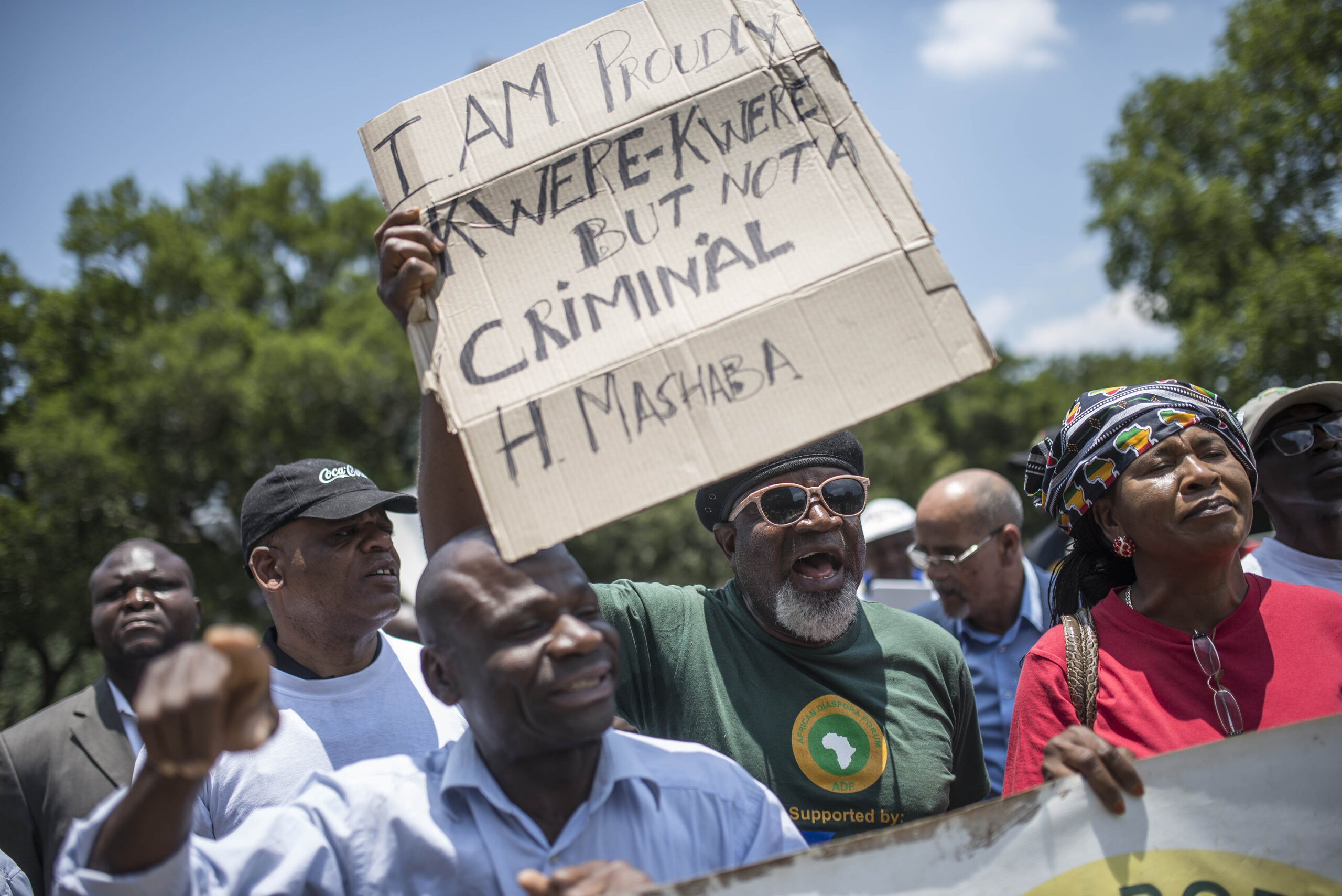
“Nationwide anti-immigration marches have disrupted South Africa’s informal economy, forcing spaza shops and micro-enterprises to close amid fears of looting. Economists caution that the protests highlight deeper structural challenges of poverty, unemployment, and inequality, with long-term risks for community-level trade and labor markets.”
South Africa’s informal economy, long considered the lifeline of township communities, is facing unprecedented disruption following nationwide anti-immigration protests. The marches, which swept across all provinces, were largely peaceful but carried significant economic consequences. While the government praised the orderly conduct of demonstrators, economists warn that the protests have exposed vulnerabilities in microeconomic structures, particularly within spaza shops, street vendors, and small-scale enterprises.
Background of the Protests
The protests were driven by growing frustration over undocumented immigration and its perceived impact on local communities. Demonstrators demanded the removal of undocumented migrants, citing competition for jobs, housing, and public services. Although the marches were mostly peaceful, isolated incidents of looting and violence occurred, including a fatal shooting in Alexandra.
Dr. Lumkile Mondi, a senior economist at Wits University, contextualized the protests within South Africa’s broader socio-economic challenges. He argued that the unrest reflects the government’s failure to address poverty, unemployment, and inequality—issues that remain deeply entrenched decades after apartheid.
Microeconomic Impact
The immediate fallout was felt most acutely in the informal sector:
- Spaza shops and street vendors closed to avoid looting, halting daily trade.
- Micro-enterprises reliant on foot traffic saw sharp declines in revenue.
- Digitalized businesses such as e-hailing services continued operating, highlighting disparities between traditional and modern economic tiers.
This disruption underscores the fragility of microeconomic systems that depend on daily cash flow and consumer trust. For many township residents, spaza shops are not just businesses but essential providers of food and household goods. Their closure, even temporarily, creates ripple effects across communities.
Labor Market Dynamics
The protests reignited debates about labor competition between South Africans and foreign nationals. While protesters argue that undocumented migrants “steal jobs,” economists emphasize that the reality is more complex. Migrants often fill low-wage positions in sectors shunned by locals, such as domestic work and informal retail. Dr. Mondi stressed that the futures of South Africans and the broader Southern African Development Community (SADC) are intertwined, making exclusionary policies economically unsustainable.
Structural Challenges
The protests highlight deeper structural issues:
- Poverty: Many South Africans remain trapped in cycles of deprivation, with limited access to upward mobility.
- Unemployment: Youth unemployment rates exceed 60%, fueling resentment toward migrants perceived as competitors.
- Inequality: Wealth remains concentrated among elites, while township economies struggle to survive.
Dr. Mondi criticized the government’s response as “belated and disappointing,” noting the absence of concrete plans to improve material conditions for the poorest citizens.
Political and Social Dimensions
The democratic framing of the protests drew comparisons to the anti-apartheid movement, with citizens mobilizing against perceived injustice. However, unlike the liberation struggle, today’s protests risk deepening xenophobia and social division. Political elites have been accused of exploiting public anger to deflect attention from governance failures.
Long-Term Economic Risks
If protests continue, the risks include:
- Declining investor confidence in township economies.
- Reduced cross-border trade within SADC.
- Erosion of community trust between locals and migrants.
Microeconomic resilience depends on stability, and repeated disruptions could permanently weaken informal markets.
Conclusion
The immigration protests of July 2026 mark a turning point for South Africa’s microeconomy. While they reflect legitimate frustrations over poverty and unemployment, their economic fallout threatens the very businesses that sustain township life. Without targeted government intervention—such as infrastructure investment, job creation, and inclusive policies—the informal sector may struggle to recover.
South Africa’s challenge lies not in excluding migrants but in addressing structural inequalities that fuel resentment. As Dr. Mondi emphasized, the intertwined futures of South Africans and their neighbors demand cooperation, not division. The protests may fade, but their economic lessons will resonate for years to come.



