




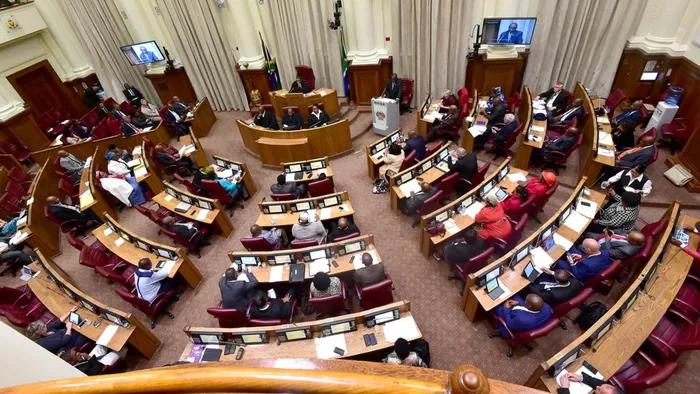
“South Africa’s Electoral Laws Amendment Bill, B24-2026, proposes significant changes to the rules governing political-party registration and eligibility to contest elections, including mandatory annual renewal for unrepresented parties. The legislation has become particularly important ahead of the 4 November 2026 local government elections, although the Independent Electoral Commission has indicated that several provisions could remain important even after the election.”
Electoral legislation moves into the political spotlight
South Africa’s electoral framework is again at the centre of political debate as Parliament considers the Electoral Laws Amendment Bill, B24-2026. The legislation seeks to amend three important pieces of electoral law: the Electoral Commission Act of 1996, the Electoral Act of 1998 and the Local Government: Municipal Electoral Act of 2000. Its provisions touch directly on how political parties register, maintain their status and qualify to participate in elections.
The timing is particularly significant. South Africa is preparing for its 2026 local government elections, scheduled for 4 November. With political parties competing for municipal seats across the country, any change to the rules governing registration and electoral eligibility has potentially significant consequences for the political landscape.
The Bill proposes that political parties without representation in a legislative body should face mandatory annual renewal requirements. Failure to renew would result in mandatory deregistration. It also proposes rules concerning which registered parties are eligible to contest elections once an election has been announced.
These proposals could have a major impact on smaller and newly established political organisations. South Africa has a large number of registered political parties, and the electoral system has increasingly allowed smaller organisations and independent political movements to compete for voters. The proposed legislation therefore raises broader questions about political participation, administrative efficiency and the balance between maintaining an orderly electoral system and preserving access to democratic competition.
What the Bill proposes
According to Parliament’s official description, the Electoral Laws Amendment Bill would amend the Electoral Commission Act to introduce mandatory deregistration of unrepresented political parties that fail to renew their registration annually. It would also introduce a provision dealing with the eligibility of registered political parties to contest elections and make changes to the composition of the Electoral Court.
The legislation would also amend provisions in the Electoral Act relating to definitions, voter-registration requirements and objections to the voters’ roll. Among the proposed changes is a limitation of objections to the provisionally compiled voters’ roll, together with clarification of the Electoral Commission’s authority when dealing with objections.
The Local Government: Municipal Electoral Act would also be amended, particularly regarding the definition of political parties and their eligibility to contest municipal elections.
Taken together, these changes represent an attempt to update the legal framework governing elections and clarify procedures that become especially important when election periods approach.
Cabinet previously approved the introduction of the Bill, describing its purpose as strengthening and aligning the electoral legislative framework in preparation for the 2026 local government elections. The government said the changes were intended to improve the administration and management of elections and support free, fair and credible elections.
Why political-party registration matters
Political-party registration is more than an administrative procedure. Registration determines whether an organisation can formally participate in elections and therefore whether voters will have the opportunity to support that organisation on the ballot.
South Africa’s political system has historically been dominated by large parties, but recent elections have demonstrated growing competition from smaller parties and independent political actors. Municipal politics has particularly encouraged fragmentation, coalition formation and the emergence of local political organisations.
The proposed annual renewal requirement for unrepresented parties is therefore likely to attract attention from smaller political organisations.
Supporters of the change can argue that the measure would help maintain an accurate and credible register of political parties. If organisations register but subsequently become inactive, an outdated register can create administrative difficulties and potentially complicate election management.
The Electoral Commission has an interest in knowing which parties remain active and intend to participate in the political process. Regular renewal could provide a mechanism for distinguishing active organisations from dormant ones.
However, the proposal also raises questions about whether administrative requirements could unintentionally disadvantage smaller parties that lack the financial, organisational or human resources available to larger political organisations.
The election timetable adds urgency
The legislation is being considered against the background of the 2026 municipal elections. The Electoral Commission has confirmed that the local government elections will take place on 4 November 2026, making the legislative timetable particularly important.
Recent reporting indicated that the Electoral Laws Amendment Bill was tabled in Parliament ahead of the November elections. One of its most politically significant provisions would establish a firm relationship between party registration and eligibility to participate in an election.
The question is therefore not simply whether Parliament agrees with the policy objectives of the Bill. The timing of legislative approval, implementation and possible legal challenges can also influence whether particular provisions have practical relevance for the November election.
The Independent Electoral Commission has reportedly asked Parliament to continue processing the legislation even if it cannot be completed before the 4 November election. According to recent reporting, Deputy Chief Electoral Officer Masego Sheburi told Parliament’s Home Affairs Portfolio Committee that some provisions could be particularly useful for by-elections and party registration after the November poll.
That position is important because it indicates that the legislation has significance beyond one election cycle.
Possible impact on smaller political parties
One of the biggest political questions surrounding the Bill concerns its effect on smaller parties.
South Africa’s proportional representation system has historically allowed parties with relatively limited national support to obtain representation when they meet the applicable electoral requirements. At municipal level, numerous parties can also compete for seats.
Mandatory annual renewal could create a stronger administrative discipline for parties that want to remain on the register.
For larger parties, completing registration-related administrative procedures may be relatively straightforward because they generally have established structures and dedicated officials. Smaller parties, however, may operate with fewer resources.
The debate will therefore involve two competing democratic principles.
The first is the need for an efficient, credible and manageable electoral system. The second is the constitutional importance of political participation and the ability of citizens to organise politically.
Any legislation governing elections must balance these objectives carefully.
The Bill’s provisions on eligibility could also become important because they determine which registered organisations are permitted to appear on ballots once an election has been announced. Parliament’s official description specifically identifies eligibility as one of the areas requiring amendment.
Parliament’s legislative process remains important
The Bill is not automatically law simply because it has been introduced. Parliament explains that a Bill must generally pass through both Houses before being sent to the President for assent. Bills are referred to relevant committees, where members can debate provisions, consider amendments and, where appropriate, conduct public participation.
Parliament’s current list shows the Electoral Laws Amendment Bill among legislation under consideration, alongside other significant Bills dealing with areas including municipal structures, corruption, policing, employment and finance.
This parliamentary process is especially important for electoral legislation because election rules affect every political party and millions of voters.
Public participation can therefore provide an opportunity for political organisations, civil society groups, electoral experts and members of the public to raise concerns about particular provisions.
The government has also published notices concerning the Electoral Laws Amendment Bills and invited comments, illustrating that the legislative process includes opportunities for public input.
A broader reform agenda
The Electoral Laws Amendment Bill should also be viewed within South Africa’s broader programme of electoral reform.
The country has undergone several important electoral-law changes in recent years. Constitutional and legislative developments have expanded opportunities for independent candidates and prompted continued debate about the design of South Africa’s electoral system.
The current Bill focuses more directly on party registration, eligibility and election administration. Nevertheless, it forms part of an ongoing effort to ensure that electoral law keeps pace with changes in political participation.
The 2026 municipal elections will provide another important test of the country’s electoral framework.
Municipal politics is particularly complex because voters are choosing representatives for institutions responsible for everyday services such as water, electricity, roads, waste management and local planning. Political parties and independent candidates therefore compete not simply for ideological support but for the responsibility of governing communities directly.
The significance for South African democracy
At its heart, the legislation raises a fundamental question: how should South Africa maintain an open political system while ensuring that its elections are administered efficiently?
A democratic electoral system needs clear rules. Parties must understand the requirements for registration, candidates must know the conditions for participation, and election officials must have legally defined responsibilities.
At the same time, those rules must not unnecessarily restrict political competition.
The Electoral Laws Amendment Bill attempts to address administrative weaknesses while clarifying eligibility and registration requirements. Whether it achieves that objective will depend heavily on how Parliament finalises the provisions and how they are ultimately implemented.
The political significance is considerable because changes to electoral law can influence who is able to compete for public office.
What happens next
The Bill remains part of Parliament’s legislative programme, and its progress will be closely watched by political parties, electoral officials and civil society.
The immediate focus is the November local government election, but the legislation’s importance extends beyond that contest. The IEC’s reported request that Parliament continue processing the Bill even if it misses the November election demonstrates that its provisions could influence future by-elections, party registration and subsequent electoral administration.
For South African voters, the most important issue is ultimately whether the reforms strengthen confidence in the electoral system.
For political parties, particularly smaller organisations, the key concern will be whether the new requirements create reasonable administrative standards without unnecessarily restricting participation.
For Parliament, the challenge is to balance efficiency, constitutional rights, political competition and electoral integrity.
As South Africa moves closer to the 4 November municipal elections, the Electoral Laws Amendment Bill therefore represents more than a technical adjustment to election legislation. It is part of a continuing debate about how South Africa’s democracy should regulate political parties, protect voter choice and maintain a credible electoral process.



