




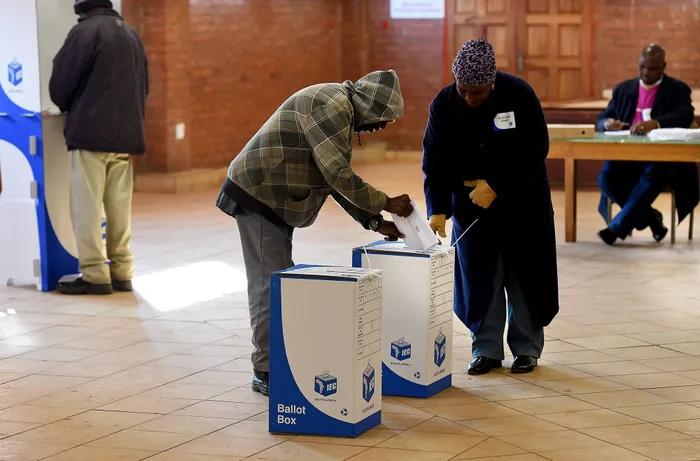
“A new News24/SABI opinion poll shows South Africa entering the 2026 local government elections with a deeply fragmented electorate, with no clear outright winner emerging in several major metropolitan areas. The findings point to shifting voter loyalties, growing competition between established and smaller parties, and the increasing importance of coalition politics as voters prepare to cast their ballots on 4 November.”
South African Voters Signal Major Political Shift as News24/SABI Poll Shows Fragmented Local Election Race
South Africa’s political landscape is entering another decisive period as voters prepare for the 4 November 2026 Local Government Elections. A newly published News24/SABI opinion poll provides a detailed snapshot of public sentiment and points to an increasingly fragmented electorate, with the African National Congress (ANC), Democratic Alliance (DA), uMkhonto weSizwe Party (MKP), Economic Freedom Fighters (EFF) and smaller parties competing for influence in major municipalities.
The findings are particularly important because local government directly affects many of the issues voters encounter in their daily lives, including electricity, water, roads, refuse collection, housing, public transport and municipal administration. The poll suggests that voters are assessing political parties increasingly through the lens of performance, credibility and local service delivery rather than relying solely on traditional party loyalties.
According to the News24/SABI research, the poll involved 5,001 registered voters interviewed between 25 August and 17 September 2026. The national sample consisted of 1,000 respondents, while Johannesburg, Cape Town and eThekwini each had samples of about 1,000 respondents, with 1,001 respondents surveyed in Tshwane. The researchers used weighting based on voter-registration and demographic information and applied a turnout model.
The researchers also stress that the findings are a snapshot of public sentiment rather than a prediction of the final election result. That distinction is important because voter intentions can change substantially during the final weeks of an election campaign, particularly when parties intensify their campaigning and voters become more familiar with candidates and manifestos.
Nevertheless, the findings reveal an important political trend: South Africa’s electorate is becoming increasingly difficult for traditional political parties to take for granted.
Johannesburg Emerges as a Major Battleground
Johannesburg is among the clearest examples of political fragmentation. The News24/SABI poll places DA veteran Helen Zille at 36% in the mayoral race, making her the leading individual contender but still far below the 50% level required to establish an outright majority.
That result means the Johannesburg contest is not simply about which candidate finishes first. It is also about which parties can negotiate effectively after voters have cast their ballots.
The poll indicates that Zille would require coalition partners to govern. This reinforces a broader trend in South African politics in which municipal administrations increasingly depend on agreements between parties rather than single-party majorities.
Johannesburg’s political importance extends beyond its municipal boundaries. As South Africa’s largest economic hub, the city’s government has a significant influence on business confidence, infrastructure, employment conditions and the quality of public services experienced by millions of residents.
The competition therefore has national implications. A major shift in Johannesburg could affect perceptions of the strength of the ANC, the prospects of the DA and the future role of smaller parties ahead of the 2029 national elections.
Tshwane Shows Opposition Momentum
The News24/SABI findings also show the DA ahead of the ANC in Tshwane. The DA is recorded at 32%, compared with 24% for the ANC if the election were held at the time of the survey.
Although the figures do not guarantee an electoral victory, they demonstrate the competitive nature of the capital city’s political environment.
Tshwane has experienced coalition politics in recent years, and the 2026 election could again produce a council in which negotiations determine who governs. For voters, this means the election may not end when the ballots are counted. The ability of parties to build stable governing arrangements could be just as important as their performance on election day.
The result also demonstrates the changing relationship between voters and historically dominant parties. The ANC remains a major political force, but its previous ability to rely on deeply established electoral support is increasingly being challenged in metropolitan areas.
eThekwini Highlights the Rise of MKP
In eThekwini, the political picture is substantially different. The News24/SABI poll identifies former president Jacob Zuma’s MK Party as the strongest political force among voters surveyed in the municipality.
The development is significant because eThekwini has historically been one of the ANC’s important centres of support. The emergence of MKP as a major competitor demonstrates how quickly political loyalties can change when voters become dissatisfied with established parties.
The shift is also consistent with other recent polling. Ipsos previously reported that MKP could command 55% among voters expressing a party preference in eThekwini, although Ipsos warned that polling should not be interpreted as a prediction of the final outcome.
The competing surveys differ in methodology and timing, but both point toward the same broader conclusion: eThekwini is experiencing a significant political realignment.
That realignment could have consequences throughout KwaZulu-Natal, where party competition has intensified following the ANC’s declining support and the rise of new political movements.
Cape Town Presents a Different Political Picture
Cape Town remains different from the other major metros. The News24/SABI research describes a striking contrast between how residents view South Africa’s overall direction and how they assess their own city.
This distinction illustrates the increasingly local nature of municipal elections. Voters may be dissatisfied with national politics while simultaneously expressing greater confidence in their municipality. Conversely, dissatisfaction with local services can motivate voters to punish a party even when they remain supportive of it nationally.
Cape Town’s political environment has historically been dominated by the DA, which has maintained a strong governing position in the Western Cape. Other polling has similarly shown the DA ahead in the province and in the city.
The challenge for the DA, however, is maintaining its dominance while expanding beyond the Western Cape. The party’s performance in Johannesburg, Tshwane and other metros will be closely watched because success outside Cape Town would strengthen its claim to becoming the country’s largest political party.
Public Opinion Is Becoming More Important
The most important feature of the latest polling may not be the performance of any individual party. Instead, it is the evidence that South African voters are becoming more unpredictable.
Recent research has repeatedly highlighted frustration with local government and concerns about service delivery. Afrobarometer has reported dissatisfaction with local government ahead of the 2026 elections, while other research has raised concerns about public trust and democratic participation.
This environment creates opportunities for opposition parties and smaller political movements.
At the same time, however, fragmentation creates its own challenges. A growing number of parties may give voters more choices, but it can also make municipal councils harder to govern.
Election analysts have noted that South Africa will have an exceptionally crowded ballot in many municipalities. In Johannesburg, for example, 75 parties are contesting the proportional-representation ballot. Nationally, more than 136,000 candidates have been certified for 10,526 council seats.
For voters, more choice can be empowering. However, it can also make it harder to distinguish between parties, candidates and policy programmes.
Coalition Politics Could Decide the Outcome
The rise of coalition politics is one of the central consequences of the changing public mood.
Where no party secures a majority, parties must negotiate to establish a governing coalition. That process can provide smaller parties with considerable influence because they may hold the seats required to create a majority.
Recent reporting indicates that the DA, MKP and ActionSA have said they will wait for election results before entering coalition negotiations. Analysts have warned that prolonged negotiations could delay municipal decision-making and affect service delivery.
This creates an important dilemma for voters. A voter may support a particular party because of its promises on water, electricity, housing or crime, but the eventual municipal government could be controlled by a coalition involving several parties.
Consequently, voters are increasingly being asked to consider not only which party they prefer, but also which political partnerships they believe could produce stable government.
The ANC Faces a Crucial Test
For the ANC, the election represents another major test following the party’s loss of its national majority in the 2024 general election.
The party remains deeply established across South Africa, particularly in several provinces and municipalities. However, polling indicates that its support is under pressure in some major urban centres.
Ipsos, for example, found competitive ANC-DA contests in Johannesburg, Ekurhuleni, Nelson Mandela Bay and Buffalo City, while its national provincial figures showed the ANC ahead of the DA but with a substantially reduced level of support compared with previous electoral eras.
The ANC’s challenge is therefore twofold: retaining traditional supporters while persuading dissatisfied voters that it can improve municipal governance.
The party’s ability to respond to concerns about corruption, infrastructure and service delivery could be decisive.
What the Poll Means for South Africa
The News24/SABI findings demonstrate that the 2026 local elections are unlikely to be a simple contest between two dominant parties.
Instead, voters appear to be distributing their support across a wider range of political organisations. The ANC remains important, the DA is competitive in several metros, MKP has established itself as a major force in KwaZulu-Natal, and smaller parties could become decisive in coalition negotiations.
For South African voters, the coming weeks will therefore be critical. Campaign promises, mayoral candidates, local service-delivery records and coalition strategies could all influence final decisions.
The poll should not be treated as a forecast. News24 and SABI explicitly caution that polling represents a snapshot of sentiment at a particular moment.
However, it provides a valuable indication of the political mood heading into November.
The central message is clear: South Africa’s voters are increasingly willing to reconsider established political loyalties. The 2026 Local Government Elections could therefore become another important milestone in the country’s evolving multiparty democracy, with public opinion, coalition negotiations and local performance determining who governs some of the country’s most important cities.
As 4 November approaches, political parties will be fighting not only for votes but also for the trust of an electorate that appears increasingly prepared to demand results before offering its loyalty.



