




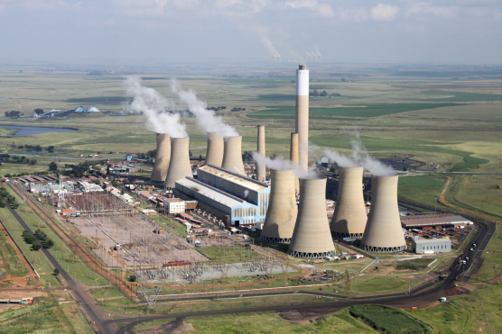
“South Africa has achieved its first winter in over a decade without major load shedding, thanks to Eskom’s improved fleet availability and new coal-fired stations reaching full output. However, the country faces looming challenges in gas supply and liquid fuels, with the Zululand Energy Terminal at Richards Bay emerging as a critical project to secure future energy resilience.”
South Africa’s energy landscape is undergoing a profound transformation. For the first time in more than ten years, households and businesses have experienced a winter largely free from load shedding. Eskom’s fleet availability has climbed above 65%, bolstered by the full output of two new coal-fired power stations. Yet beneath this progress lies a complex web of challenges: declining natural gas reserves, shuttered oil refineries, and the urgent need for infrastructure investment. The Zululand Energy Terminal at Richards Bay, a flagship project for liquefied natural gas (LNG) imports, has become a focal point in the country’s energy future.
Eskom’s Improved Stability
- Fleet availability: Eskom’s generation fleet has risen from below 50% to above 65%.
- Coal-fired stations: Kusile and Medupi, two of South Africa’s newest coal plants, are finally delivering full output.
- Impact: This improvement has temporarily stabilized electricity supply, reducing reliance on rotational load shedding.
This milestone is significant for a country where rolling blackouts have been a defining feature of daily life. Improved availability not only boosts confidence in Eskom but also provides breathing room for policymakers to address longer-term energy diversification.
Gas Supply Risks
- Current reliance: South Africa produces almost no natural gas domestically.
- Imports from Mozambique: Sasol imports gas from two ageing fields, in production since 2004.
- Deadline extensions: Sasol has extended guaranteed supply to July 2028, but the decline is inevitable.
The looming decline in Mozambique’s fields underscores the urgency of developing LNG import infrastructure. Without it, industries and households in Gauteng could face severe shortages.
Zululand Energy Terminal
- Location: Richards Bay, KwaZulu-Natal.
- Partnership: Joint venture between Vopak Terminal Durban, Transnet Pipelines, and Reatile.
- Concession: 25-year agreement to build and operate the terminal.
- Capacity: Floating storage unit initially, scaling to a permanent tank of 200,000 cubic metres.
- National plan: Supports 6,000MW of gas-fired power.
- Customers: Eskom and ExxonMobil already signed on.
This project represents the most advanced LNG terminal initiative in South Africa. While Ngqura and Saldanha Bay remain on paper, Richards Bay is moving forward, positioning itself as the cornerstone of South Africa’s gas future.
Liquid Fuels Challenge
- Refinery closures: Three of South Africa’s six oil refineries have shut down since 2020.
- Impact: Increased reliance on imports for refined petroleum products.
- Risk: Vulnerability to global supply chain disruptions and price volatility.
The decline in domestic refining capacity mirrors the gas challenge: South Africa is increasingly dependent on external sources for critical energy inputs.
Policy and Industrial Alignment
Energy reform is not just about infrastructure—it is about aligning industrial policy with energy transition goals. Calls for greater coordination between the Presidential Climate Commission, National Planning Commission, and Eskom highlight the need for a unified strategy.
Economic and Social Implications
- Households: Improved electricity supply reduces disruptions but tariff hikes remain a burden.
- Businesses: Mining, manufacturing, and agriculture benefit from stability but face higher costs from fuel imports.
- Employment: Infrastructure projects like Zululand Energy Terminal create jobs, but refinery closures threaten livelihoods.
Conclusion
South Africa’s energy sector stands at a crossroads. Eskom’s improved performance offers short-term relief, but declining gas reserves and refinery closures expose long-term vulnerabilities. The Zululand Energy Terminal is a beacon of progress, yet the country must accelerate diversification into renewables, LNG, and industrial alignment to secure its energy future.



