




“South African nutrition experts are calling for ultra-processed food companies to be excluded from future national nutrition congresses, arguing that their participation could create conflicts of interest and give the public an impression that their products have professional endorsement. The congress organisers and participating companies dispute that their involvement undermines scientific independence, highlighting screening procedures, disclosure requirements and the importance of assessing individual foods according to their nutritional composition.”
South Africa’s Nutrition Debate Intensifies as Experts Challenge Food Industry Involvement in Professional Congresses
Introduction
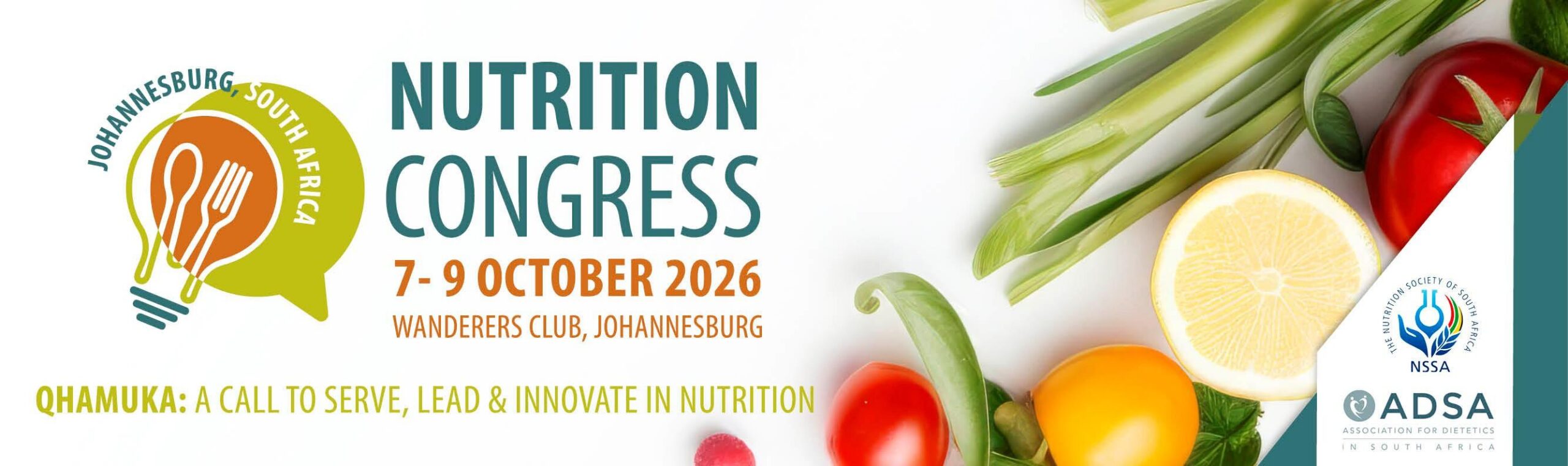
South Africa’s nutrition sector is facing renewed scrutiny following calls from health experts to exclude ultra-processed food companies from future professional nutrition congresses. The debate emerged after the Nutrition Society of South Africa (NSSA) and the Association for Dietetics in South Africa (ADSA) held their biennial Nutrition Congress from 7 to 9 October 2026. The event brought together nutrition researchers, dietitians, healthcare professionals, policymakers and other stakeholders to discuss scientific developments and strategies for improving the country’s nutritional wellbeing.
However, the participation of Danone Southern Africa, Unilever South Africa and PepsiCo as exhibitors prompted objections from some nutrition specialists. They argued that companies selling ultra-processed products should not be associated with a professional event whose central purpose is to advance healthier diets and improve public health.
The disagreement extends beyond exhibition stands. It raises questions about scientific independence, commercial sponsorship, public trust and how South Africa should respond to malnutrition, obesity and diet-related diseases.
Nutrition experts raise concerns about conflicts of interest
According to the original report by Daily Maverick journalist Iman Allie, nutrition specialists questioned whether commercial participation at the congress could create actual or perceived conflicts of interest.
Tamryn Frank, a senior lecturer at the University of the Western Cape’s School of Public Health, argued that allowing manufacturers associated with ultra-processed foods to exhibit at a nutrition-focused event could send confusing messages to the public.
Her concern was that visitors might interpret the presence of these companies alongside professional nutrition organisations as evidence that the organisations endorsed their products.
This perception matters because people frequently depend on healthcare professionals, dietitians and scientific institutions for reliable dietary advice. When commercial branding appears alongside professional organisations, consumers may struggle to distinguish independent health guidance from corporate promotion.
The experts’ concerns also reflect a broader question about whether organisations dedicated to improving nutrition should accept funding or commercial participation from businesses whose products may conflict with some public-health objectives.
Nevertheless, the presence of a company at a scientific conference does not automatically establish that its products are unhealthy or that research presented at the event is compromised. The central issue is whether appropriate safeguards are sufficient to protect scientific independence and public confidence.
Why ultra-processed foods are part of the debate
Ultra-processed foods are generally industrially formulated products that may contain ingredients, additives and combinations of substances not commonly used in ordinary home cooking. Examples can include certain packaged snacks, sugary drinks, confectionery, instant meals and other highly formulated products.
However, the category is broad, and products differ considerably in their nutritional composition. Processing alone does not provide a complete assessment of a food’s nutritional value, affordability, safety or contribution to an overall diet.
Nutrition specialists opposing industry participation argue that diets dominated by products high in sugar, salt or unhealthy fats can undermine public-health goals. They want professional nutrition events to prioritise evidence-based guidance that encourages balanced diets, including vegetables, fruit, legumes, whole grains and other nutrient-rich foods.
The debate is especially relevant in South Africa, where malnutrition takes several forms. Some households struggle to obtain enough food, while others face increasing risks associated with overweight, obesity and non-communicable diseases.
Catherine Pereira-Kotze, a nutrition expert and consultant researcher at the South African Medical Research Council, highlighted the combination of undernutrition, micronutrient deficiencies, overweight and obesity within a society also affected by poverty, inequality and unemployment.
Her position is that families with limited budgets need practical support to prioritise nutritious foods rather than spend scarce resources on products that provide insufficient nutritional value.
However, effective nutrition policy must also recognise that convenience, price, availability, advertising and household circumstances influence what people eat. Advice alone cannot overcome every barrier to healthier diets.
Protests at the 2026 Nutrition Congress
The disagreement became visible during the October congress when Frank and other concerned specialists displayed slides opposing the participation of ultra-processed food companies.
Frank reportedly included a statement in her presentation describing their exhibition as a conflict of interest. Other speakers adopted similar messages, turning the issue into a public discussion within the professional event.
Zandile Kubeka, the Department of Health’s deputy director of dietetics in the Child and Youth Health Directorate, also raised concerns. According to the report, a slide used during her presentation expressed the department’s opposition to the industry’s participation.
Department of Health spokesperson Foster Mohale confirmed that Kubeka had raised concerns about potential conflicts of interest.
These interventions demonstrated that the disagreement was not confined to external campaigners. It involved questions about professional standards and the relationship between commercial organisations and public-health institutions.
Frank also worked with the civic campaign platform Amandla.mobi to establish a petition. The petition called on the NSSA and ADSA to prohibit companies associated with ultra-processed foods from sponsoring or exhibiting at future congresses and to apologise for permitting their participation in the 2026 event.
The petition represents one approach to protecting professional independence: eliminating the relationship rather than relying on disclosures and participation rules.
Organisers defend their participation rules
The NSSA and ADSA defended their decision to allow the companies to participate.
In a joint response reported by Daily Maverick, the organisations explained that prospective exhibitors had submitted information about their businesses, products and planned exhibition stands for review before the event.
The organising committee assessed applications against healthy-eating guidelines, relevant regulations and the congress’s stated values and principles.
The organisers also said sponsorship and exhibition income was pooled into congress funds. According to their explanation, sponsors and exhibitors did not determine the scientific programme or select research abstracts and speakers.
They added that participation did not constitute an endorsement of exhibitors’ products or business practices. Speakers were required to disclose relevant affiliations and funding during their presentations.
The organisers acknowledged that commercial sponsorship could create actual, potential or perceived conflicts of interest. However, they argued that the safeguards applied to the congress were sufficient to protect its independence and integrity.
They also noted that the programme included sessions addressing conflicts of interest, allowing the subject to be discussed directly.
Their position highlights a genuine institutional challenge. Scientific conferences require funding, venues, logistics and administrative support, but the sources of that funding can affect perceptions of credibility. Screening, transparency and separation between sponsors and scientific decision-making are therefore important, even when organisers believe their procedures are adequate.
Food companies reject the allegations
Unilever South Africa and Danone Southern Africa disputed the suggestion that their participation constituted a conflict of interest.
Dudu Mthuli, Unilever Southern Africa’s nutrition and health lead, said the company participated through an exhibition stand and was not involved in other aspects of the congress. She explained that the stand communicated how the company’s brands related to healthy eating and reflected its interest in supporting accessible, affordable and balanced diets.
Danone also defended its involvement. Leanne Kiezer, the company’s head of corporate and regulatory affairs in South Africa, described the participation as a shared interest rather than a conflict.
Danone participated in the scientific programme and exhibited material focused on the nutritional benefits of yoghurt. Kiezer said the educational content addressed yoghurt as a food category rather than promoting specific brands.
She also referred to findings from the FoodSAMSA Project’s 2025 report, Inside our Food Environments South Africa 2025. According to the company’s account, Danone scored 83 out of 100 in the assessment of food companies’ commitments and practices relating to healthier food environments and population nutrition.
Danone further argued that evaluating a company exclusively through the category of ultra-processed foods could oversimplify the nutritional characteristics of individual products.
The company cited its own assessment of product volumes sold in 2025, stating that 74% passed a nutrient-profiling calculator associated with draft Regulation 3337, while 71% would not require warning labels under the draft criteria. These figures were company-reported claims in the original news coverage, rather than independently verified conclusions established by the article.
Daily Maverick reported that PepsiCo had been contacted for comment but had not responded by publication time.
The wider implications for public health
The controversy comes at a time when South Africa is confronting the interconnected challenges of food affordability, dietary quality and chronic disease.
Nutrition is not simply a question of individual choice. Household income, food prices, transport costs, local retail options, time available for cooking and access to reliable information all influence dietary patterns.
For families experiencing food insecurity, healthier options may be difficult to obtain consistently. Fresh produce can be expensive in some locations, while packaged products may appear cheaper, more convenient or easier to store.
Public-health strategies therefore need to combine nutrition education with practical measures that improve access to affordable, nutritious food.
Schools, clinics, community organisations and healthcare professionals can support healthier eating through accessible guidance and appropriate food programmes. Government policy can also influence food environments through labelling standards, marketing rules and measures intended to encourage healthier choices.
At the same time, public communication must avoid suggesting that every processed food is nutritionally equivalent or that consumers alone are responsible for addressing structural barriers.
Clear, evidence-based information helps people compare products and make informed decisions. Independent nutrition research can also help policymakers distinguish between legitimate scientific findings, commercial claims and areas where evidence remains uncertain.
Transparency and scientific independence
One of the central lessons from the congress dispute is that transparency should extend beyond the disclosure of funding.
Professional organisations can strengthen confidence by publishing clear sponsorship policies, explaining how exhibitors are assessed and making their conflict-of-interest procedures accessible to members and the public.
They can also establish independent review mechanisms, require detailed declarations of financial relationships and demonstrate that sponsors have no influence over research selection, clinical recommendations or editorial decisions.
Such measures would allow audiences to evaluate possible conflicts rather than relying solely on assurances from either organisers or participating companies.
Critics, meanwhile, are asking whether disclosure is sufficient when the commercial interests of an exhibitor appear inconsistent with public-health objectives. A complete prohibition could reduce some perceived conflicts, but it could also reduce available funding and limit opportunities for professional engagement with industry.
The decision ultimately requires transparent reasoning, clearly defined standards and meaningful consultation with researchers, practitioners and the communities affected by nutrition policy.
What happens next?
The NSSA and ADSA indicated that feedback from the 2026 congress, including differing views from nutrition professionals, would inform their ongoing review. They said future decisions would be guided by available evidence and their governance structures.
The immediate outcome of the petition and whether the organisations will adopt stricter rules for future congresses remain matters to watch.
For South African consumers, the most important outcome should be a nutrition environment where credible health advice is accessible, scientific claims can be scrutinised and people can make informed decisions without confusion about commercial influence.
Nutrition experts, industry representatives and professional organisations may disagree about the best way to achieve these objectives. Nevertheless, all parties have a responsibility to communicate accurately and to recognise the public-health consequences of dietary choices.
Conclusion
South Africa’s debate over commercial participation at nutrition congresses has exposed a difficult balance between funding professional events and protecting public trust.
Experts calling for a ban argue that excluding ultra-processed food companies would reduce perceived conflicts and reinforce the independence of nutrition guidance. The organisers and participating businesses maintain that screening procedures, disclosures and limits on sponsor influence can protect scientific integrity.
Neither position removes the need for rigorous evidence, transparent governance and affordable access to nutritious food.
As South Africa continues to address hunger, micronutrient deficiencies, obesity and diet-related disease, professional nutrition institutions will need to demonstrate that their decisions put public health first. The policies adopted after this year’s congress could become an important test of how the country manages commercial influence while advancing credible, independent and practical nutrition advice.



