




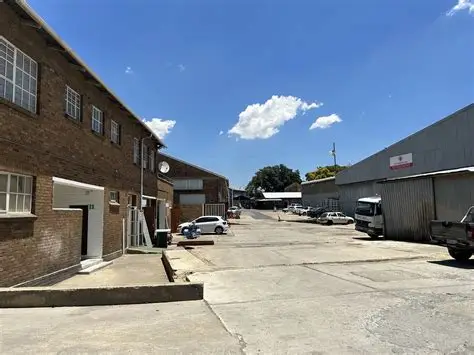
“South Africa’s industrial property sector has become the backbone of the nation’s real estate rebound, with vacancy rates dropping to 3.8% nationally and rental growth surging 8.4% year-on-year. Developers and investors are pouring billions into logistics corridors, fueling job creation, infrastructure upgrades, and renewed investor confidence”
South Africa’s industrial real estate sector has emerged as the driving force behind the country’s property recovery in August 2026. After years of pandemic-driven uncertainty, the industrial segment is now spearheading growth, reshaping investor sentiment, and catalyzing economic resilience. With vacancy rates at historic lows and rental growth accelerating, industrial hubs in Durban, Cape Town, and Johannesburg are becoming magnets for both domestic and international investors.
Industrial Real Estate: The Backbone of Recovery
- Vacancy rates: Dropped to 3.8% nationally, the lowest in history.
- Rental growth: Surged 8.4% year-on-year for mid-sized spaces (around 500m²).
- Demand drivers: Logistics, warehousing, and last-mile distribution, reflecting global supply chain resilience and e-commerce expansion.
Developers such as Fortress Real Estate Investments have raised R1.35 billion to expand logistics projects in Cape Town’s industrial corridors. This surge reflects the rapid expansion of e-commerce and the resilience of global supply chains.
Durban: Africa’s Gateway
Durban’s industrial basin, strategically positioned near the Port of Durban, Africa’s busiest port, has become a focal point for logistics and manufacturing. Its connectivity to road and rail networks enhances freight efficiency, making it a critical node in both national and international trade.
Recent record-breaking transactions, including the R285.5 million auction sale of a logistics facility, underscore investor appetite for income-generating industrial assets in Durban.
Cape Town: Logistics Expansion
Cape Town’s industrial corridors are seeing massive investment in warehousing and distribution centers. Developers are capitalizing on the city’s role as a hub for both domestic and international trade, with infrastructure upgrades supporting freight efficiency.
Johannesburg: Industrial Magnet
Johannesburg, despite challenges in its office market, is witnessing strong industrial demand. Warehousing and logistics facilities are attracting investors, while adaptive reuse of older properties is reshaping urban landscapes.
Infrastructure Development
Industrial growth is spurring upgrades in:
- Road networks for freight efficiency.
- Port expansions to handle increased cargo volumes.
- Rail connectivity linking inland hubs with coastal trade routes.
These investments not only support industrial tenants but also enhance South Africa’s competitiveness in global trade.
Job Creation and Economic Impact
Thousands of jobs are being created in logistics, construction, and warehousing. Industrial real estate is becoming a catalyst for broader economic recovery, offering employment opportunities across skill levels.
Investor Confidence and REIT Activity
Real Estate Investment Trusts (REITs) are regaining traction, buoyed by improved rental yields and stabilized vacancies. Institutional investors are re-entering the market, signaling renewed trust in industrial real estate as a long-term growth engine.
Comparative Outlook
| City | Key Driver | Recent Development |
|---|---|---|
| Durban | Port proximity | R285.5m auction sale record |
| Cape Town | Logistics corridors | R1.35b expansion projects |
| Johannesburg | Warehousing demand | Adaptive reuse of older stock |
Conclusion
South Africa’s industrial property sector is not just recovering—it is leading the nation’s economic revival. With record-low vacancies, surging rental growth, and billions in new investments, industrial real estate is reshaping the country’s property landscape. Durban, Cape Town, and Johannesburg are emerging as industrial powerhouses, driving infrastructure upgrades, job creation, and renewed investor confidence.



