




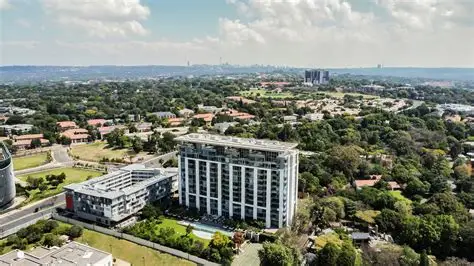
“South Africa’s property market in September 2026 is witnessing a surge in first-time buyers, who now represent the majority of home loan applications. Stable interest rates, government subsidies, and affordable housing demand are reshaping development trends across key urban and suburban hotspots.”
The South African real estate sector has entered September 2026 with renewed momentum, driven by a remarkable surge in first-time buyers (FTBs). Accounting for 54.5% of all home loan applications, this demographic shift is reshaping development priorities, pricing strategies, and urban planning.
Economic Context
- Prime lending rate: 10.50%
- Repo rate: 7.00%
- National property inflation: +4.2% YoY
- Average FTB purchase price: R1.41 million
The South African Reserve Bank’s decision to maintain interest rates has created a stable borrowing environment. While rates remain high compared to pre-2024 levels, buyers have adapted, recalibrating affordability expectations.
Affordable Housing Surge
Affordable housing below R1.6 million has become the most active segment. The R1.2 million transfer duty exemption and subsidies like FLISP have made entry-level properties more accessible. Developers are responding with mixed-use projects in Johannesburg, Cape Town, and Durban, focusing on compact, energy-efficient units.
Urban Hotspots
- Johannesburg South & Soweto: Affordable housing demand is surging.
- Cape Town Northern Suburbs: Mid-market developments are thriving.
- Durban North: Infrastructure upgrades are attracting new buyers.
Investor Confidence
Despite elevated interest rates, investor sentiment is stabilizing. Mid-to-high-end properties (R2.5–R5 million) are seeing 8–10% annual growth, particularly in established urban centers.
Infrastructure & Municipal Role
Municipal performance and infrastructure delivery are increasingly influencing buyer decisions. Areas with reliable utilities, transport connectivity, and safety measures are outperforming weaker municipalities.
Risks & Challenges
- Household debt ratio: 61.8% of disposable income
- Inflation remains a concern, though easing slightly.
- Developers face rising construction costs due to global supply chain pressures.
Long-Term Outlook
Analysts predict a sustained recovery through late 2026, with potential for further rate cuts if inflation remains within target. The dominance of first-time buyers signals a generational shift, likely to anchor demand in affordable and mid-market housing for years to come.
📊 Key Takeaways
- First-time buyers dominate: 54.5% of applications.
- Affordable housing boom: Below R1.6 million, supported by subsidies.
- Urban hotspots: Johannesburg South, Cape Town suburbs, Durban North.
- Investor confidence: Mid-to-high-end properties growing 8–10% annually.
- Risks: High household debt, construction costs, inflationary pressures.



