




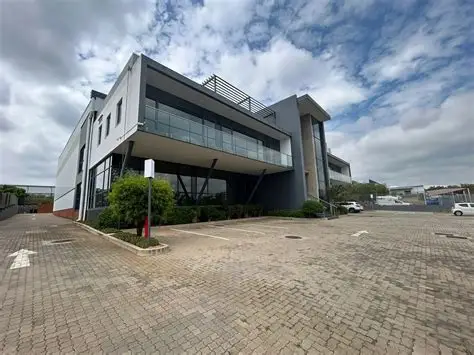
“South Africa’s commercial property sector is showing resilience in 2026, led by industrial real estate with record-low vacancies and strong rental growth. Office demand is stabilizing, retail nodes are recovering, and REITs are regaining investor confidence, marking a turning point for developers and investors.”
South Africa’s real estate development landscape in 2026 is undergoing a remarkable transformation. After years of pandemic-driven uncertainty, the commercial property sector is rebounding with renewed vigor. Industrial properties are spearheading this recovery, while office demand stabilizes and retail nodes regain momentum. This resurgence is not only reshaping the property market but also signaling new opportunities for developers, landlords, and institutional investors.
Industrial Real Estate: The Star Performer
Industrial properties remain the backbone of South Africa’s real estate recovery. Vacancy rates have dropped to 3.8% nationally, a record low that underscores the sector’s resilience. Rental growth has surged by 8.4% year-on-year for 500m² spaces, driven by logistics, warehousing, and last-mile distribution demand. Cape Town’s industrial corridors, in particular, are experiencing unprecedented activity, with developers like Fortress Real Estate Investments raising R1.35 billion to expand logistics projects.
This industrial boom reflects broader global trends, where supply chain resilience and e-commerce growth continue to fuel demand for warehousing and distribution hubs. For South Africa, this means not only economic growth but also job creation and infrastructure development.
Office Market Recovery
The office sector, long battered by remote work trends, is showing signs of stabilization. National office vacancies have dropped to 12.1% in Q2 2026, the lowest since early 2020. Cape Town is leading the recovery, attracting professional services and hybrid teams seeking A-grade office space. Johannesburg, however, continues to face oversupply challenges, though strategic conversions of older stock into mixed-use developments are easing vacancy rates.
Hybrid workforces are reshaping demand patterns, with decentralized office hubs catering to flexible work models. Developers are increasingly focusing on mixed-use suburban nodes, which are outperforming secondary CBD buildings.
Retail Nodes Stabilize
Retail, once under severe strain, is showing signs of stabilization. Lifestyle-focused malls and convenience retail centers are attracting steady foot traffic, driven by consumer demand for accessible, experience-oriented shopping. This stabilization is crucial for developers, as retail nodes often anchor mixed-use developments and contribute to community vibrancy.
REITs Regain Investor Confidence
Real Estate Investment Trusts (REITs) are once again proving their value as a cornerstone of South Africa’s property investment landscape. In 2025, most listed REITs delivered double-digit total returns, outperforming equities and bonds. This momentum has carried into 2026, with healthier balance sheets, stabilizing valuations, and improved operational performance.
Investor appetite is particularly strong for logistics, convenience retail, and alternative asset classes. The upcoming SA REIT Conference 2026 is expected to spotlight new opportunities in logistics and last-mile distribution, further boosting confidence in the sector.
Developer Opportunities
For developers, the current environment presents a wealth of opportunities. Industrial expansion projects are in high demand, while office conversions into mixed-use developments offer creative solutions to oversupply challenges. Retail stabilization provides a foundation for integrated community developments, combining residential, commercial, and lifestyle spaces.
Challenges Ahead
Despite the positive momentum, challenges remain. Johannesburg’s oversupply of office space continues to weigh on recovery, and broader economic uncertainties—such as interest rate fluctuations and global inflationary pressures—pose risks. Developers must navigate these challenges with strategic planning and adaptive design.
Conclusion
South Africa’s real estate development sector in 2026 is entering a new era of resilience and opportunity. Industrial properties are leading the charge, office demand is stabilizing, and retail nodes are recovering. Investor confidence is returning, driven by strong REIT performance and renewed appetite for logistics and mixed-use developments. For developers and investors alike, the message is clear: South Africa’s property market is back on the growth trajectory, offering fertile ground for innovation and expansion.



