




“South Africa’s third-quarter inflation expectations survey shows a marked decline in household inflation forecasts, reversing much of the previous quarter’s spike. At the same time, consumer confidence rebounded modestly, supported by low food inflation and stronger retail sales, though high-income households remain cautious due to rising interest rates and fuel costs.”
South Africa’s economic landscape is undergoing a delicate balancing act as inflation expectations ease, consumer confidence shows signs of recovery, and retail sales outperform forecasts. These developments, captured in the Bureau for Economic Research’s (BER) latest Data Review (18 September 2026), provide a nuanced picture of microeconomic dynamics at play. With the South African Reserve Bank (SARB) preparing for its upcoming Monetary Policy Committee (MPC) meeting, the findings carry significant implications for monetary policy, household spending, and business investment.
Inflation Expectations: A Turning Point
The BER’s third-quarter survey reveals that household inflation expectations fell sharply to 4.9% from 6.0%, marking the lowest level in nearly five years. Professional forecasts remained stable at 4.4%, while long-term expectations eased slightly. This reversal is particularly noteworthy given the geopolitical tensions in the Middle East earlier this year, which had driven energy prices higher and pushed inflation expectations up in the second quarter.
Lower inflation expectations suggest that households and businesses anticipate more price stability in the near term. This could influence wage negotiations, pricing strategies, and investment decisions, reducing the risk of inflation becoming entrenched. For policymakers, it provides breathing room to maintain or cautiously adjust interest rates without exacerbating economic strain.
Consumer Confidence: Signs of Recovery
The FNB/BER Consumer Confidence Index (CCI) rebounded to -13 in Q3, after plunging to -19 in Q2. The recovery was driven by improvements in household finances and economic outlook sub-indices, particularly among low-income households benefiting from subdued food inflation.
However, the rebound is fragile. Confidence among high-income households remains depressed, reflecting concerns over rising interest rates and fuel costs. Importantly, the present-time indicator—consumers’ rating of whether it is a good time to buy durable goods—fell to its lowest level since early 2025. This signals that while optimism about the future has improved, immediate spending remains constrained.
Retail Sales: A Positive Surprise
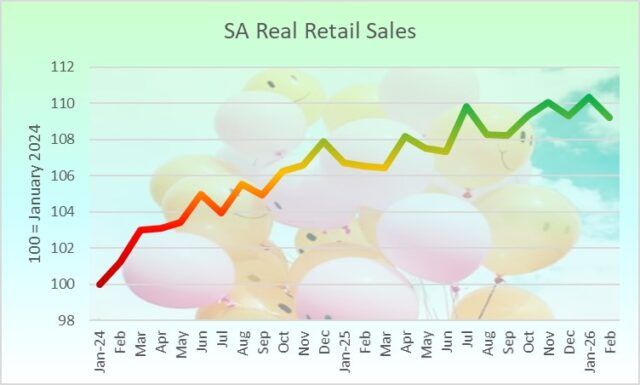
Retail trade sales grew 3.4% year-on-year in July, far exceeding forecasts of 0.9%. This surge was supported by lower fuel prices and stronger wholesale trade activity. The improvement in retail performance suggests that consumer demand is more resilient than previously thought, offering a boost to economic activity.
Yet, the sustainability of this growth is uncertain. Rising Brent crude oil prices threaten to erode disposable incomes, while interest rate hikes could dampen household spending power. The SARB’s policy decisions will therefore play a pivotal role in determining whether this momentum can be maintained.
Policy Implications
The SARB faces a difficult trade-off. On one hand, easing inflation expectations and stronger retail sales argue for maintaining current rates to support growth. On the other, rising global oil prices and persistent geopolitical risks could reignite inflationary pressures, necessitating tighter monetary policy.
The BER report highlights that South Africa’s policy dilemma resembles that of the UK more than the US or Japan, given its exposure to external shocks and fragile domestic demand. A temporary fuel-levy intervention is even being considered to cushion households against the next leg of the oil shock.
Microeconomic Impact
- Households: Low-income households benefit from food price stability, but fuel costs and interest rates weigh heavily on middle- and high-income groups.
- Businesses: Retailers enjoy stronger sales, but uncertainty about future demand complicates inventory and pricing strategies.
- Investors: Bond yields remain sensitive to SARB decisions, with expectations of a rate hike attracting yield-seeking investors but risking slower domestic activity.
Conclusion
South Africa’s microeconomic environment is characterized by cautious optimism. Inflation expectations have eased, consumer confidence has partially recovered, and retail sales have exceeded forecasts. Yet, challenges remain in the form of rising oil prices, interest rate pressures, and subdued high-income household confidence.
The SARB’s upcoming MPC meeting will be a defining moment, as policymakers weigh the need to support growth against the imperative of containing inflation. For households, businesses, and investors alike, the decisions taken will shape the trajectory of South Africa’s economy in the months ahead.



