




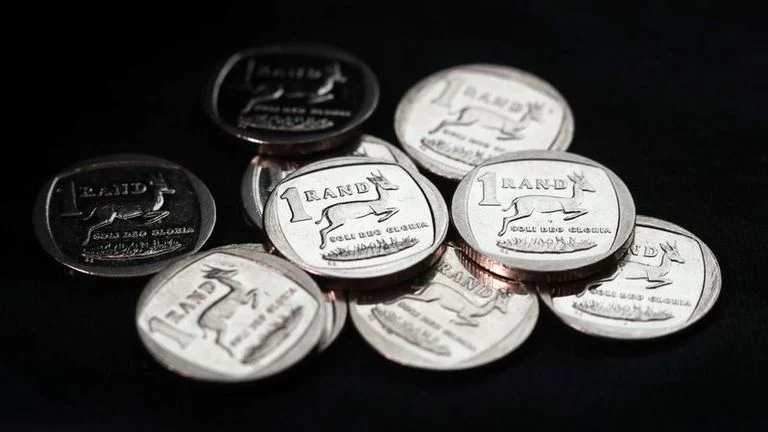
“The South African rand traded steadily at 16.2450 against the dollar as investors await August inflation data and the SARB’s monetary policy decision next week. Analysts expect a rate hike to attract yield investors, but warn it could dampen domestic economic activity.”
South Africa’s financial markets are once again at a crossroads. The rand’s stability ahead of the release of August inflation data and the SARB’s upcoming monetary policy meeting reflects both investor caution and optimism. With inflation cooling to 4.3% in July—the first decline in five months—the central bank faces a delicate balancing act: whether to raise interest rates to attract foreign capital or maintain its restrictive stance to support domestic growth.
Rand Performance
- Current trading level: 16.2450 per dollar, little changed from 16.2649.
- Support factors: Stable commodity prices and global monetary tightening, particularly the U.S. Federal Reserve’s recent rate hike.
- Bond market: Benchmark 2035 government bond yield fell 1.5 basis points to 8.615%, signaling investor confidence.
Inflation Outlook
- July CPI: 4.3% year-on-year, down from previous months.
- Expectations: August data will provide clarity on whether inflationary pressures are easing sustainably.
- Global context: Oil price shocks and geopolitical tensions remain risks, potentially reversing recent gains.
SARB Policy Dilemma
- Restrictive stance: The SARB previously held rates steady, arguing policy was already tight enough to return inflation to target within two years.
- Rate hike implications:
- Positive: Higher yields could attract foreign investors, strengthening the rand.
- Negative: Higher borrowing costs could suppress consumer spending and business investment.
Consumer Confidence & Retail Sales
- Confidence index: Rebounded to -13 in Q3 from -19 in Q2, driven by improved household finances.
- Retail sales: Surged 3.4% year-on-year in July, far exceeding forecasts, supported by lower fuel prices.
- Risks: Rising oil prices and interest rate hikes could erode disposable income.
Global Influences
- Federal Reserve: Continued tightening signals global liquidity constraints.
- Bank of Japan & Bank of England: Divergent policies highlight the complexity of global monetary conditions.
- Impact on SA: South Africa’s policy trade-offs increasingly resemble those of the UK, balancing inflation control with growth concerns.
Investor Sentiment
- Short-term outlook: Investors are cautious but optimistic, awaiting inflation data for clarity.
- Medium-term risks: Persistent oil shocks, geopolitical instability, and weak GDP growth expectations (1.2% for 2026).
Conclusion
South Africa’s financial landscape is defined by uncertainty and cautious optimism. The rand’s stability reflects investor confidence in the SARB’s ability to manage inflation, but the looming rate hike decision underscores the delicate balance between attracting foreign capital and sustaining domestic growth. The coming week’s inflation data will be pivotal, shaping not only monetary policy but also the trajectory of consumer confidence, retail activity, and broader economic momentum.



