




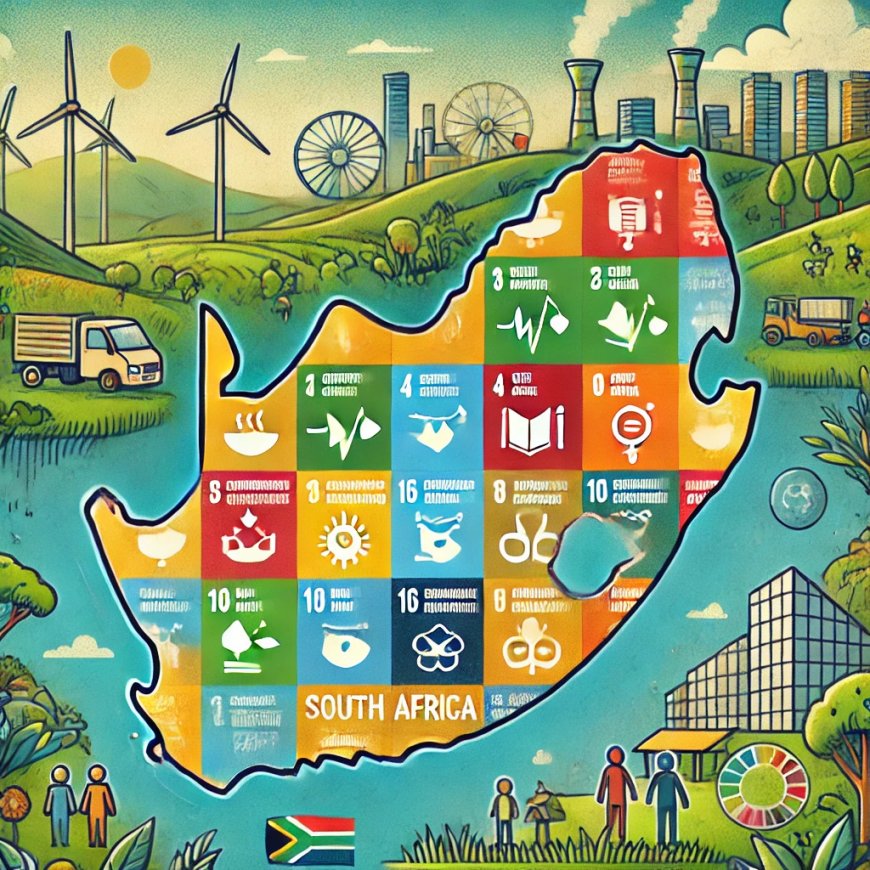
“South African scientists have unveiled a cutting-edge pollution warning app designed to track and alert residents about hazardous air quality in Johannesburg, where coal emissions remain a major health risk. The app integrates AI, satellite data, and community reporting to empower citizens and policymakers with real-time environmental insights.”
Johannesburg, South Africa’s economic hub, has long struggled with air pollution driven by coal combustion, industrial activity, and urban traffic. On July 1, 2026, scientists from leading South African universities and research institutes unveiled a groundbreaking AI-powered pollution warning app aimed at transforming how residents and policymakers respond to environmental hazards. This development marks a significant milestone in the country’s broader Sci-Tech environmental innovation agenda, aligning with global climate action goals.
Background: The Pollution Crisis
Johannesburg’s reliance on coal for energy has created persistent smog, with particulate matter levels frequently exceeding World Health Organization (WHO) guidelines. Studies show that only 14% of global cities meet WHO particulate matter standards, and Johannesburg is far from compliance.
- Health impact: Respiratory diseases, cardiovascular problems, and premature deaths are linked to prolonged exposure.
- Economic cost: Pollution reduces productivity, increases healthcare spending, and deters investment.
The App: Features and Functionality
The pollution warning app integrates multiple technologies:
- AI-driven analytics: Machine learning models predict pollution spikes based on weather, traffic, and industrial activity.
- Satellite imagery: Real-time monitoring of emissions hotspots.
- Citizen reporting: Users can log visible pollution events, creating a crowdsourced database.
- Push alerts: Immediate warnings when air quality reaches hazardous levels.
This multi-layered approach ensures both scientific accuracy and community engagement, making it a powerful tool for urban resilience.
Policy and Governance Impact
The app supports South Africa’s Department of Forestry, Fisheries, and the Environment (DFFE) in enforcing air quality standards. Policymakers can use the data to:
- Identify non-compliant industries.
- Implement targeted interventions.
- Strengthen climate resilience strategies under the Benguela Current Convention.
Public Reception and Adoption
Early trials in Johannesburg neighborhoods revealed strong community interest. Residents appreciated the user-friendly interface and the ability to take proactive measures, such as limiting outdoor activity during pollution spikes. Schools and hospitals expressed interest in integrating the app into their safety protocols.
Global Context
South Africa’s innovation resonates with international climate action efforts:
- BRICS collaboration: Strengthening frameworks for environmental monitoring.
- African Union initiatives: Promoting sustainable urban development.
- Global partnerships: Similar apps in Europe and Asia have shown success in reducing exposure risks.
Challenges and Risks
Despite its promise, the app faces hurdles:
- Data accuracy: Reliance on satellite imagery may miss localized pollution events.
- Digital divide: Limited smartphone access in poorer communities could restrict adoption.
- Policy enforcement: Without strong government action, data alone may not drive change.
Future Prospects
Scientists envision expanding the app nationwide, integrating it with renewable energy projects and green building initiatives. Partnerships with private companies like Investec, which recently secured a $200m IFC loan for sustainable building, could amplify its impact.
Conclusion
The launch of Johannesburg’s pollution warning app represents a critical step in South Africa’s Sci-Tech environmental innovation journey. By combining AI, citizen science, and policy integration, the app offers a blueprint for tackling urban pollution in developing economies. If scaled effectively, it could become a cornerstone of South Africa’s climate resilience strategy, protecting both public health and economic stability.



