




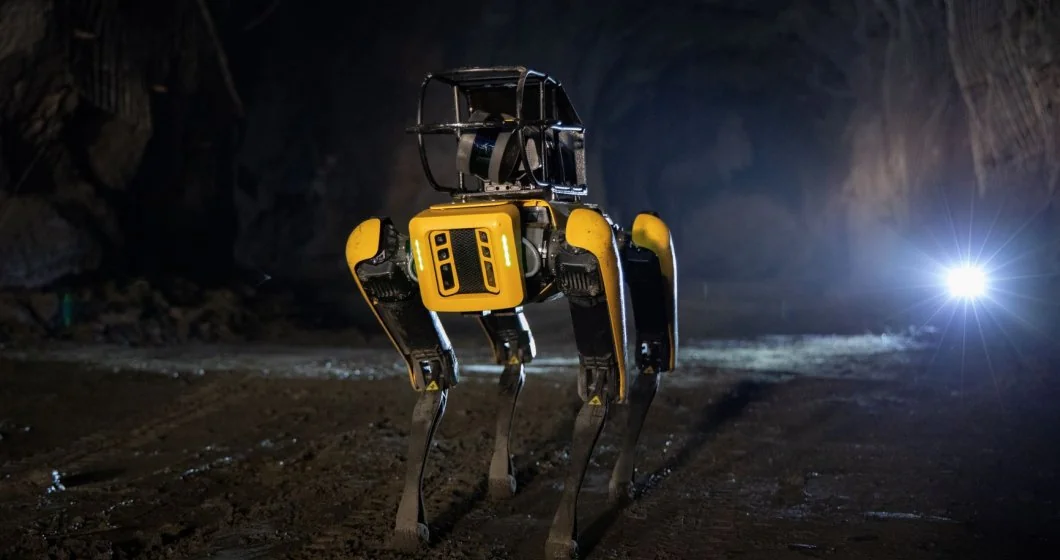
“South Africa’s mining sector, known for its extreme depths and hazardous conditions, is increasingly deploying robotics for inspection, monitoring, and safety management. The 2026 status report reveals that quadruped robots and automated systems are already delivering measurable value, though full autonomy remains aspirational.”
Mining has long been the backbone of South Africa’s economy, contributing significantly to GDP and employment. Yet, it is also one of the most dangerous industries, with risks ranging from rockfalls to toxic gases. The 2026 Robotics in Mining Status Report provides a candid assessment of how robotics is reshaping this sector, separating hype from reality and identifying where robotics is already making a difference.
Why Mining is a Natural Fit for Robotics
- Hazardous environments: Mines reach depths of over 3,000 meters, with temperatures exceeding 55°C before cooling. Robots reduce human exposure to these extreme conditions.
- Repetitive tasks: Inspections of conveyors, stopes, and tailings facilities are routine and data-driven—ideal for robotic automation.
- High economic stakes: A single safety incident or shutdown can cost millions, making investment in robotics financially justifiable.
Current Deployments in 2026
- Surface and Infrastructure Inspection: Quadruped robots equipped with cameras, LiDAR, and thermal sensors conduct routine inspections of headgear, conveyors, and processing facilities.
- Tailings Storage Facility Monitoring: After global dam failures, monitoring tailings has become critical. Robots now provide consistent, real-time data to prevent disasters.
- Gas and Air Quality Monitoring: Autonomous units measure air composition in confined spaces, reducing risks for human inspectors.
Case Studies
- Gold Mines in Gauteng: Robots are deployed to inspect underground shafts, reducing downtime and improving safety compliance.
- Platinum Mines in Limpopo: Quadruped robots monitor conveyor systems, ensuring early detection of mechanical faults.
- Coal Mines in Mpumalanga: Robotics-assisted monitoring of tailings facilities has prevented costly environmental incidents.
Barriers and Challenges
- Technical limitations: Full autonomy is still aspirational; robots require human oversight in complex scenarios.
- Cost of deployment: While justified economically, upfront capital remains a barrier for smaller operators.
- Workforce adaptation: Training miners to work alongside robots is essential but still in early stages.
Strategic Importance for South Africa
Robotics in mining aligns with South Africa’s broader push toward digital industrialization under the African Union’s Agenda 2063 and STISA 2034 frameworks. By integrating robotics, the country not only enhances safety but also positions itself as a continental leader in industrial automation.
Future Outlook
- AI integration: Combining robotics with AI will enable predictive maintenance and smarter decision-making.
- Cross-industry applications: Lessons from mining robotics are expected to spill over into agriculture, healthcare, and manufacturing.
- Global competitiveness: South Africa’s mining robotics innovations could become exportable technologies, strengthening its role in the Fourth Industrial Revolution.
Conclusion
The 2026 status report underscores that while the dream of fully autonomous mines remains distant, robotics is already transforming South African mining in tangible ways. By reducing risks, improving efficiency, and aligning with continental innovation strategies, robotics is not just a technological upgrade—it is a strategic necessity for the future of mining in South Africa.



