




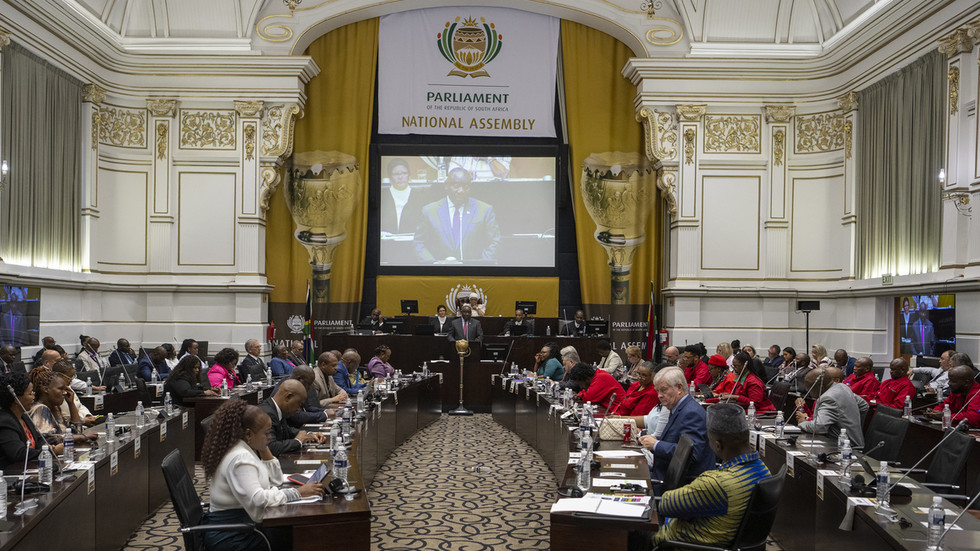
“The Higher Education Committee of Parliament has raised concerns about the disproportionate number of foreign nationals occupying senior academic posts in public universities, arguing that this undermines local talent development. The committee has called for urgent legislative review and policy intervention to ensure fair representation and strengthen South Africa’s higher education system.”
On 25 June 2026, the Higher Education Committee of Parliament issued a media statement that has quickly become the focal point of South Africa’s legislative and political discourse. The committee expressed alarm at the high proportion of foreign academics in senior positions at public universities, framing the issue as one of national interest, sovereignty, and long-term skills development. This announcement has triggered debates across political parties, academia, and civil society, positioning it as the most consequential legislative matter of the day.
Background
South Africa’s universities have long prided themselves on being globally competitive, attracting talent from across the continent and beyond. However, the committee’s statement suggests that this openness may have inadvertently created an imbalance. According to parliamentary sources, over 40% of senior academic posts in certain institutions are held by foreign nationals, raising questions about whether local scholars are being sidelined.
Legislative Context
The committee’s intervention is not merely rhetorical; it signals potential legislative reform. Parliament has the authority to review hiring policies in public institutions, and the committee has urged the Department of Higher Education to table amendments that would prioritize South African citizens for senior posts. This aligns with broader government efforts to strengthen local capacity, echoing similar measures in healthcare and engineering sectors.
Political Reactions
- African National Congress (ANC): The ruling party has cautiously supported the committee’s stance, emphasizing the need to balance international collaboration with local empowerment.
- Democratic Alliance (DA): Opposition leaders have warned against xenophobic undertones, arguing that merit should remain the primary criterion for academic appointments.
- Economic Freedom Fighters (EFF): The EFF has seized on the issue to call for radical transformation in higher education, demanding quotas for South African scholars.
These divergent positions highlight how the debate straddles both policy and identity politics, making it a legislative flashpoint.
Academic Sector Response
University leaders have expressed concern that restrictive legislation could undermine academic freedom and global competitiveness. Several vice-chancellors noted that foreign academics often bring unique expertise, particularly in specialized fields where South Africa has limited capacity. However, local academic unions welcomed the committee’s statement, arguing that South African PhD graduates struggle to secure senior posts despite qualifications.
Broader Implications
This legislative debate has far-reaching consequences:
- Skills Development: Ensuring opportunities for local scholars could strengthen South Africa’s research base.
- International Relations: Restrictive hiring policies may strain ties with neighboring countries whose academics contribute significantly to South African institutions.
- Economic Impact: Universities rely on global rankings and international partnerships; limiting foreign participation could affect funding and reputation.
Legislative Path Forward
The committee has announced plans to draft a motion of desirability for a new bill regulating academic appointments. This process will involve:
- Public consultations with universities, unions, and civil society.
- Committee debates to refine the bill’s scope.
- National Assembly deliberations before final passage.
If enacted, the legislation could reshape the governance of higher education, making it one of the most significant reforms in recent years.
Conclusion
The Higher Education Committee’s statement on foreign academics has ignited a national conversation about identity, sovereignty, and competitiveness in higher education. While the legislative process is only beginning, the issue has already polarized political parties and academic institutions. As South Africa grapples with balancing global integration and local empowerment, this debate will remain at the center of political discourse in the weeks ahead.



