




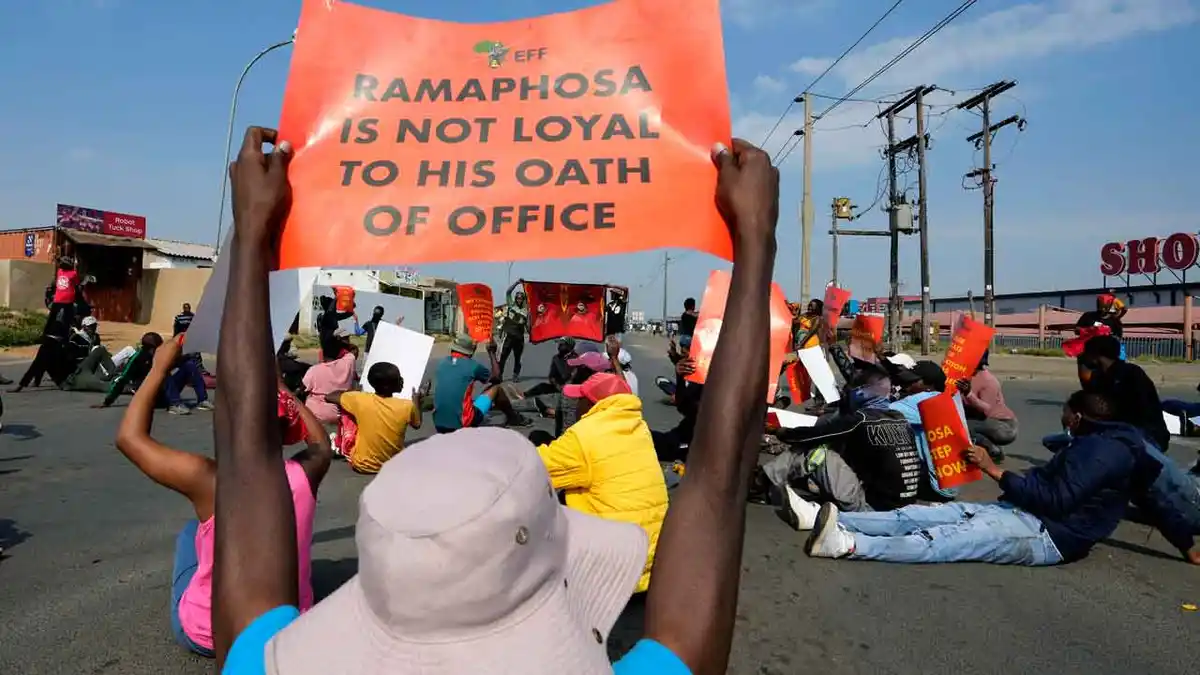
“A fresh Ipsos survey reveals that eight in ten South Africans feel the nation is heading in the wrong direction, citing corruption scandals, unemployment, and service delivery failures as key drivers of discontent. The findings highlight the fragility of the GNU coalition and raise urgent questions about its ability to deliver stability and reform.”
South Africa’s political landscape is once again at a crossroads. The latest Ipsos “What Worries the World” survey paints a sobering picture: 80% of South Africans believe the country is on the wrong track. This figure, the highest since the GNU’s inception in 2024, underscores the fragility of coalition governance and the growing disconnect between political promises and lived realities.
Rise and Fall of Optimism
When the GNU was formed after the contentious May 2024 elections, optimism surged. The coalition, composed of the ANC, DA, and smaller parties, was heralded as a bold experiment in unity governance. Between July and September 2024, 36–40% of South Africans expressed confidence that the country was heading in the right direction.
However, by April 2025, disputes over the national budget and inter-party disagreements culminated in a narrow parliamentary vote, exposing cracks in the coalition’s foundation. Optimism dissipated, replaced by skepticism. By mid-2026, the GNU’s promise of unity had largely unraveled, leaving citizens disillusioned.
Current Public Sentiment
The Ipsos survey reveals unprecedented levels of pessimism. Citizens cite:
- Corruption scandals undermining trust in leadership.
- Persistent unemployment leaving millions without livelihoods.
- Service delivery failures, including electricity shortages and water crises.
While 42% of respondents believe parties are working together “fairly well,” nearly the same proportion feels the GNU is failing to manage inter-party issues effectively. This duality reflects a fragile coalition struggling to inspire confidence.
Political Implications
Public opinion is not just a reflection of mood—it shapes political outcomes. The GNU was designed to stabilize governance, yet Ipsos findings suggest it has failed to inspire confidence.
- The Democratic Alliance (DA) emphasizes fiscal discipline.
- The Economic Freedom Fighters (EFF) criticize inequality and call for radical reforms.
- Smaller parties frame the GNU as ineffective, demanding stronger accountability measures.
This dynamic is likely to intensify as South Africa approaches its next electoral cycle, with public trust becoming a decisive factor in shaping political fortunes.
Economic Dimensions
South Africa’s economy remains stagnant. Unemployment hovers above 30%, inflationary pressures erode household purchasing power, and sluggish growth leaves citizens frustrated. The GNU’s inability to deliver tangible improvements has fueled disillusionment.
Social Dimensions
Beyond economics, service delivery failures dominate public discourse. Electricity blackouts, water shortages, and healthcare inefficiencies reinforce perceptions of government incompetence. Citizens increasingly view the state as unable to meet basic needs.
Historical Context
South Africa has long grappled with governance challenges. The GNU was envisioned as a corrective measure, bridging divides and stabilizing governance. Yet history shows that coalition governments often struggle with coherence, and South Africa’s experiment is proving no exception.
Public Opinion as a Political Force
Public opinion is not static—it evolves with events. The Ipsos survey highlights how quickly optimism can collapse when promises remain unmet. For the GNU, the challenge is not merely to survive but to rebuild trust.
Path Forward
Experts argue that the GNU must prioritize:
- Transparent governance to combat corruption.
- Job creation initiatives to address unemployment.
- Infrastructure investment to improve service delivery.
Without decisive action, public opinion will continue to erode, undermining the coalition’s legitimacy.
Conclusion
South Africa’s public opinion crisis is a warning sign. With 80% of citizens believing the nation is on the wrong track, the GNU faces a credibility test. Its survival depends on whether it can deliver tangible reforms that restore faith in governance.



