




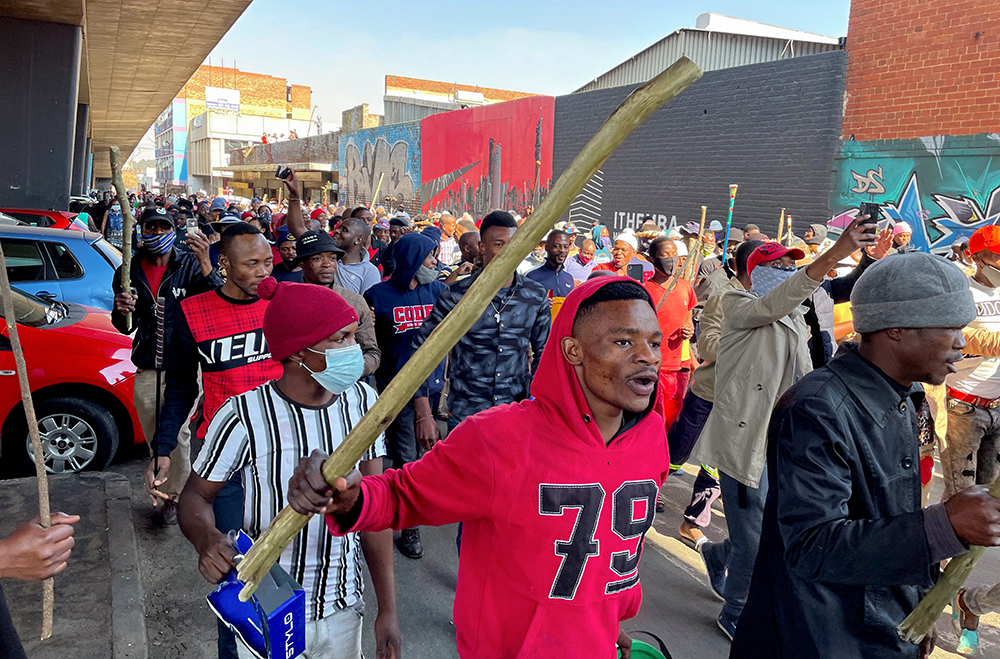
“Public opinion in South Africa is sharply polarized as protests over undocumented migrants intensify in eThekwini, with activists blaming government mismanagement while residents express fears about safety and economic strain. The crisis highlights broader national tensions over immigration policy, governance, and the balance between humanitarian obligations and public security.”
South Africa’s political landscape is once again being reshaped by public opinion, as immigration protests in eThekwini dominate headlines. The issue of undocumented migrants has sparked heated debates, with activists accusing the government of failing to uphold humanitarian responsibilities, while many residents argue that unchecked migration threatens local stability and economic survival. This clash of perspectives underscores the deep divisions in South African society and the growing urgency for coherent policy responses.
Background
The protests emerged after authorities began clearing informal camps where undocumented migrants had settled. These camps, often lacking basic sanitation and security, became symbolic of the broader immigration crisis. Activists argue that the government’s approach—focused on repatriation and enforcement—ignores the humanitarian needs of vulnerable populations. Residents, however, claim that the camps have fueled crime, strained public services, and undermined community cohesion.
Public Opinion Trends
Recent surveys and community forums reveal a stark divide:
- Support for stricter immigration controls: Many South Africans believe undocumented migration exacerbates unemployment and insecurity.
- Calls for humanitarian protection: Civil society groups emphasize South Africa’s obligations under international law to protect refugees and asylum seekers.
- Distrust in government handling: Both sides criticize authorities for inconsistent policies and poor communication, fueling frustration and mistrust.
This polarization reflects broader anxieties about governance, economic inequality, and national identity.
Political Reactions
Political parties have seized on the issue:
- The Democratic Alliance (DA) has called for stronger border enforcement and better coordination with neighboring countries.
- The Economic Freedom Fighters (EFF) argue that anti-immigrant sentiment is rooted in xenophobia and economic mismanagement, urging solidarity with African migrants.
- The African National Congress (ANC) faces mounting pressure to balance humanitarian commitments with public demands for security.
These divergent positions illustrate how immigration has become a litmus test for political leadership and accountability.
Community Impact
In eThekwini, residents describe daily challenges:
- Rising tensions between locals and migrants, sometimes erupting into violence.
- Strain on housing, healthcare, and education systems.
- Fear that protests could escalate into broader unrest, reminiscent of past xenophobic violence.
Activists counter that migrants contribute to local economies, often taking jobs shunned by citizens, and enrich cultural diversity. The clash of narratives highlights the complexity of integrating migrant populations into South African society.
Media Coverage
South African media has amplified the debate, with outlets like eNCA and TimesLIVE reporting extensively on the protests, government responses, and community reactions. Coverage often emphasizes the human stories of migrants living in precarious conditions, alongside the frustrations of residents who feel abandoned by policymakers.
Broader Implications
The immigration protests are not just a local issue—they resonate nationally:
- Economic dimension: With unemployment hovering at high levels, many South Africans view migrants as competitors for scarce jobs.
- Security dimension: Rising crime rates are often (though controversially) linked to undocumented migration.
- Political dimension: Immigration policy is becoming a central issue in the run-up to the 2026 elections, shaping party platforms and voter sentiment.
Conclusion
Public opinion on immigration in South Africa is deeply divided, reflecting broader societal tensions over governance, identity, and economic survival. The eThekwini protests serve as a microcosm of these challenges, forcing policymakers to confront difficult questions: How can South Africa balance humanitarian obligations with domestic stability? Can political leaders bridge the divide between activists and residents? The answers will shape not only immigration policy but also the future of South Africa’s democracy.



