




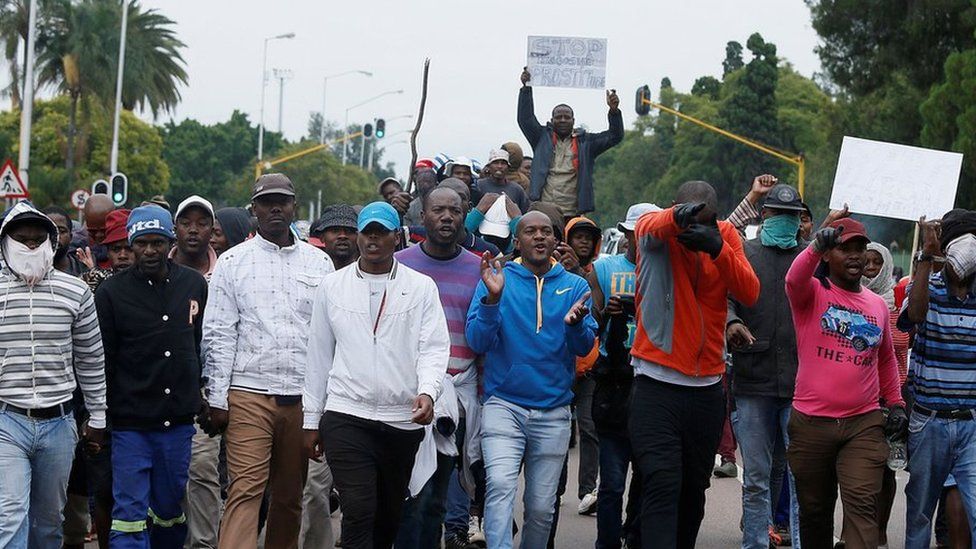
“A new survey by the IEC reveals that trust in South Africa’s political institutions has plummeted, with only 19% of citizens expressing confidence in the national government and just 11% in political parties. This erosion of faith is expected to drive voter abstention in the upcoming November 4 municipal elections, raising concerns about democratic legitimacy and stability.”
South Africa is entering one of its most turbulent pre-election climates in three decades, as the Independent Electoral Commission (IEC) warns of a deepening crisis of public trust that could undermine the legitimacy of the upcoming local government elections scheduled for November 4, 2026. According to the IEC’s Deputy Chief Electoral Officer, Masego Sheburi, the findings of a nationwide survey conducted between October 2025 and February 2026 paint a grim picture of widespread disillusionment with political leadership and democratic institutions.
The survey shows that confidence in the national government has collapsed from 69% in 2004 to just 19% today, while trust in Parliament has dropped to 20%. Local government, once seen as the most responsive tier of governance, has seen its credibility fall from 55% to 18%. Political parties fare even worse, with only 11% of South Africans expressing confidence in them, down from 42% two decades ago. Even traditionally respected institutions such as the courts and the IEC itself have not been spared, with trust in the electoral body declining from 74% to 32%.
This erosion of trust is not merely an abstract concern—it has direct implications for voter behavior. The IEC warns that intention to vote has dropped from 76% in 2015 to 64% in 2026, signaling a potential wave of abstention that could distort electoral outcomes and weaken democratic accountability. Sheburi emphasized that citizens now hold “low expectations of responsiveness and delivery from government,” a sentiment that fuels disengagement and cynicism.
The timing of this crisis is particularly troubling. The November elections will see parties and independent candidates contesting 10,439 seats across 214 municipalities, making them one of the most competitive local polls in recent history. Yet, the competitiveness may be overshadowed by the sheer scale of public disillusionment. Analysts warn that low voter turnout could empower fringe movements and destabilize municipal governance, especially in areas already grappling with service delivery failures.
The survey also highlights a generational divide. Younger South Africans, many of whom have never voted before, are significantly less likely to participate compared to older citizens. This trend is compounded by the fact that youth registration levels remain alarmingly low, with more than 70% of 18- to 19-year-olds not registered to vote.
The broader implications extend beyond the ballot box. Declining trust in institutions reflects a deeper malaise about the direction of the country. The proportion of citizens who believe South Africa is heading in the wrong direction has surged, echoing findings from other studies conducted by Government Communications and private research firms. This sentiment is not confined to politics—it permeates perceptions of economic opportunity, social cohesion, and national identity.
Observers argue that rebuilding trust will require more than electoral promises. Citizens demand tangible improvements in service delivery, accountability, and responsiveness. Without these, the democratic project risks losing its legitimacy. As Sheburi noted, “This is not automatic. It is positive if certain things are done and people feel there is a level of responsiveness and political contestants are concerned with issues that concern them.”
The IEC’s warning comes against the backdrop of heightened political tensions. Analysts have already cautioned that alliances between anti-immigrant movements and former president Jacob Zuma’s MK Party could spark unrest reminiscent of the July 2021 riots. With trust in institutions at historic lows, the risk of instability looms large.
As South Africa heads toward November, the elections will serve as a litmus test for the resilience of its democracy. Whether citizens choose to engage or withdraw will determine not only the composition of local councils but also the trajectory of the nation’s democratic experiment. The stakes could not be higher: a disengaged electorate risks ceding power to opportunistic actors, while renewed participation could breathe life into a democracy in need of revitalization.



